

Air travel with a mobility limitation involves two distinct environments: the airport (long walking distances, variable surfaces, security, baggage management) and the aircraft (confined seating, limited overhead access, distance to bathroom). Both environments create specific functional challenges for mobility aid users that are different from the home and community environments the person has adapted. The person who has a fully adapted home may find the airport environment completely un-adapted — no familiar grab rails, unfamiliar surfaces, inaccessible storage heights, and the added pressure of timed transitions. Pre-trip planning that includes adaptive tool considerations prevents the situation of arriving at the airport without the tools needed.
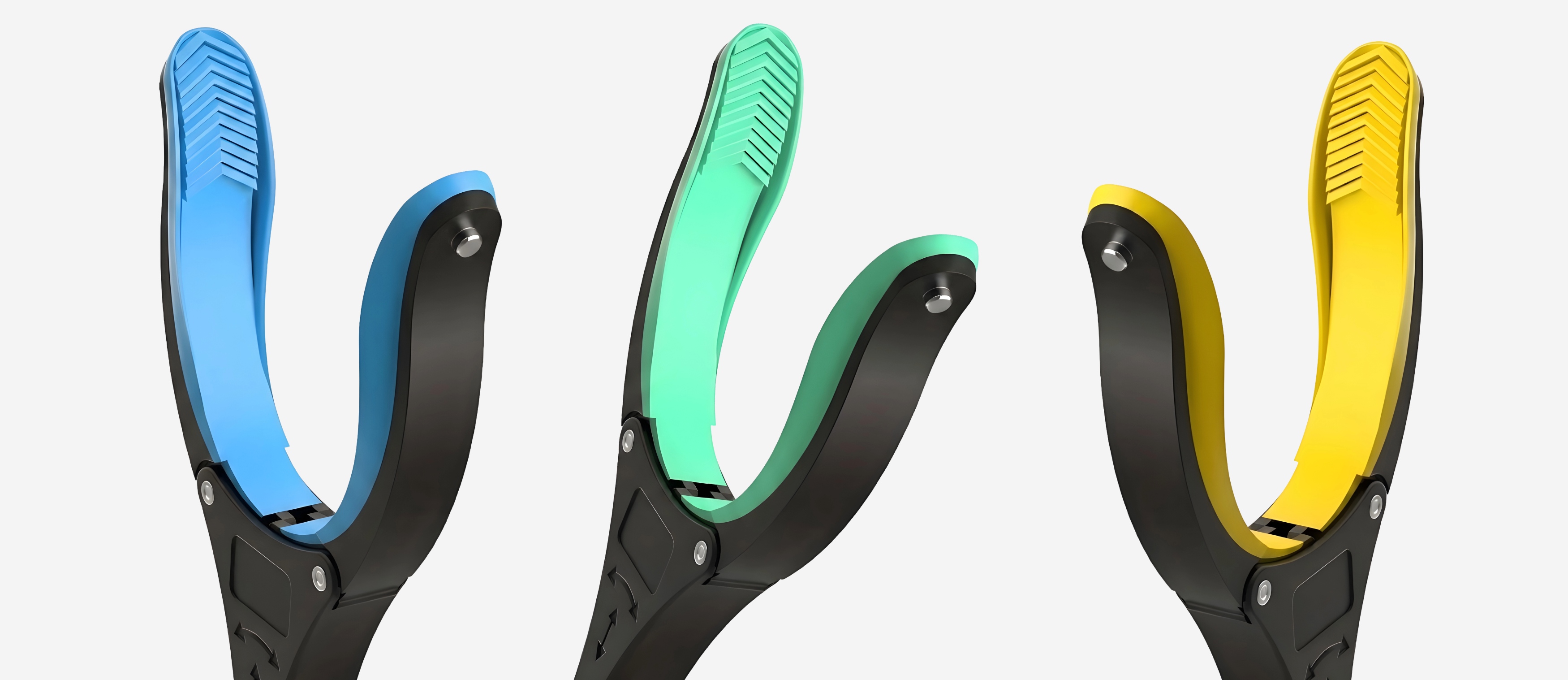
Direct answer: for air travel with mobility limitations, the essential portable adaptive tools are: the GrabbersTool Walking Cane with Cane Strap (cane management during security, boarding, and in-seat transitions), the Reacher Grabber (overhead bin access from a seated or standing position with limited mobility — the 32-inch model travels in carry-on luggage), and the 5-in-1 Multi-Opener (airport food packaging and in-flight meal container access). The reacher and multi-opener are small enough for carry-on bags; the cane and cane strap are airline-allowed mobility aids.
Airport Challenges and Adaptive Solutions
Security Checkpoint
Security creates a specific mobility challenge: shoes must be removed (and replaced), carry-on bags must be placed in trays (lifting), and the person may need to navigate through the scanner while managing their mobility aid. The Cane Strap is useful at security: the cane is strapped to the wrist during the shoe removal and bag placement sequence, keeping it accessible without requiring it to be leaned against a surface where it may fall. TSA allows walking canes through security as mobility aids.
Long Airport Walking Distances
Airport terminals often require significant walking distances — sometimes more than half a mile between gates. For mobility-limited travelers, this walking distance may exceed their comfortable range. Pre-requesting wheelchair assistance from the airline is the primary management strategy for long walking distances — most airlines provide this service at no cost when requested at booking or check-in. The walking cane provides support for the shorter walking segments that remain between wheelchair transport endpoints.
Baggage Placement and Retrieval
Placing carry-on luggage in the overhead bin requires lifting a bag to shoulder height or above — a task that is difficult with shoulder conditions, limited arm strength, or when holding a mobility aid. Airline staff and fellow passengers typically assist with overhead bin loading when asked. The Reacher Grabber can assist with the final positioning of items already lifted to bin height, or with retrieval of items from the back of the bin without reaching into the bin — but the primary overhead bin challenge (lifting the bag to height) requires human assistance.
In-Flight Adaptive Considerations
| In-Flight Task | Mobility Challenge | Adaptive Solution |
|---|---|---|
| Rising from aircraft seat | Narrow seat with limited space; no standing assist | Request aisle seat; push from armrests; ask for early boarding to seat before congestion |
| In-flight meal access | Pull-tab trays; bottle tops; foil lids | 5-in-1 Multi-Opener in carry-on |
| Dropped items in tight seat | Cannot bend between seats; floor not visible | Reacher Grabber in under-seat bag — extends reach between seat rows |
| Cane management while seated | Cane cannot stand in aisle; must not be checked | Cane Strap suspends cane from armrest; airline must allow cabin storage |
The GrabbersTool Reacher Grabber folds for transport and the 32" model fits in most carry-on bags when placed diagonally or in an external side pocket. The multi-opener fits in a pocket or personal item bag. Cane straps are considered mobility aid accessories and are not subject to carry-on size restrictions. View 32" reacher grabber dimensions
Airline Disability Assistance: What You Can Request
Airlines operating in the United States are required by the Air Carrier Access Act (ACAA) to provide specific accommodations for passengers with disabilities at no charge, including: wheelchair assistance through the airport and to the aircraft, on-board aisle wheelchairs for access to the lavatory on wide-body aircraft, and priority boarding for passengers who need additional time. These services must typically be requested in advance — at booking or by calling the airline directly before the flight date.
Destination Adaptive Tool Planning
The destination environment may not provide the adaptive tools the traveler uses at home. Hotels may have standard bathroom fixtures without grab bars. Vacation rentals may have furniture of different heights than home. Bringing portable adaptive tools — reacher, multi-opener, cane strap — ensures the tools are available at the destination regardless of the local environment.
See also: Traveling With Mobility Aids: What to Pack and How to Manage and Why a Walking Cane Needs to Be on the Correct Side.
Browse Ergonomic Mobility and Reacher Grabber Tools for the full travel-ready adaptive range.


