

Ankylosing spondylitis (AS, radiographic axial spondyloarthritis) is a chronic inflammatory arthritis primarily affecting the axial skeleton -- the sacroiliac joints and the spine. AS is strongly associated with HLA-B27 (present in the majority of AS patients) and typically presents in young adults (onset usually before age 45) with inflammatory back pain (insidious onset, morning stiffness lasting over 30 minutes, improvement with exercise and worsening with rest, and nocturnal pain in the second half of the night). The inflammatory process (enthesitis at the sites of ligament and tendon insertion into bone, followed by reactive new bone formation) causes progressive spinal fusion: syndesmophytes bridge between vertebrae, ultimately producing the bamboo spine of complete spinal ankylosis in advanced AS. Consequences: progressive loss of spinal mobility (loss of lumbar lordosis, then thoracic kyphosis, then cervical involvement -- the spine fuses in progressive flexion); reduced chest expansion (costovertebral joint involvement); hip involvement (in a subset of AS patients, causing hip joint damage requiring arthroplasty); and the risk of spinal fracture (the fused, osteoporotic AS spine is brittle and fractures with minor trauma, often at the cervical spine, with high neurological injury risk). Extra-articular manifestations: acute anterior uveitis, inflammatory bowel disease, psoriasis, and aortic involvement. Kitchen function in AS is affected by spinal mobility loss (inability to bend forward for low kitchen items or extend to look up at high shelves), fixed kyphotic posture (forward-stooped spine reducing kitchen reach and forward vision), and hip involvement.
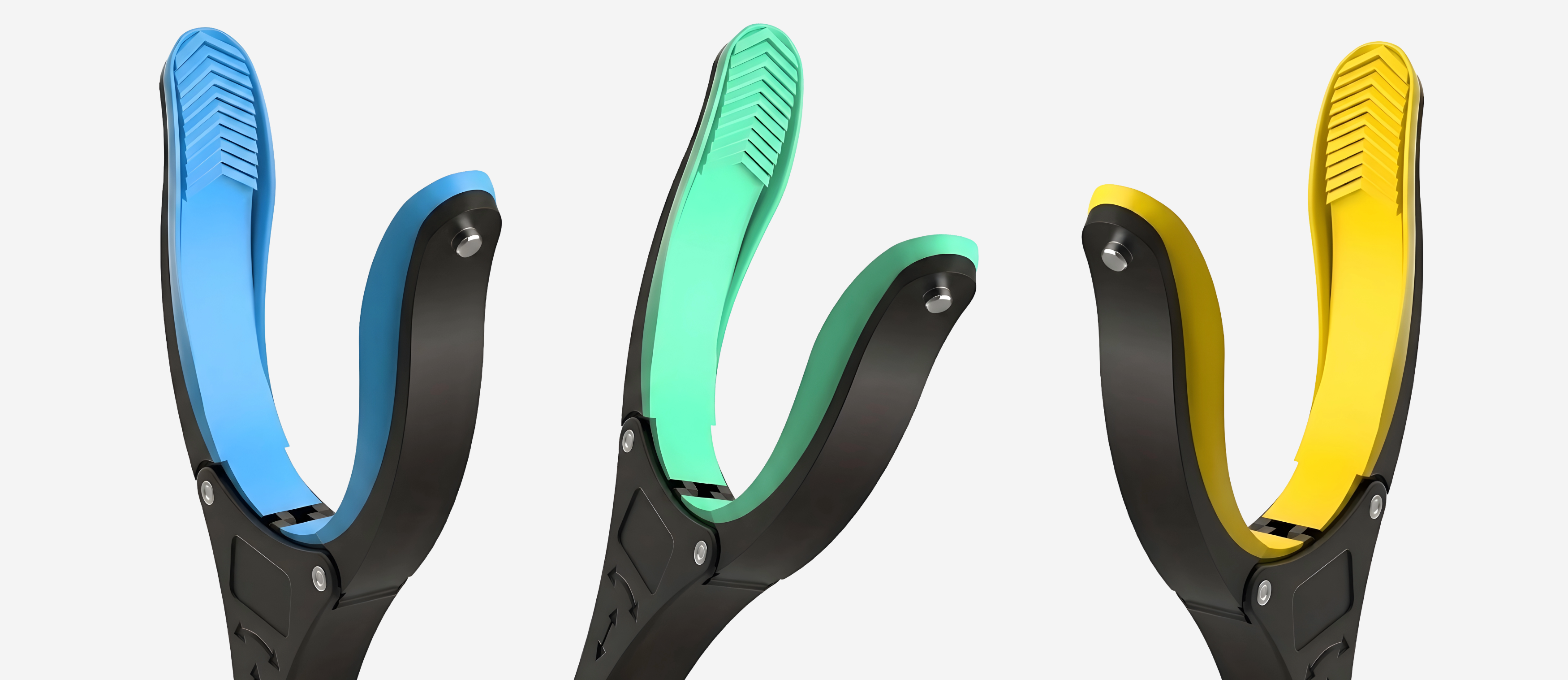
Direct answer: Ankylosing spondylitis kitchen adaptive tools address spinal mobility loss and fixed kyphotic posture: the reacher is essential for AS patients who cannot bend forward or reach overhead due to spinal fusion. The GrabbersTool 32-inch Reacher compensates for AS spinal fusion by retrieving both low and high kitchen items without the spinal flexion and extension that fused AS spines cannot perform.
Ankylosing Spondylitis Kitchen Adaptive Strategy
| AS Feature | Kitchen Impact | Adaptive Solution |
|---|---|---|
| Spinal mobility loss and fusion limiting kitchen bending and reaching | AS progressive spinal fusion eliminates the spinal flexion needed to bend forward for low kitchen items (loading the dishwasher, retrieving items from low cabinets, picking up dropped kitchen items) and the spinal extension needed to look up at high kitchen shelves; the fused AS spine moves as a single rigid unit -- the patient must bend at the hips and knees rather than the spine for any lowering task; reaching overhead is limited by both spinal extension loss and often shoulder involvement; the loss of spinal rotation limits turning to reach kitchen items to the side; these mobility restrictions are permanent in fused AS (unlike the reversible stiffness of early AS) | Reacher grabber (GrabbersTool 32-inch) is the essential AS kitchen tool -- retrieves both low kitchen items (without spinal flexion) and high kitchen items (without spinal extension); the reacher fully compensates for the spinal mobility that AS fusion eliminates; kitchen reorganization to place all frequently used items within the AS patient limited reach zone (avoiding both very low and very high storage); hip and knee bending technique for lowering tasks (since spine cannot flex); kitchen items on pull-out shelves and drawers to bring items to the AS patient rather than requiring reach |
| Fixed kyphotic posture and reduced forward vision in advanced AS | Advanced AS causes fixed thoracic and cervical kyphosis -- the spine fuses in progressive forward flexion, leaving the patient with a stooped posture and the head fixed in a downward-flexed position; severe AS kyphosis can prevent the patient from looking forward or upward (the chin-to-chest deformity in extreme cases); this affects kitchen function: difficulty seeing kitchen work surfaces at counter height, inability to look up at kitchen shelves or into high cabinets, and reduced forward vision for kitchen navigation safety; reduced chest expansion from costovertebral fusion limits exertional capacity during kitchen tasks; cervical fusion prevents turning the head to check kitchen surroundings | Kitchen adaptation for AS fixed kyphosis: lower kitchen work surfaces or angled work surfaces to bring tasks into the AS patient fixed downward visual field; mirrors positioned to extend the AS patient limited visual field for kitchen safety; reacher grabber for high kitchen items the kyphotic AS patient cannot look up to see or reach; adequate lighting on kitchen work surfaces within the AS visual field; cervical AS fusion means the patient must turn the whole body rather than the head -- ensure clear kitchen navigation paths; spinal deformity correction surgery (osteotomy) in severe AS kyphosis is a major intervention considered in selected cases |
| Hip involvement, spinal fracture risk, and AS kitchen safety | AS hip involvement (coxitis) occurs in a subset of patients and causes hip joint damage, groin pain, and reduced hip mobility that compounds the spinal mobility loss -- when both spine and hips are affected, the patient loses the hip flexion compensation strategy for lowering tasks; AS hip arthroplasty is performed for severe hip involvement; the fused AS spine is at high risk of fracture from minor trauma (a kitchen fall in an AS patient can cause a spinal fracture with catastrophic spinal cord injury, particularly cervical fractures); AS-associated osteoporosis increases fracture risk; kitchen fall prevention is especially critical in AS due to the brittle fused spine fracture risk | Reacher grabber and kitchen adaptation for combined AS spine and hip mobility loss; hip arthroplasty recovery kitchen adaptation for AS patients undergoing hip replacement (see hip replacement kitchen recovery); rigorous kitchen fall prevention for AS spinal fracture risk (non-slip surfaces, adequate lighting, handrails, removing trip hazards -- a fall in fused AS is a spinal fracture emergency risk); TNF inhibitor and IL-17 inhibitor biologic therapy for AS (reduces inflammation, may slow fusion progression); physical therapy for AS posture and mobility maintenance; rheumatologist for AS disease management |
See the 32-inch Reacher for ankylosing spondylitis spinal fusion kitchen bending and reaching support.


