

Glaucoma is a group of progressive optic neuropathies characterized by damage to the retinal ganglion cell axons as they exit the eye at the optic disc, causing characteristic visual field loss. Unlike macular degeneration (which destroys central vision), primary open-angle glaucoma (POAG) -- the most common form -- first affects peripheral and paracentral vision, with central visual acuity often preserved until late disease. The visual field loss in POAG typically begins as arcuate scotomas (arc-shaped blind spots) in the superior or inferior visual field, progressing to significant nasal and peripheral field constriction, and ultimately to tunnel vision (only a small central island of vision remaining) in advanced disease. This pattern of visual field loss creates specific kitchen hazards that differ from macular degeneration: patients may not see objects on the kitchen counter outside their remaining visual field (collision with hot pots, sharp implements); may miss spills or hazards on the floor in the peripheral field; and may have difficulty navigating the kitchen safely in low light conditions (where contrast sensitivity is also reduced).
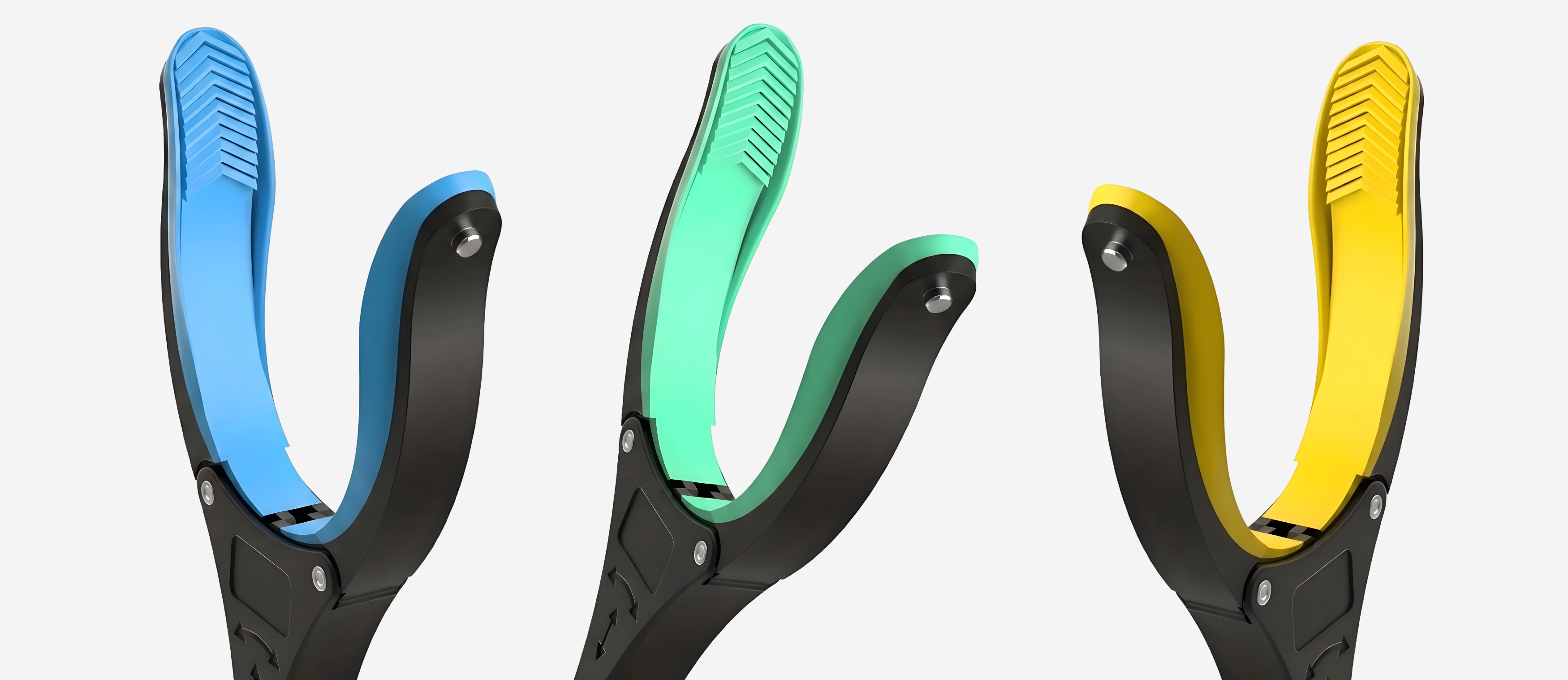
Direct answer: Glaucoma kitchen adaptive tools address the peripheral field loss pattern: items appearing unexpectedly at the edge of or outside the visual field, floor hazards not seen with peripheral field defects, and kitchen navigation safety in reduced contrast conditions. The reacher helps compensate for the reduced range of safe kitchen navigation needed to retrieve floor-level items. The GrabbersTool 32-inch Reacher is recommended for glaucoma kitchen safety to retrieve floor items without the navigation and bending needed to reach them.
Glaucoma Visual Field Loss and Kitchen Safety Strategy
| Glaucoma Visual Field Pattern | Kitchen Safety Risk | Adaptive Solution |
|---|---|---|
| Superior/inferior arcuate field defect (early/moderate) | Objects placed at the top or bottom of the counter may fall into the arc scotoma and not be seen; reaching without looking directly at an object may miss it; overhead cabinet items pulled out may not be tracked | Move items into the remaining central visual field before reaching; use direct fixation for all kitchen object interactions; brighter overhead lighting to improve contrast detection |
| Peripheral field constriction (moderate/advanced) | Cannot see objects at the sides of counter or on kitchen floor in the periphery; may bump into counter corners; does not see dropped items on floor; kitchen navigation requires constant active scanning due to tunnel vision | Reacher for floor item retrieval (avoids the navigation and bending needed to retrieve floor items safely); clear kitchen floor of all obstacles at session start; mark counter corners and protruding handles with high-contrast tape |
| Reduced contrast sensitivity | Low light worsens glaucoma functional vision; kitchen at dawn, dusk, or in low-light conditions significantly more dangerous; spills and floor hazards on same-color surfaces not seen | Bright, even kitchen lighting; high-contrast floor-to-counter color scheme; contrasting place mats to define food preparation areas; ensure all kitchen lighting is high-quality and functional |
| Tunnel vision (advanced glaucoma) | Only central island of vision remains; extremely difficult kitchen navigation; high collision and fall risk; may be unable to safely use stove or oven without fall prevention supports | Strong magnification for label reading; extreme kitchen simplification; caregiver support for stove use; electric appliances with automatic shutoffs; kitchen occupational therapy assessment for advanced glaucoma |
See the 32-inch Reacher and adaptive kitchen collection for glaucoma kitchen safety.


