

Spinal cord injury (SCI) adaptive tool selection is more level-specific than any other condition in GrabbersTool experience. The function available to a person with a C6 complete SCI is fundamentally different from the function available to someone with a T10 complete SCI, and both differ completely from an L2 incomplete SCI. Generic adaptive tool recommendations that do not account for injury level are of limited clinical value. GrabbersTool works with SCI rehabilitation occupational therapists to understand this level-specificity, because the right tool for one patient may be actively counterproductive for another at a different injury level.
Direct answer: for SCI, the adaptive tool recommendation depends critically on injury level. For cervical SCI (C5-C8) with preserved but limited arm function: electric openers are often the highest-value tools, as the grip and rotation required for manual opening may be unavailable even with good biceps function. For thoracic SCI (T1-T12) with full arm function and paraplegia: the reacher is the primary tool, compensating for the floor-level access that wheelchair use limits. For lumbar incomplete SCI: a walking cane for gait support is often the first tool need.
SCI Level and Adaptive Tool Priority
| Injury Level | Typical Preserved Function | Primary Adaptive Tool Needs |
|---|---|---|
| C5 complete | Shoulder and elbow flexion; no wrist or hand function | Specialized feeding equipment; tenodesis splints; electric everything -- no grip available for standard tools |
| C6 complete | Wrist extension (tenodesis grip possible); no finger flexion | Electric Jar Opener (tenodesis grip insufficient for jar torque); Electric Can Opener; tools requiring only button activation |
| C7-C8 complete | Triceps; wrist and partial finger function returning | Electric openers still preferred for reliability; reacher for wheelchair floor access; increasing independence possible |
| T1-T12 complete (paraplegia) | Full arm and hand function; no leg function or trunk stability varies | Reacher for floor access from wheelchair; electric openers as convenience; wheelchair-accessible kitchen setup |
| Lumbar incomplete | Partial leg function; walking may be possible with aids | Walking Cane; reacher for floor tasks; electric openers if fatigue is factor |
Full specifications for all GrabbersTool products are on each product page. View Reacher Grabber specifications.
The Reacher Grabber and Wheelchair Use
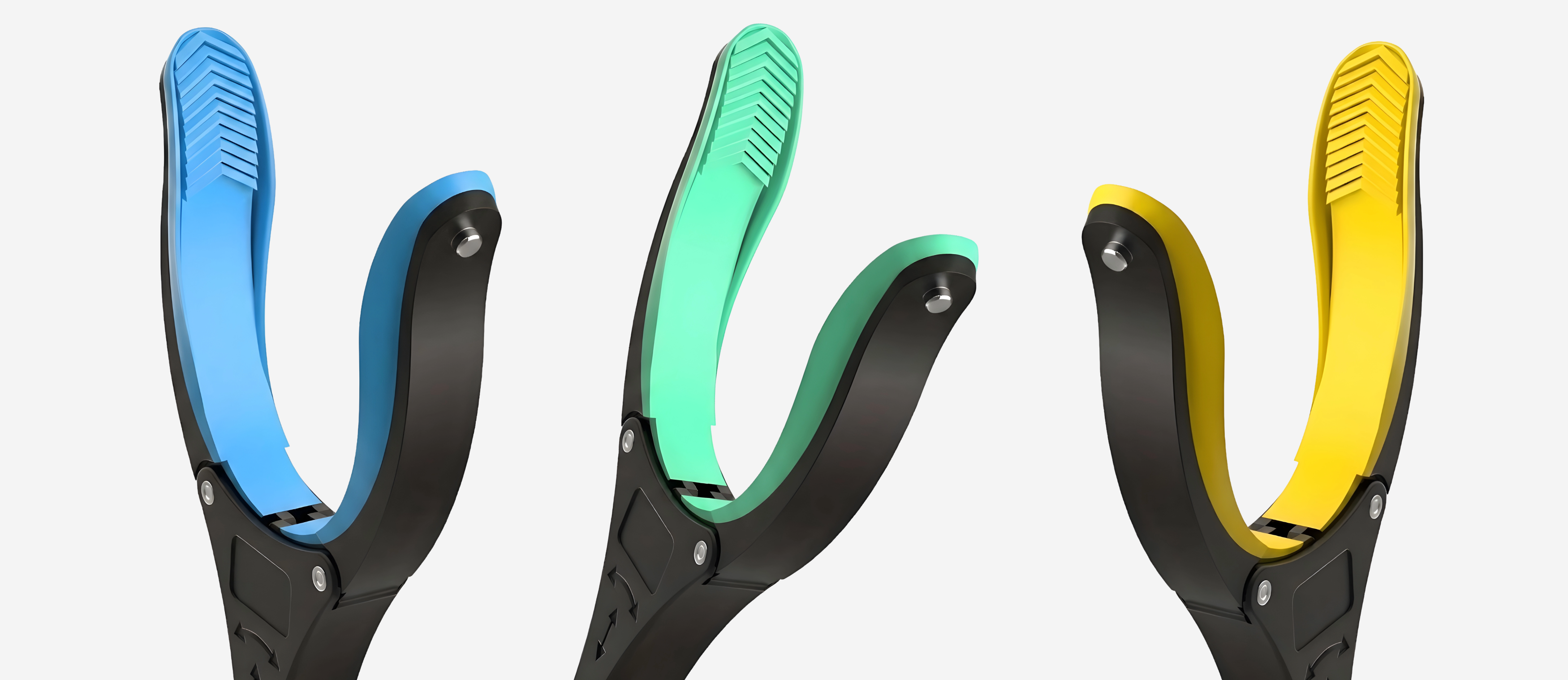
For thoracic SCI patients using manual or power wheelchairs with full arm function, the reacher solves a specific geometric problem: items on the floor are well below wheelchair seat height and outside the reach envelope of a seated person. The standard floor retrieval method for wheelchair users without a reacher -- leaning over the wheelchair armrest to reach the floor -- is a fall risk for items far from the chair, and physically impossible for items directly below. The 43-inch reacher extends the reach envelope significantly and allows floor retrieval without the chair-tipping risk of extreme forward lean. GrabbersTool customers with thoracic SCI describe the reacher as the most consistently used adaptive tool in their daily life -- used multiple times per day for the ordinary events of floor items that everyone experiences. Full specifications for the GrabbersTool 43-inch Reacher are on the product page.
SCI and the Kitchen Accessibility Redesign
Beyond individual tools, SCI rehabilitation programs -- particularly for patients with thoracic SCI who will be independent wheelchair users -- typically include kitchen accessibility assessment and modification. The adaptive tools GrabbersTool provides fit into a broader kitchen redesign: counter heights accessible from a seated position, under-counter knee clearance for forward approach, storage at accessible levels. The reacher addresses items outside the primary accessible zone; electric openers address tasks that are possible from a seated position but require grip strength and rotation the patient may not have or may prefer not to expend. See also: Spinal Cord Injury Adaptive Tools and Independence Guide and Wheelchair Athletes and Adaptive Tools.
Browse Reacher Grabber Tools, Easy Grip Kitchen Openers, and Ergonomic Mobility Solutions.


