

Stroke produces sudden neurological deficits from either ischemia (blood flow obstruction to a brain region -- 87% of strokes) or hemorrhage (bleeding into brain tissue or subarachnoid space -- 13% of strokes). The functional consequences of stroke depend primarily on which brain region is affected, not on whether the mechanism was ischemic or hemorrhagic -- though hemorrhagic strokes often cause more severe initial deficits due to mass effect from bleeding. The most common stroke presentation is hemiplegia or hemiparesis (weakness or paralysis of one side of the body, opposite to the affected hemisphere), which creates the classic one-handed kitchen challenge. Other common deficits include aphasia (language difficulty, affecting kitchen communication and recipe reading), neglect (inattention to the affected side of space), dysphasia (swallowing difficulty), and visual field deficits. Neurological recovery after stroke is most rapid in the first 3 months (driven by resolution of peri-infarct edema and early neuroplasticity) and continues at a slower rate for 6-12 months or longer. Adaptive kitchen tools are most critical in the first 6-12 months of recovery when deficits are at their worst, but many stroke survivors have permanent deficits requiring permanent adaptive strategies.
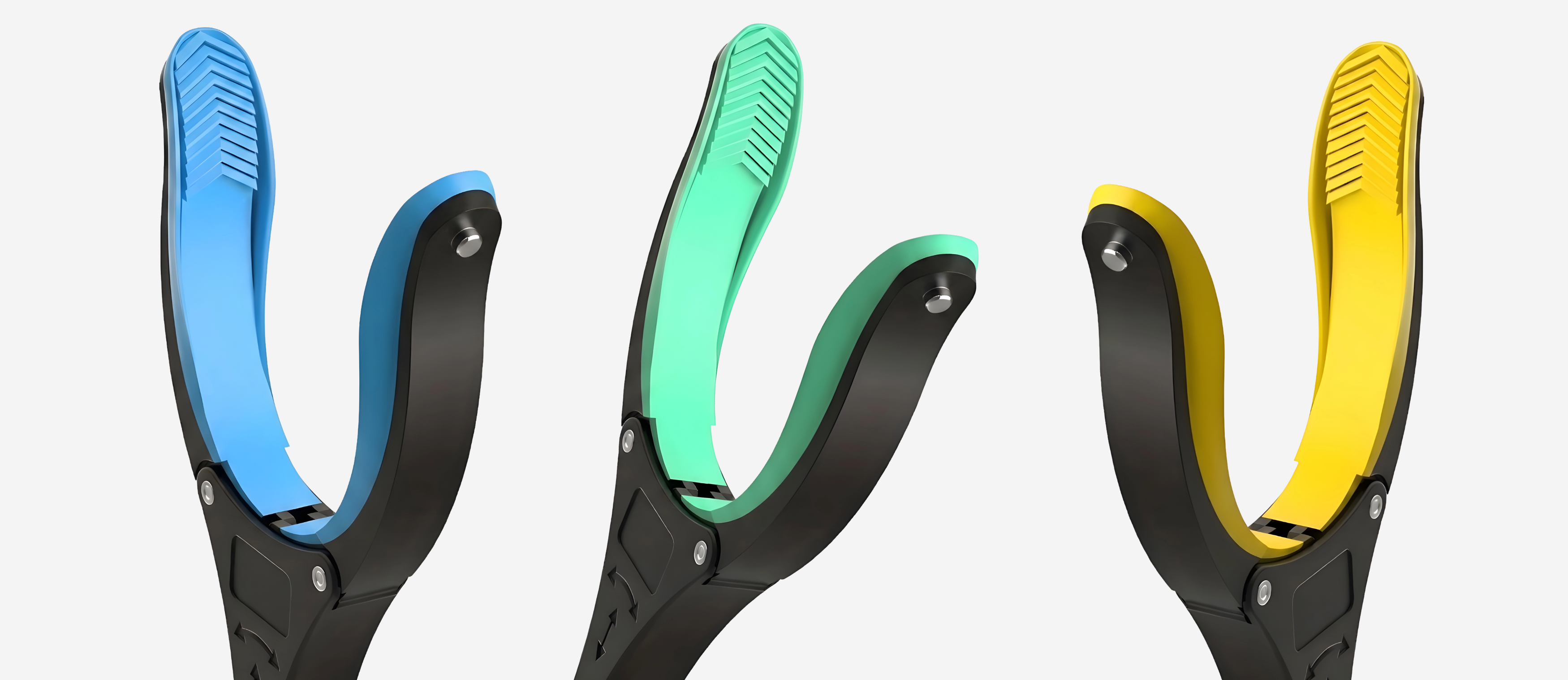
Direct answer: Stroke adaptive kitchen tools center on the one-handed kitchen strategy when hemiplegia is present. The electric jar opener is the most critical tool because it converts a two-handed task (one hand holds, one hand turns) into a one-handed task -- place and press. The reacher supports floor-level and overhead retrieval for the hemiplegic patient who cannot use the affected arm for steadying during bending. For patients with spatial neglect or visual field deficits, kitchen organization must also account for the affected side of space. The GrabbersTool Electric Jar Opener and 32-inch Reacher are the core tools.
Stroke Deficit Pattern and Adaptive Kitchen Tool Strategy
| Stroke Deficit | Kitchen Impact | Adaptive Tool or Strategy |
|---|---|---|
| Hemiplegia or hemiparesis (one-sided) | One-handed kitchen tasks; jar opening requires two functional hands; carrying heavy items with one hand dangerous | Electric jar opener essential (one hand places, one button press); suction-base cutting boards and stabilizers; one-handed kitchen strategy; lightweight cookware |
| Aphasia (language deficit) | Reading recipes difficult; communicating kitchen needs to caregiver impaired; may affect safety communication | Visual recipe cards with images; picture-based kitchen labels; caregiver support; simple familiar meals that do not require recipe reading |
| Neglect (spatial inattention) | Does not attend to objects on the affected side of space; may not notice items on affected side of kitchen; may collide with objects; may not notice food spilled on affected side | Kitchen reorganized to keep all items in attended visual field; caregiver cues during cooking; adaptive kitchen training with OT for neglect compensation strategies |
| Visual field deficit (homonymous hemianopia) | Cannot see items in the affected visual field; may not notice flame, hot surfaces, or items on the affected side | Systematic compensatory scanning of affected side; kitchen safety guards; caregiver supervision for stove tasks; items stored in intact visual field |
Browse the adaptive kitchen collection and the Electric Jar Opener for stroke survivor kitchen support.


