

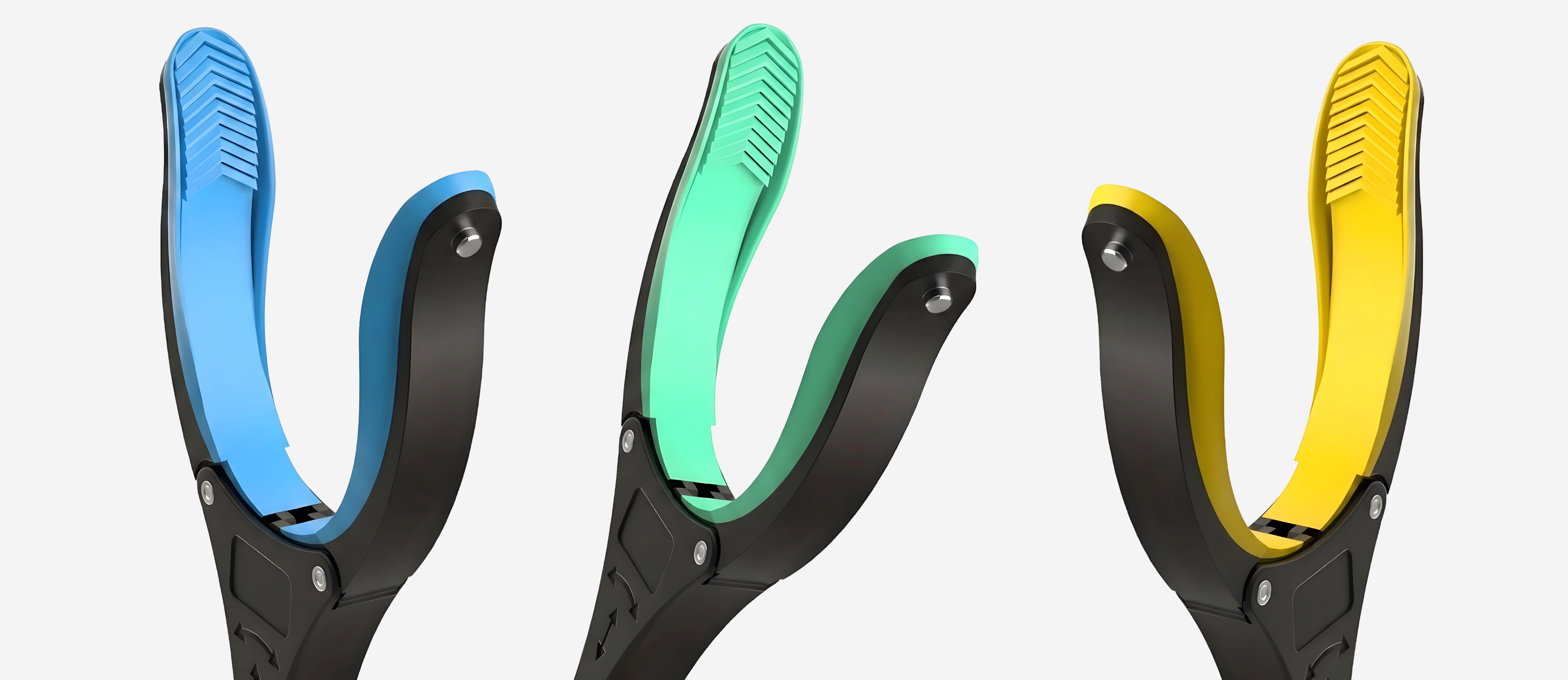
Vision impairment is primarily addressed by assistive technology specific to visual tasks -- magnification, screen readers, braille, talking devices. But some people with visual impairment also have mobility or reach limitations from conditions that commonly co-occur with vision loss (diabetic complications, age-related conditions, multiple conditions in older adults). When mobility tool selection overlaps with vision impairment, tool design features that are unimportant for sighted users become critical: a tool that requires precise visual targeting to use is much more difficult for a user with low vision.
Direct answer: For users with both mobility and vision limitations, adaptive tool selection should prioritize tools that work by tactile feedback rather than visual targeting. The reacher grabber is actually well-suited to this population -- the trigger mechanism is felt, and the jaw position can be found by touch. The electric jar opener requires visual placement on the lid but can be learned by touch with practice. The main consideration: consistent storage locations are even more important when visual scanning is limited, because the user must rely on consistent placement to locate the tool.
Adaptive Tool Suitability for Low Vision Users
| Tool | Visual Demand | Low Vision Suitability |
|---|---|---|
| Reacher grabber | Moderate -- jaw positioning on target item | Good; approach is tactile; jaw can be guided by touch; large targets work well |
| Electric jar opener | Moderate -- positioning opener on lid | Good with practice; placement can be learned by feel; activate by button |
| Non-slip mat | None -- position by feel | Excellent; no visual component |
| Long-handled dressing aids | Low -- familiar body targeting | Good; body position is known |
| Talking kitchen scale | None -- audio feedback | Excellent for vision-impaired users |
| Color-contrast tape on step edges | Low vision assisted | Specifically designed for low vision; high contrast tape aids navigation |
Consistent Placement Is Critical
For users with low vision, the most important organizational principle is absolute consistency of placement. Every adaptive tool must be in the same location every time. The electric jar opener goes on the same counter corner. The reacher goes in the same holder by the stove. When placement varies, the user must visually or tactilely search for the tool, which creates both frustration and fall risk from unnecessary movement.
The GrabbersTool 32-inch Reacher and Electric Jar Opener can both be used effectively with low vision. Browse the reacher collection and kitchen tools.


