

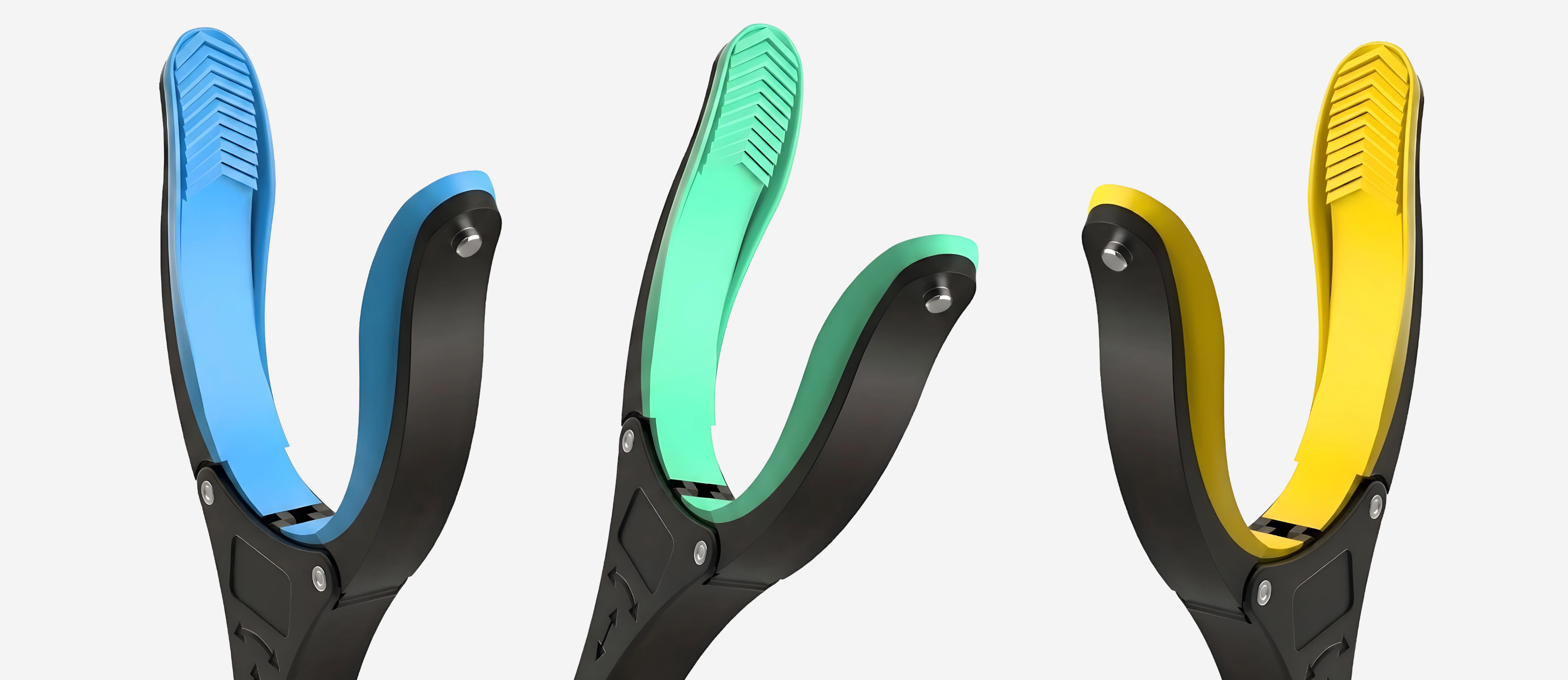
ALS (amyotrophic lateral sclerosis) presents the adaptive tool professional with the most demanding planning challenge in the field: a progressive condition with a trajectory measured in months to a few years, where the functional tools appropriate today may be insufficient in 6 months, and where the window for learning and adapting is limited by the disease pace. GrabbersTool works with ALS patients, their families, and the ALS multidisciplinary clinic teams who address adaptive equipment as part of comprehensive ALS care. The most consistent message from ALS adaptive equipment professionals: introduce tools earlier than you think you need to, because learning a tool while still functionally capable is far easier than learning it after the target function has been lost.
Direct answer: for ALS, the adaptive kitchen tool introduction timeline should be 2-3 functional stages ahead of current need. When the person with ALS begins to notice occasional jar-opening difficulty, the GrabbersTool Electric Jar Opener should be introduced -- not when jar opening becomes impossible, but when it becomes unreliable. The same anticipatory principle applies to the reacher grabber for floor retrieval as lower limb function declines, and to mobility aids as ambulation is affected.
ALS Progression Stages and Adaptive Tool Timeline
| ALS Stage | Typical Function | Adaptive Tool Priorities |
|---|---|---|
| Early (onset to 12 months): limb onset typical | One limb weakening; bimanual tasks becoming difficult | Electric Jar Opener -- compensates for early grip loss; Reacher as floor tasks become harder |
| Middle (12-24 months): bilateral involvement common | Both arms weaker; ambulation may be affected in limb-onset | Electric openers essential; Walking Cane if ambulatory; Standing Assist for chair rise |
| Late (24 months onwards): significant generalized weakness | Power wheelchair; upper limb function markedly reduced | Tool accessibility depends on residual upper limb function; ALS team and OT guide at this stage |
| Bulbar onset ALS (speech/swallowing first) | Limb function may remain near-normal early; swallowing and speech affected | Kitchen tool needs emerge later; monitor limb function for adaptive tool trigger |
Product activation force requirements for each tool are on the respective product pages. View Electric Jar Opener specifications.
ALS Multidisciplinary Clinic and Adaptive Equipment
ALS care is ideally managed through an ALS multidisciplinary clinic (ALS MDC) -- a team-based model that includes neurology, occupational therapy, physical therapy, speech pathology, respiratory therapy, and social work. The OT on the ALS MDC team conducts regular functional assessments and generates adaptive equipment recommendations as the disease progresses. GrabbersTool products are commonly recommended by ALS OTs at the early-to-middle transition, when upper limb weakness begins to affect kitchen function. Patients in an ALS MDC should not wait for the OT to bring up adaptive kitchen tools -- proactively asking at each visit about kitchen tool recommendations for the next 6 months provides anticipatory planning that reactive assessment does not.
The Emotional Dimension: Maintaining Identity Through Tool Use
ALS strips away physical function at a pace that can be emotionally catastrophic. Adaptive tools that maintain independence in specific tasks -- making your own breakfast, retrieving your own dropped items -- preserve a domain of self-authorship that matters psychologically well beyond the functional value of the task itself. GrabbersTool hears from ALS patients and their spouses who describe the period when the electric jar opener and reacher maintained breakfast independence as among the most psychologically meaningful months of the disease course. The tool is not just a functional device -- for an ALS patient, it represents preserved agency in a disease defined by loss of agency. See also: The Psychology of Accepting Adaptive Tools: Identity, Autonomy, and the Decision to Change and Adaptive Tools for People Living Alone with Progressive Conditions.
Browse Easy Grip Kitchen Openers, Reacher Grabber Tools, and Ergonomic Mobility Solutions.


