

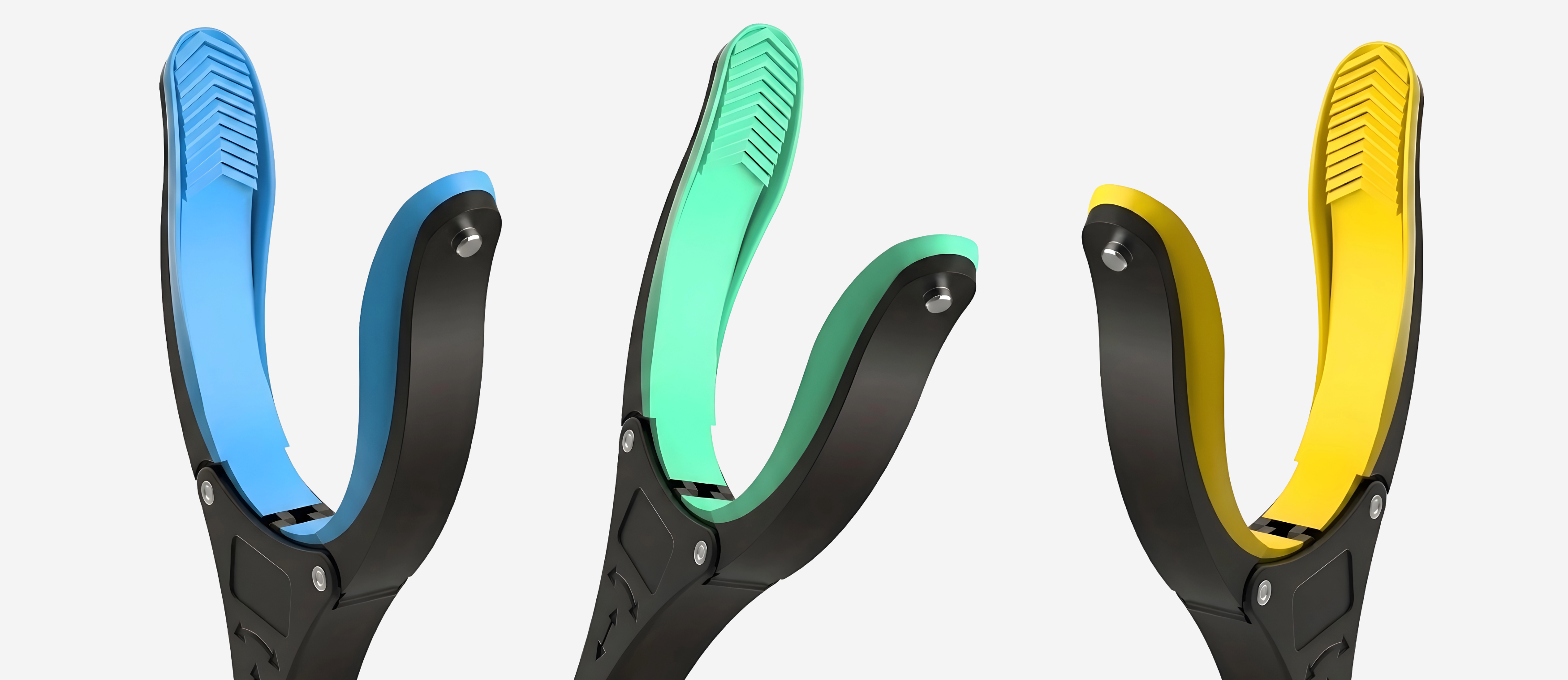
Adaptive tool recommendations for cerebral palsy in adults are less common than for children -- the assumption that CP is a pediatric condition requiring pediatric tools persists despite the reality that adults with CP manage the same motor differences throughout their lifespan, often with accumulating secondary conditions (early arthritis from spastic loading, pain from abnormal joint mechanics) that add to the primary CP presentation. GrabbersTool works with adults with cerebral palsy who have adapted extensively throughout their lives and have clear, specific insights into which tools work for their motor profile and which do not.
Direct answer: for adults with cerebral palsy, adaptive tool selection depends significantly on the type and distribution of motor involvement. Spastic hemiplegia (one side): bilateral kitchen tasks (jar opening, can opening) are the primary challenge -- the GrabbersTool Electric Jar Opener and Electric Can Opener address this. Spastic diplegia (legs primarily): floor-level retrieval is the challenge -- the 43 inch Reacher Grabber. Mixed/total body involvement: full kitchen and mobility tool set as clinically appropriate, in consultation with the individual.
CP Motor Profiles and Tool Compatibility
| CP Motor Profile | Primary Daily Living Challenge | Adaptive Tool Priority |
|---|---|---|
| Spastic hemiplegia | One-hand function only; bilateral tasks require adaptive solution | Electric Jar Opener, Electric Can Opener, 5-in-1 Multi-Opener |
| Spastic diplegia | Lower limb involvement -- gait, bending, floor access | 43 inch Reacher; Walking Cane with Cane Strap |
| Dyskinetic/athetoid CP | Involuntary movements -- sustained grip unreliable | Electric Jar Opener (button press vs sustained grip); Electric Can Opener |
| Ataxic CP | Coordination and balance -- reaching accuracy affected | Electric Jar Opener (wide jaw placement); Standing Assist Tool |
| Mixed CP (multiple motor types) | Combination of above -- individual assessment required | OT assessment for specific tool selection |
Electric opener and reacher specifications are on the product pages. View Electric Jar Opener specifications
Spasticity and Tool Trigger Mechanisms
Spasticity creates variable grip force: the spastic hand may grip tightly and then release unpredictably, or may have difficulty initiating grip against resistance. Reacher trigger mechanisms that require sustained finger pressure may be difficult for individuals with spastic hand involvement. GrabbersTool customers with spastic hemiplegia describe operating the reacher trigger with a lateral palm pressure approach rather than finger-specific grip -- using the whole hand against the trigger rather than individual finger flexion. This whole-hand technique works with some reacher trigger designs better than others -- the product page trigger mechanism description informs this selection.
Secondary Conditions in Aging with CP
Adults with CP experience accelerated musculoskeletal aging due to the biomechanical effects of spasticity on joint loading. Early osteoarthritis in the spastic limb joints, pain from chronic abnormal posture, and fatigue from the high energy cost of spastic movement patterns all accumulate through adulthood. These secondary conditions add to the primary CP adaptive tool need -- a person with CP who also develops arthritis in the affected hand needs adaptive tools for both conditions simultaneously. GrabbersTool electric openers address both CP-related grip difficulties and arthritis-related grip pain in the same tool.
Peer Network and CP Adaptive Strategies
Adults with CP who have lived with their condition for decades have often developed highly effective personal adaptive strategies -- including tool modifications, techniques, and approaches that have not been documented in clinical literature because they emerged from lived experience rather than research. CP-specific adult peer networks (United Cerebral Palsy, CP Foundation) are valuable resources for adaptive strategy sharing that complement the clinical adaptive tool guidance. GrabbersTool tools are frequently discussed in these communities, and the specific techniques that work for different CP motor profiles are knowledge held within the community.
See also: Adaptive Tools for People With Autism and Sensory Processing Differences and Occupational Therapy Home Programs and Adaptive Tools.
Browse Easy Grip Kitchen Openers, Reacher Grabber Tools, and Ergonomic Mobility.


