

Hip osteoarthritis produces a characteristic functional limitation pattern that evolves over the years from mild discomfort with activity to severe pain that limits walking and sleep. For daily function, the most consistently impacted activities are those requiring hip flexion past 90 degrees (putting on shoes and socks, rising from low seats, accessing low cabinets), hip rotation (common in walking and pivoting), and sustained walking distance. People with hip OA often develop the same functional needs as hip replacement recovery patients -- but without the specific 90-degree precaution and with a gradual rather than sudden onset. This means adaptive tools adopted for hip OA pain management are often the same tools used for hip replacement recovery.
Direct answer: The adaptive tools that help most with hip osteoarthritis pain are: reacher grabber (reduces the hip flexion required for floor retrieval), long-handled shoehorn (dressing without deep hip bend), and a raised toilet seat with arms (reduces the sit-to-stand range requiring deep hip flexion). These are also the tools prescribed for hip replacement recovery. Adopting them while still managing hip OA provides practice and familiarity for the post-replacement period if surgery occurs.
Hip OA vs Hip Replacement: Tool Needs Compared
| Tool | Hip OA Use | Hip Replacement Use |
|---|---|---|
| Reacher grabber | Reduces painful hip flexion during floor access | Required -- avoids hip flexion past 90 degree precaution |
| Long-handled shoehorn | Reduces painful hip flexion during shoe donning | Required -- avoids 90-degree precaution during shoe donning |
| Raised toilet seat | Reduces deep hip flexion and extension required for transfer | Required -- toilet must keep hip above 90 degrees |
| Shower chair | Optional; useful if standing tolerance reduced | Required for first 4-6 weeks |
| Electric jar opener | Useful if hand OA also present; energy conservation | Useful during one-arm periods with walker use |
Starting Tools Early: The Practice Advantage
Patients who begin using adaptive tools for hip OA symptom management -- before replacement surgery -- arrive at the post-operative period already proficient with the tools. The reacher that was already in the home and already part of the daily routine does not require a learning curve during the high-stress post-operative period.
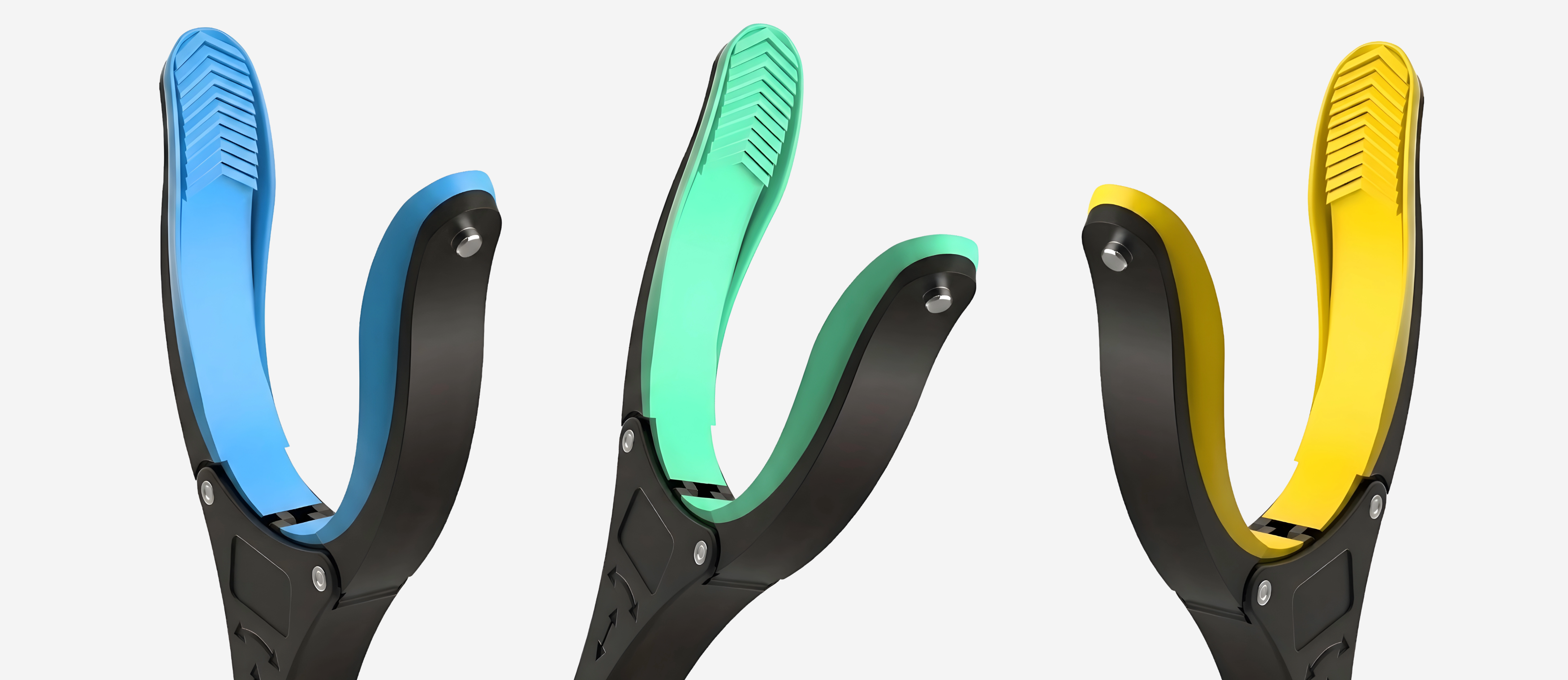
The GrabbersTool 32-inch Reacher is the primary tool for both hip OA and hip replacement. Browse the full reacher collection and adaptive kitchen tools.


