

The 90-degree hip precaution is the single most consequential restriction in total hip replacement recovery, and it is the least intuitively understood by patients who have never had the procedure. The rule sounds simple -- do not bend the new hip past 90 degrees -- but its application to the actual activities of daily life is not obvious without a clear map. Most patients violate the precaution accidentally within the first week at home, not from carelessness but from not understanding which specific movements cross the 90-degree threshold.
Direct answer: The 90-degree hip precaution prohibits any position in which the hip joint flexes past 90 degrees -- the angle at which dislocation risk is highest during the initial osseointegration period (typically 6-12 weeks). Daily activities that commonly violate this precaution: bending to floor items, sitting in low chairs, putting on socks and shoes without aids, using a standard-height toilet, and leaning forward while seated. Adaptive equipment -- reacher grabber, sock aid, raised toilet seat -- is prescribed specifically to allow these activities within precaution geometry.
The 90-Degree Rule in Practice: Activity by Activity
| Activity | Without Compliance | Hip Flexion Angle | Compliant Method |
|---|---|---|---|
| Picking up floor item | Bending forward at waist | 120-140 degrees | Reacher grabber from standing |
| Putting on socks | Forward bend to reach foot | 130-150 degrees | Sock aid -- foot comes to hand |
| Sitting in standard chair | Knees higher than hips when seated | 95-100 degrees | Raised seat 18-20 inch height |
| Using standard toilet | Significant flexion during sit-down | 100-110 degrees | Toilet riser adds 3-4 inches |
| Tying shoes | Forward bend to reach shoe | 130-150 degrees | Long-handled shoehorn or slip-on shoes |
| Reaching into low cabinet | Bending forward | 100-120 degrees | Reacher grabber from standing |
Why the Precaution Exists
Total hip replacement dislocation most commonly occurs when the hip is simultaneously flexed past 90 degrees and internally rotated or adducted. The new joint capsule and surrounding soft tissues are healing and cannot yet provide the stability that the mature capsule will offer at 12+ weeks. During this healing window, positioning the joint past the 90-degree threshold -- especially combined with internal rotation -- presents dislocation risk that is eliminated by precaution compliance.
Modern surgical approaches (anterior approach THR) sometimes carry modified or no precautions because the muscle structures involved are less disrupted. Posterior approach THR has the classic precaution set. Verify with your surgeon which approach was used and which specific precautions apply to your procedure.
The Adaptive Equipment Solution Set
The complete equipment set that keeps a hip replacement patient compliant with the 90-degree precaution:
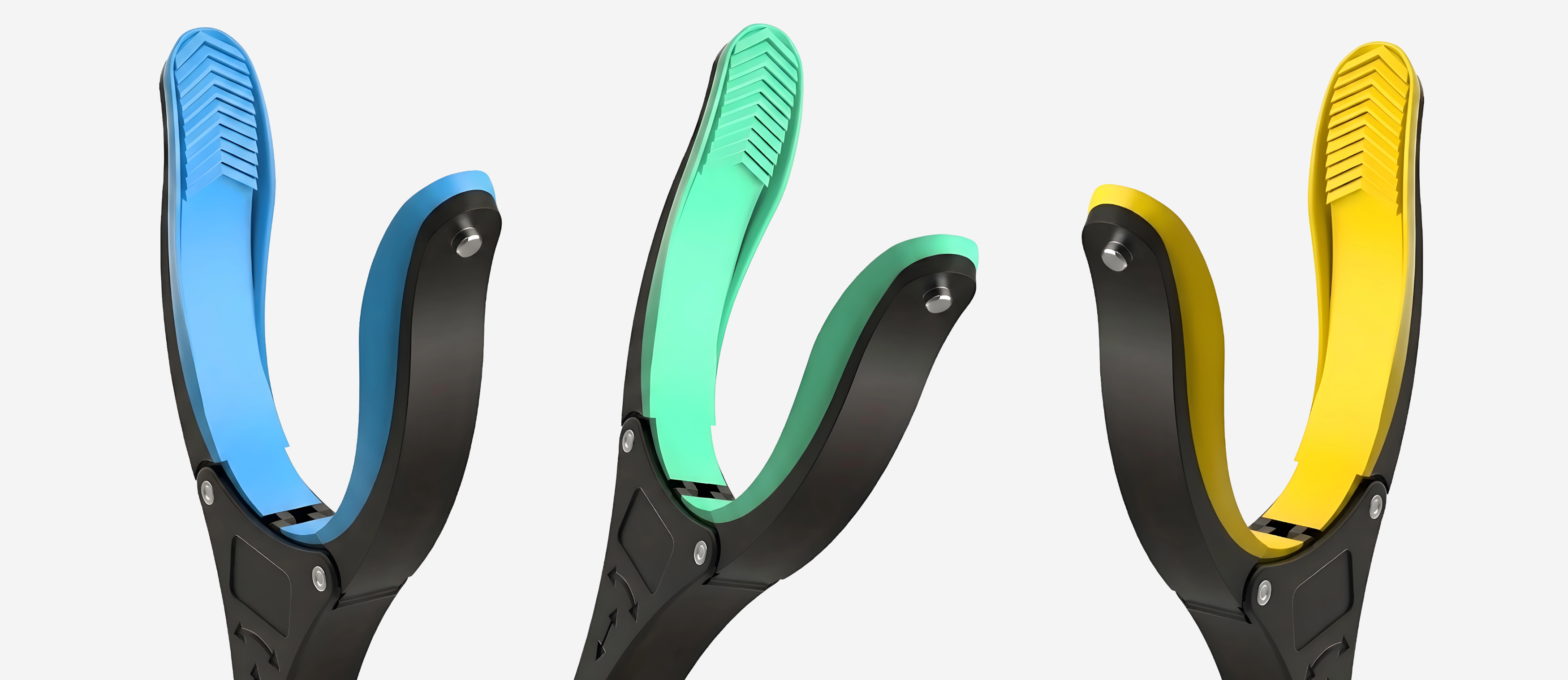
- Reacher grabber (32-inch): Floor retrieval and low-access tasks without bending. GrabbersTool 32-inch Reacher.
- Sock aid: Putting on socks without bending to the foot.
- Long-handled shoehorn: Shoe insertion without bending.
- Raised toilet seat with arms: Keeps hip above 90 degrees during toilet transfers.
- Firm chair with 18-20 inch seat height: Keeps hip above 90 degrees when seated.
Browse the GrabbersTool Reacher collection and the adaptive tools collection for hip replacement recovery.


