

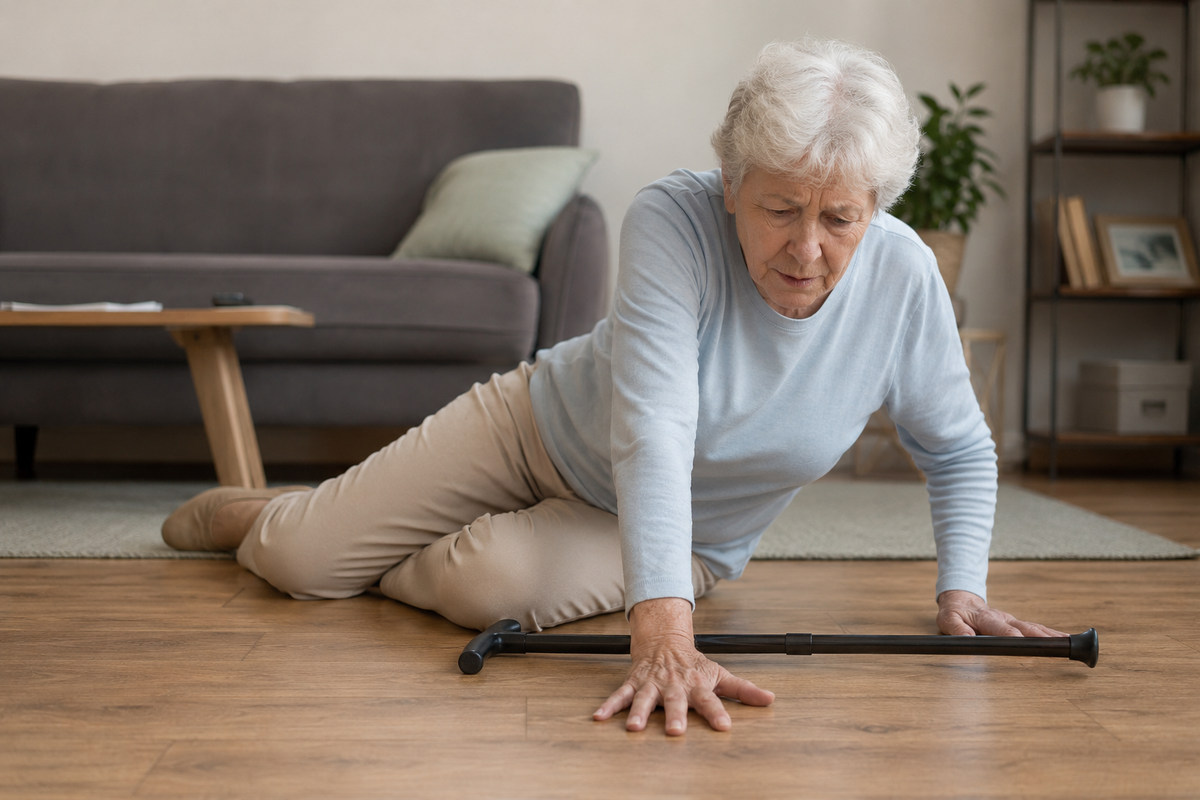
A clear, calm guide to protecting yourself in the minutes that matter most.
Every 11 seconds, an older adult in the United States is treated in an emergency room for a fall-related injury. But what most people don't realize is this: it's often not the fall itself that causes the most serious harm. It's what happens in the minutes right after — when panic, rushing, or the wrong movement turns a minor stumble into a real injury.
If you live alone, or you're helping a parent stay independent at home, knowing exactly what to do after a fall isn't optional information. It's one of the most important safety skills you can have. This guide walks through it step by step, in plain language, so you'll know exactly what to do — before you ever need it.
Why What You Do After a Fall Matters So Much
When you fall, your body goes into a brief state of shock. The natural instinct is one of two things: freeze completely, or try to jump back up immediately, the same way you might have 20 years ago. Both reactions can make things worse.
If there's an injury — even something small, like a strained wrist or a bruised hip — moving the wrong way can turn it into something far more serious. That's why the first move after a fall isn't standing up. It's pausing, checking, and moving deliberately.
The Four Steps to Get Up Safely
Pause and Check Yourself Before Moving
Give yourself 10 to 15 seconds before doing anything at all. Take a slow breath. Then check your body from the top down: your head for dizziness or confusion, your arms and wrists for pain with small movements, and your hips and legs by gently bending a knee or rotating an ankle. If anything feels sharply painful or won't move normally, stop and call for help instead of trying to get up.
Roll to Your Side — Never Sit Straight Up
Sitting straight up from your back puts sudden strain on your lower back and can trigger dizziness from a quick change in blood pressure. Instead, bend the knee of your top leg and use it, along with your arm, to roll gently onto your side. Rest here for a few seconds before continuing.
Get to Hands and Knees, Then Find Something Sturdy
Push yourself up onto your hands and knees, then look for the nearest sturdy piece of furniture — a heavy chair, a couch, or a bed frame. Take a few extra seconds to choose something solid, and crawl toward it slowly. There's no rush, and there's no reason to feel rushed.
Avoid Grabbing
- Small side tables
- Rolling or swivel chairs
- Shelving units
- Lamps or standing fixtures
Look For Instead
- A heavy armchair or sofa
- A bed frame
- A sturdy dining chair against a wall
Use the Half-Kneel Position to Stand
This is the step most people get wrong. Once you reach your sturdy furniture, place both hands on it and bring one foot flat on the floor so that knee is bent at roughly a right angle — this is the half-kneeling position, the same technique physical therapists teach patients recovering from hip surgery, because it relies on your legs instead of your back or arms. Push down through both your hands and your front foot at the same time, and slowly straighten up. Once you're standing, sit down as soon as possible and rest for a few minutes before doing anything else.
What to Do If You Can't Get Up on Your Own
Sometimes you won't have the strength to get up, or moving causes pain. This is completely normal, and it isn't a failure. If it happens, stay where you are and try to stay warm and comfortable, call for help using a phone or medical alert button, and avoid pushing through pain to "tough it out."
Keeping a phone within arm's reach at home — on a low table, not a high shelf — is one of the most overlooked safety habits for anyone living independently.
The Best Fall Is the One That Never Happens
Most falls at home come from the same two movements: bending down to pick something up, and reaching up or stretching for something out of easy reach. Both put your balance at risk for a second or two — and that's often all it takes.
A simple, low-effort change is to keep your feet planted and let a reacher-grabber tool do the bending and stretching for you — whether it's the cereal box on the top shelf or the mail you dropped on the floor. It's a small habit, but it removes two of the most common fall triggers completely, and it's often the easiest first step toward a safer home.
Quick Reference: Steps to Get Up Safely After a Fall
| Step | What to Do | Why It Matters |
|---|---|---|
| 1. Pause & Check | Breathe, check head, arms, hips, legs for pain | Prevents worsening a hidden injury |
| 2. Roll to Your Side | Never sit straight up from your back | Avoids strain and dizziness |
| 3. Crawl to Sturdy Furniture | Choose heavy, stable pieces only | Prevents a second fall |
| 4. Half-Kneel & Stand | Push up using your legs, not your back | Safest way to return to standing |
| If You Can't Get Up | Stay put, stay warm, call for help | Avoids forcing an injury |

Frequently Asked Questions
No. Pause for 10–15 seconds first and check for pain before attempting any movement. Rushing is one of the most common causes of a second injury after a fall.
Keep a phone or medical alert device within arm's reach when you're home alone — ideally on a low table rather than a shelf — so it's reachable even from the floor.
Yes. It's common, and it isn't a sign of weakness or failure. Waiting calmly for help is always the safer choice over forcing a movement that causes pain.
Most falls happen while bending down or reaching up. Using a reacher-grabber tool for everyday tasks removes both of those movements from daily routines, keeping your balance steady.
Make Bending and Reaching One Less Risk at Home
See the reacher-grabber tool designed to help you stay steady, independent, and safe.
Shop GrabberTool


