

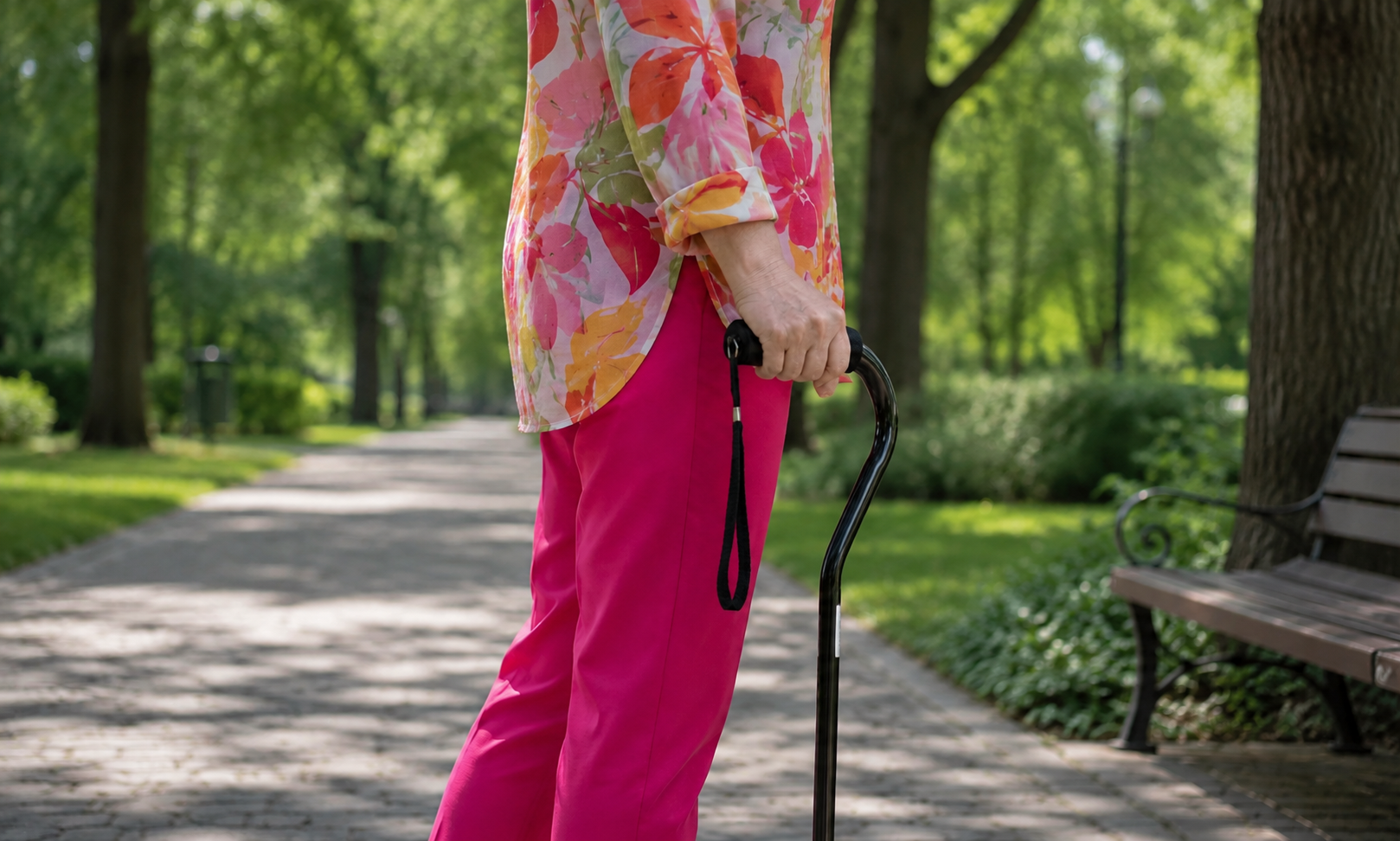
A walking cane should not feel like something you have to carry around all day. The best everyday cane is light enough to handle comfortably, strong enough to provide dependable support, and easy to adjust to the right height.
For many people, a lightweight adjustable walking cane offers a practical balance between support, comfort, and portability. A classic offset-handle design can also make a difference because the handle position gives the hand a more natural place to grip the cane.
What Makes a Good Lightweight Walking Cane?
Weight is one of the first things to consider when choosing a walking cane.
A cane that weighs less is generally easier to lift, reposition, carry, and use throughout the day. But lightweight should not mean flimsy. The important thing is to look at the cane's weight capacity, construction, adjustment system, handle, and tip together.
This particular walking cane weighs just 12 ounces and is rated to support up to 250 pounds.
That makes it suitable for people looking for a traditional walking stick that does not feel unnecessarily heavy in the hand.

Why Cane Height Matters
A walking cane should be adjusted to the person using it rather than simply used at its factory setting.
For a basic starting point, the handle should be around the level of the wrist when standing upright with the arms relaxed. When holding the cane, the elbow should remain slightly bent rather than completely straight. NHS guidance similarly recommends that the handgrip sits around wrist-bone height with the elbow slightly bent.
Getting the height right matters because a cane that is too high or too low can affect posture and balance. Guidance from NHS services also warns that incorrectly fitted walking aids can reduce stability.
Adjustable from 30 to 39 Inches
This walking cane adjusts from 30 to 39 inches in 1-inch increments.
That range makes it easier to find a comfortable height for different users without having to replace the cane with a different size.
The locking ring also helps keep the selected height secure and reduces unwanted movement or rattling.
Why Choose an Offset Handle?
The handle is one of the most important parts of a walking cane because it is where you maintain control throughout the day.
An offset handle positions the grip forward from the shaft of the cane. This creates a more natural hand position and helps distribute the load through the handle rather than concentrating it at one small point.
For people who use a cane regularly, handle comfort can be just as important as the weight of the cane itself.
This model combines a soft ergonomic offset handle with a wrist strap, giving you a comfortable place to hold the cane and an additional way to keep it close to your hand.
Lightweight Does Not Mean Weak
One common concern when shopping for a lightweight walking cane is whether a lighter design can still provide enough support.
Weight alone does not tell you how strong a cane is. Always check the manufacturer's stated weight capacity and intended use.
This cane weighs 12 ounces while supporting up to 250 pounds. That combination makes it a practical choice for someone who wants a lightweight walking cane without moving to a bulky or heavy design.

The Cane Tip Matters Too
The bottom of a walking cane is just as important as the handle.
A worn or damaged rubber tip can reduce traction and should be replaced when it becomes worn. NHS guidance specifically recommends checking the ferrule, or rubber tip, regularly because worn tips can contribute to slipping.
This cane includes a slip-resistant tip designed for everyday walking.
Even with a good cane tip, it is important to pay attention to wet floors, uneven ground, leaves, ice, and other outdoor hazards.
Who Is a Lightweight Adjustable Walking Cane For?
A lightweight adjustable cane can be a good option for adults who want additional support while walking but do not want a heavy mobility aid.
It can be useful for:
- Everyday walking around the house
- Short walks outdoors
- Shopping and errands
- Travel
- Standing and walking when extra support is helpful
- People who prefer a traditional single-point cane
- Users who need an adjustable walking cane rather than a fixed-height model
If someone needs more substantial support than a single cane can provide, a healthcare professional can help determine whether a different type of walking aid would be more appropriate. Walking aids can vary considerably in the amount of stability they provide.
Lightweight Walking Cane vs. Heavy Cane
A heavier cane is not automatically a better cane.
For everyday use, a lighter model can be easier to lift and reposition with every step. It is also easier to carry when you are not actively using it.
The goal is to find the right balance:
Light enough to handle comfortably.
Strong enough for your required weight capacity.
Adjustable enough to fit your height.
Comfortable enough for regular use.
For this reason, a 12-ounce walking cane with a 250-pound weight capacity can be an appealing alternative to heavier traditional designs.
How to Choose the Right Walking Cane
Before buying a walking cane, check these five things:
1. Weight
Look for a cane that you can comfortably lift and reposition.
2. Weight Capacity
Choose a cane with a stated capacity appropriate for the intended user.
3. Height Range
Make sure the cane can be adjusted to your correct height.
4. Handle Design
Consider an ergonomic or offset handle if grip comfort is important for everyday use.
5. Cane Tip
Look for a secure, slip-resistant tip and inspect it regularly for wear.
A properly fitted and maintained walking aid is an important part of using it safely.
The Bottom Line
A good everyday walking cane does not need to be complicated.
This lightweight adjustable walking cane combines a 12-ounce design, 30–39 inch height adjustment, 250-pound weight capacity, ergonomic offset handle, wrist strap, and slip-resistant tip in a classic format.
For anyone looking for a simple lightweight walking cane for men or women, the combination of low weight, adjustable height, and comfortable grip makes it a practical choice for everyday mobility.
FAQ
What is a good weight for a walking cane?
There is no single ideal weight for everyone, but a lighter cane can be easier to lift, reposition, and carry. This model weighs 12 ounces.
How high should a walking cane be?
The handle should generally be around wrist-bone height when standing naturally, with the elbow slightly bent.
What is the benefit of an adjustable walking cane?
An adjustable cane allows the height to be fitted to the individual user rather than relying on a fixed length.
How much weight can this walking cane support?
This walking cane is rated to support up to 250 pounds.
What height does this walking cane adjust to?
It adjusts from 30 to 39 inches in 1-inch increments.
Is a lightweight cane strong enough for everyday use?
Lightweight does not necessarily mean weak. The important specification is the manufacturer's stated weight capacity. This model weighs 12 ounces and supports up to 250 pounds.


