

Gardening is one of the activities most consistently reported by older adults and people with mobility limitations as something they have reduced or abandoned — not because they lost interest, but because the physical requirements of bending, kneeling, and reaching ground level exceeded what their body could manage safely. A reacher grabber tool does not restore full kneeling capacity. It does restore a meaningful portion of gardening access that was lost with bending and kneeling ability — and for many people, that portion is enough to continue engaging with the activity they value.
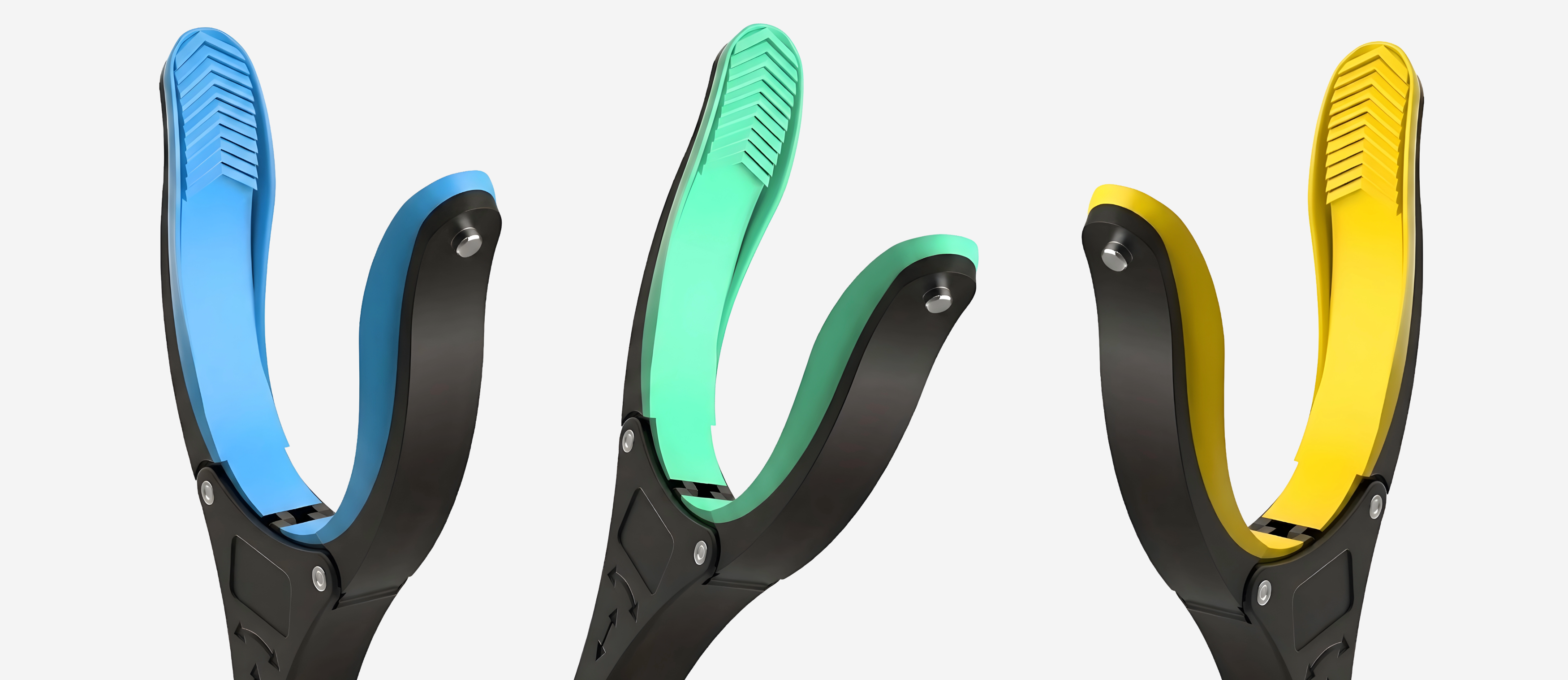
Direct answer: a reacher grabber tool in a garden context replaces the need to bend or kneel for: retrieving dropped tools or gloves from the ground, picking up debris, deadheading flowers at low height, and reaching across a raised bed without leaning. The GrabbersTool 43" Reacher provides the length needed for most garden floor-level tasks from a standing position, and the rubber jaw handles gardening objects — gloves, hand tools, small pots, cut flowers — reliably.
What a Reacher Tool Does in the Garden
- Retrieves dropped tools from the ground — a trowel, pruner, or glove dropped during garden work no longer requires kneeling or deep bending to recover
- Reaches across raised beds — for beds wider than arm-length reach, the 43" reacher extends access to the back half of the bed without requiring the user to lean over the bed edge
- Manages lightweight debris — picking up fallen branches, dead flower heads, and lightweight litter from garden paths without crouching
- Positions plant supports — pushing a stake into soft soil or retrieving a cane that fell within the bed from a standing position
- Carries items between the garden and the house — gripping a glove or small pot while walking, freeing the other hand for a walking aid or fence grip
What a Reacher Tool Cannot Do in the Garden
Honest assessment of outdoor limitations:
- Deep soil work — digging, aerating, and planting require either adapted long-handled tools or kneeling; a reacher grabber is not designed for soil contact tasks
- Heavy object lifting — plant pots, bags of soil, rocks — the jaw mechanism is designed for approximately 1.5kg sustained; heavier objects require direct handling or a dolly
- Precise plant work — pruning, tying, and delicate plant handling require finger-level precision that a jaw mechanism cannot replicate
- Wet or muddy conditions — heavy clay or mud on object surfaces reduces rubber jaw grip reliability; the magnetic tip does not engage soil-covered metal objects reliably
Outdoor vs. Indoor Use: How Conditions Differ
| Factor | Indoor Use | Outdoor / Garden Use | Impact on Tool Choice |
|---|---|---|---|
| Surface under foot | Flat, stable | Uneven, soft, potentially wet | Balance is more challenging — 43" reduces lean required |
| Object surfaces | Clean, dry | Often muddy, wet, textured | Rubber jaw handles rough better than smooth wet |
| Target object shape | Predictable (household items) | Irregular (tools, plant matter) | Wide jaw handles irregular objects better |
| Weather | Controlled | Variable — rain, sun, wind | Aluminum frame is weather-resistant; rubber jaw unaffected |
| Walking aid use | Optional | More common on uneven terrain | One-handed operation becomes essential outdoors |
The jaw rubber material specification and frame material for GrabbersTool models — relevant for outdoor durability — are detailed on the product pages. The aluminum frame and rubber jaw components are appropriate for outdoor use; the tool is not designed for submersion or high-pressure washing. View 43" model →
The Raised Bed Solution
Raised garden beds are the most common structural adaptation for gardeners with limited bending capacity — beds elevated to 60–90cm allow most work to be done from a seated or slightly bent standing position. A reacher grabber extends the effective working depth of a raised bed: instead of requiring the user to lean across to reach the back half, the 43" reacher adds approximately 80cm of additional horizontal reach from the bed edge.
For a standard 120cm-deep raised bed, a person standing at one side and using a 43" reacher can reach across the full depth — eliminating the need to walk around or lean dangerously over the edge.
Using the Reacher With a Walking Aid in the Garden
The garden presents the most challenging environment for simultaneous reacher and walking aid use because the ground surface is uneven. GrabbersTool recommends:
- Use the walking aid for stability during movement between areas; pause and plant the cane before activating the reacher
- On soft ground, confirm the cane tip has a stable footing before shifting weight to retrieve with the reacher arm
- The Cane Strap can attach the cane to a garden fence post or raised bed frame temporarily, freeing both hands for a brief task before reattaching
The Gardening Independence Outcome
GrabbersTool customers who garden report a consistent pattern: the specific tasks that had become limiting — retrieving dropped items, reaching across beds, managing debris — are resolved by the reacher, and the gardening session becomes possible again. The tool does not restore what was lost completely. It restores enough that the activity continues.
For many people, gardening represents an identity, not just an activity. The ability to continue it — even in modified form, even with adaptive tools — is a meaningfully different outcome from stopping entirely.
See also: Aging in Place: What Independence at Home Actually Requires for the broader independence context, and Grabber Tool Length Guide: 32 vs 43 Inch for the length selection relevant to outdoor reach.
Browse the Long Reach Grabber Tools collection for GrabbersTool's extended-length models.


