

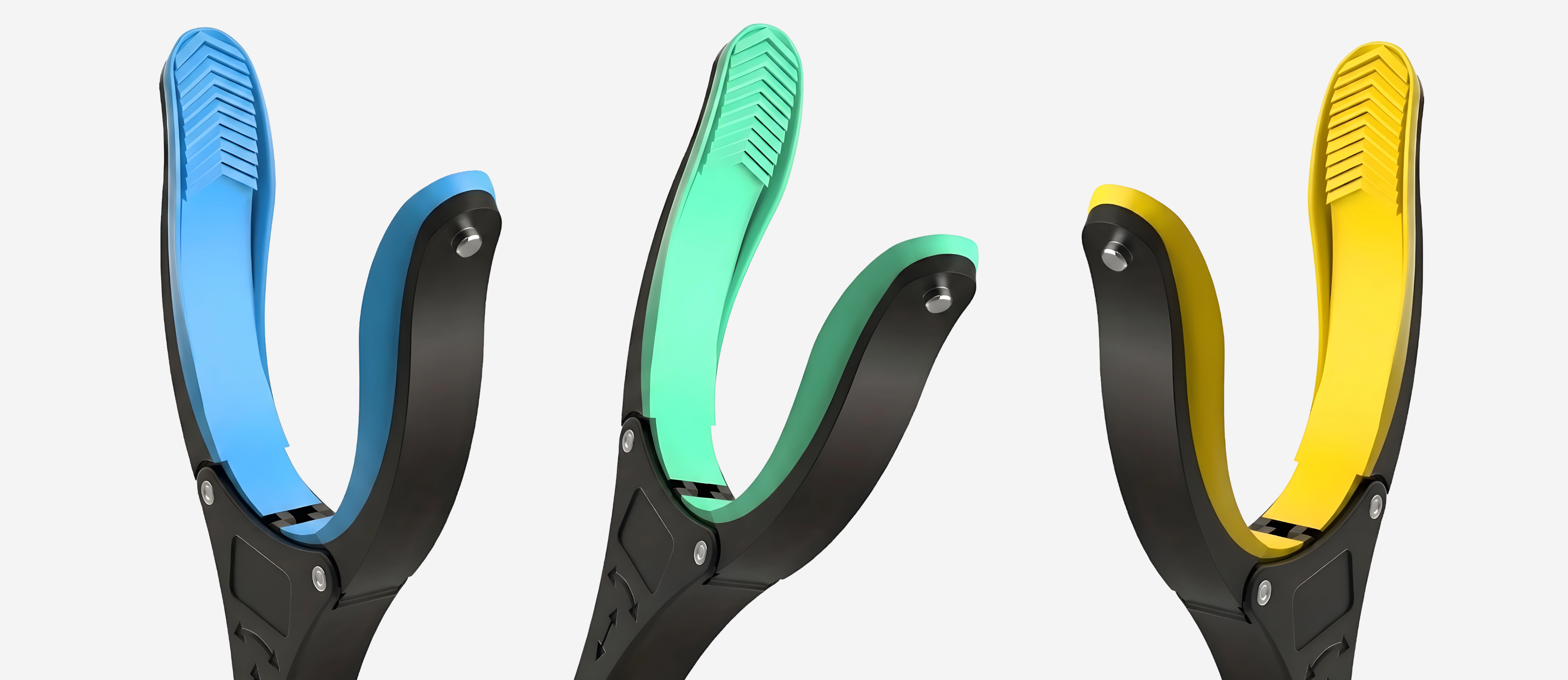
Reacher grabbers and grabber claws are two terms often used interchangeably but technically describing tools with different design lineages and intended uses. Understanding the distinction helps buyers choose the right tool for their specific need -- particularly relevant because the adaptive medical market and the general consumer market have different design priorities, and a cheap grabber claw from a toy store or general retailer is built to very different standards than a reacher grabber designed for daily mobility aid use.
Direct answer: The practical difference between a reacher grabber and a grabber claw is primarily one of construction quality and intended use. Reacher grabbers (the adaptive medical category) are designed for daily use by people with mobility limitations: rated grip capacity, padded jaws for varied objects, longer shafts for floor-to-hand reach from a standing position, ergonomic trigger handles. Grabber claws (often sold as novelty or general-use tools) are lighter-duty, shorter, often plastic-only construction, and not rated for the sustained daily use of a mobility aid. If the tool will be used daily as a mobility aid, choose a reacher grabber -- not a grabber claw.
Comparison: Reacher Grabber vs Grabber Claw
| Feature | Reacher Grabber (Adaptive Medical) | Grabber Claw (General Consumer) |
|---|---|---|
| Intended use | Daily mobility aid; prescribed by OT | Occasional use; novelty/convenience |
| Shaft material | Anodized aluminum (typically) | Plastic or thin steel |
| Shaft length | 26, 32, or 43 inches (standardized) | Varies; often shorter (18-24 inches) |
| Jaw design | Foam-padded; rated grip capacity; magnetic tip (some) | Plastic claw; no padding; no rating |
| Handle design | Pistol-grip ergonomic; designed for weak hands | Standard trigger; not ergonomically specified |
| Durability rating | Typically rated for 5 lbs grab capacity; daily use | Not rated; lower durability |
| Price | Higher (adaptive medical product) | Lower (general consumer product) |
When a General Grabber Claw Is Fine
If the use is occasional -- reaching a TV remote behind the couch, picking up an item that rolled under furniture -- a general grabber claw may be sufficient. The issue is durability and safety: they are not designed for the daily repeated use of a mobility aid and will fail faster. For someone whose independence depends on the tool working every day, that failure mode is unacceptable.
The GrabbersTool 32-inch Reacher and 43-inch Reacher are adaptive medical-grade tools designed for daily mobility aid use. Browse the full reacher collection.


