

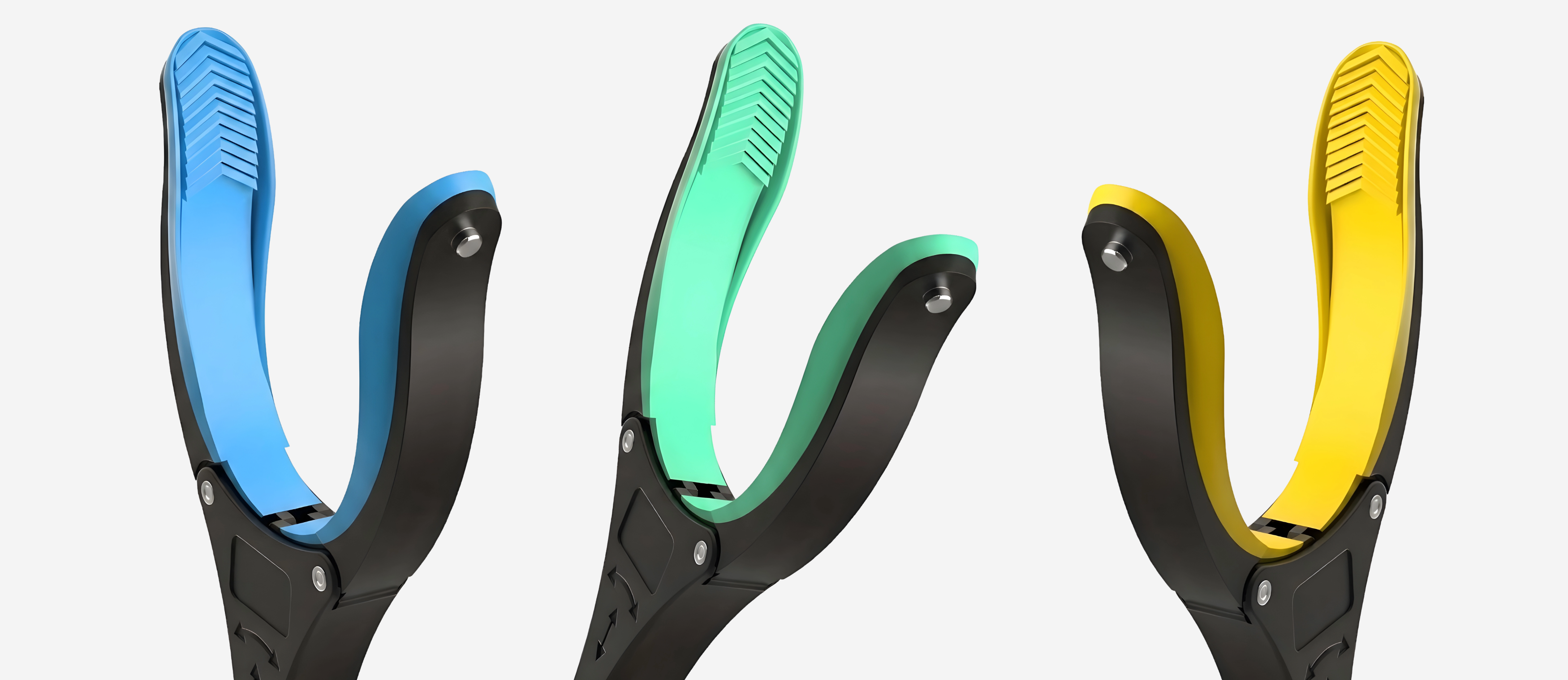
Occupational therapists (OTs) are the primary health professionals who assess the need for adaptive daily living equipment including reacher grabbers. OT assessment of reacher need involves evaluating the patient functional deficits (what they cannot do independently), identifying the specific activity limitation (bending to floor, overhead reaching, one-arm tasks), selecting the appropriate reacher type and length, and providing hands-on training in correct use technique. Reacher grabbers are among the most commonly prescribed adaptive aids in OT practice, appearing on almost every post-hip-replacement and post-spinal-surgery discharge kit, as well as in OT assessments for arthritis, neurological conditions, and fall prevention. This clinical guide describes how OTs approach reacher prescription -- the clinical reasoning behind the tool selection.
Direct answer: Occupational therapists prescribe reacher grabbers based on specific functional deficits identified during activity analysis. The most common OT indications for reacher prescription are: post-hip-replacement hip precautions (bending restriction), post-lumbar-surgery bending limitation, fall prevention in balance-impaired patients (eliminates the bending that is high-risk), arthritis-related reduction in spinal or hip flexibility, and wheelchair mobility (seated reach extension). Length selection follows the rule: 32-inch for standing ambulatory adults, 43-inch for wheelchair users and very tall individuals. The GrabbersTool 32-inch Reacher and 43-inch Reacher meet these OT prescription criteria.
OT Reacher Prescription: Condition, Indication, and Length Selection
| Condition | OT Prescription Indication | Recommended Length |
|---|---|---|
| Total hip arthroplasty (THA) | Hip precautions mandate no bending past 90 degrees; reacher replaces all floor and low-level retrieval during 6-8 week precaution period; OT provides in hospital before discharge | 32-inch (ambulatory with walker or crutches) |
| Lumbar spinal fusion or discectomy | No bending restriction of 4-6 weeks; reacher replaces floor retrieval; OT provides in hospital or outpatient | 32-inch (ambulatory) |
| Rheumatoid arthritis with spine and hip involvement | Chronic bending limitation from arthritis; reacher for ongoing floor and overhead reach compensation; OT provides in clinic or home visit | 32-inch (ambulatory); 43-inch if wheelchair user |
| Fall prevention in older adults | Bending to floor is the highest-risk fall position in elderly; reacher eliminates this movement; OT provides in home safety evaluation | 32-inch (most ambulatory elderly) |
| Wheelchair mobility (any cause) | Floor and extended reach from seated position requires longer reacher; standard ADL reach extension from wheelchair | 43-inch (standard wheelchair recommendation) |
| Post-stroke hemiplegia | One-arm function; reacher allows one-handed floor retrieval; balance support during bending; OT provides in inpatient rehab | 32-inch (ambulatory post-stroke); 43-inch (wheelchair user) |
Browse the GrabbersTool reacher collection or compare the 32-inch and 43-inch models.


