

For people with rheumatoid arthritis, the morning is not a fresh start. It is the most demanding functional period of the day — the window when inflammatory joint stiffness is at its worst, when grip strength is at its lowest, and when the tasks that must happen (medication, food preparation, dressing) require exactly the hand and joint function that is most compromised. Occupational therapists who work with RA patients structure daily routines around this reality: the morning stiffness window requires the most adaptive support, and the tools that reduce joint load during this period have an outsized impact on the entire day.
Direct answer: the morning stiffness window in rheumatoid arthritis typically lasts 30 minutes to several hours, during which grip strength and fine motor function are most impaired. The adaptive tools that matter most during this period are those that eliminate grip-dependent tasks — the GrabbersTool Electric Jar Opener for medication bottles and breakfast jars, the Electric Can Opener for food preparation, and the Reacher Grabber for floor retrieval without hand compression loading.
The Physiology of Morning Stiffness in RA
Morning stiffness in rheumatoid arthritis is caused by accumulation of inflammatory fluid in joint spaces during sleep, when joint movement ceases. The fluid exerts pressure on the joint capsule and surrounding tissue, causing the stiffness and pain that characterize the morning period. As the joint warms with activity and movement, the fluid disperses and stiffness decreases — which is why RA morning stiffness, unlike the brief stiffness of osteoarthritis, typically requires sustained movement to resolve.
The clinical significance of morning stiffness duration is well-established in rheumatology — it is used as a marker of disease activity and treatment response. For the daily living context, the implication is that the morning routine must be planned for the lowest functional state of the day.
Joint Protection Principles: What Occupational Therapists Teach
Occupational therapy for RA is organized around joint protection principles — ways of performing tasks that minimize the inflammatory and mechanical load on affected joints. The core principles:
- Avoid prolonged grip: sustained tight grip (holding a steering wheel, gripping a jar, carrying a bag with fingers) maintains compressive load on inflamed small joints. Use palms, forearms, or mechanical aids instead.
- Distribute load across larger joints: carry items in the crook of the elbow rather than with finger grip; use both hands to lift rather than one; use aids that engage larger muscle groups.
- Avoid positions that stress joints at the end of range: turning a manual can opener to the end of wrist rotation, fully extending a stiff finger — these end-range positions are higher load on inflamed tissue.
- Respect pain as a signal: pain during a task indicates that load is exceeding capacity — the task should be modified or stopped, not pushed through.
Morning Task Adaptation: The First Hour
| Morning Task | Joint Load Pattern | Adaptive Modification | GrabbersTool Tool |
|---|---|---|---|
| Medication bottle opening | Pinch grip + rotation — high finger joint load | Electric opener or pre-loosened cap the night before | Electric Jar Opener |
| Jar of spreads, breakfast food | Bilateral grip + torque — peak morning load | Electric jar opener — zero hand compression | Electric Jar Opener |
| Can of food | Sustained rotary squeeze | Electric can opener | Electric Can Opener |
| Dropped item retrieval | Floor bend — lower limb and trunk load | Reacher grabber — no joint compression on hand | Reacher Grabber |
| Dressing — buttons, fasteners | Fine motor pinch grip — maximum small joint stress | Elastic laces, velcro fasteners, dressing aids | — |
| Coffee/kettle preparation | Grip on heavy container — wrist and finger load | Lightweight kettle; two-hand carry on palm | — |
The grip-free activation mechanism of GrabbersTool's electric openers — which determines whether operation is possible during peak morning stiffness — is detailed on the product pages. The button activation design requires palm pressure rather than finger pinch. View jar opener → | View can opener →
The Reacher's Role in RA Morning Routine
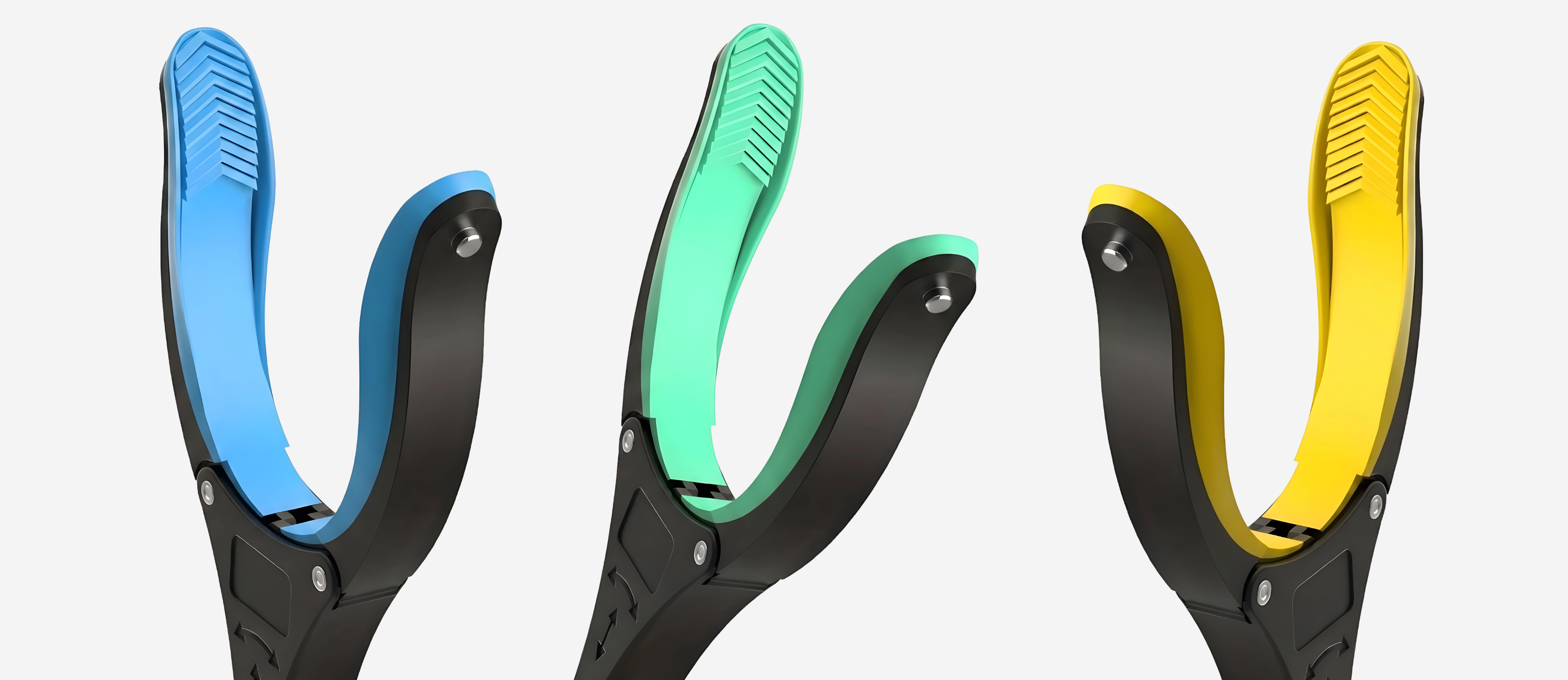
The reacher grabber is relevant to RA morning management for a reason that is not obvious: the trigger mechanism. A low-trigger-force reacher requires less grip compression than manually reaching for and picking up an object from the floor — which requires the fingers to close tightly around an object, often at an awkward angle.
The GrabbersTool reacher's trigger activates with light squeeze pressure — engaging the palm and proximal finger joints rather than the distal joints that RA most commonly affects. GrabbersTool customers with RA who use the reacher in the morning consistently report that it is more comfortable to use during morning stiffness than picking objects up directly, which is a meaningful finding about the tool's grip mechanics.
Planning the Morning Around the Stiffness Pattern
The most effective RA morning strategy combines task timing with adaptive tools:
- Prepare the night before: open the medication bottle, set out the breakfast items, put the can opener on the counter — reducing the morning task list for when function is lowest
- Allow time before demanding tasks: give the stiffness window time to improve before beginning tasks that require fine motor function
- Warm hands before use: warm water, heat packs, or gentle movement before grip-dependent tasks reduces stiffness faster
- Use adaptive tools as default, not backup: using the electric opener every morning, not only on bad days, removes the judgment call about "whether today requires it"
Beyond the Morning: The Flare Day
RA flares — periods of acute disease activity with worse than baseline inflammation — can occur throughout the day. The adaptive tool setup that works for morning stiffness is the same setup that works during a flare. GrabbersTool customers with RA report that the tools purchased for morning management become the primary tools for flare-day management — and that having them established as part of the routine means no adjustment is needed when a flare arrives.
See also: Jar Opener for Arthritis: Why Grip Strength Is Not the Real Problem for the full biomechanical explanation, and How to Make a Kitchen Accessible Without a Renovation for the broader kitchen independence context.
Browse the Easy Grip Kitchen Openers collection and Ergonomic Mobility collection for all GrabbersTool adaptive tools.


