

Shoulder impingement — the compression of the subacromial structures (bursa, rotator cuff tendons) between the humeral head and the acromion during overhead arm movement — is among the most common causes of shoulder pain in adults over 40. The primary clinical instruction is to avoid the arc of movement that compresses these structures: overhead reaching and reaching with the arm raised above 90 degrees of shoulder abduction or flexion. This instruction conflicts directly with the overhead reaching required to access kitchen shelving, upper closet shelves, and overhead storage. The conflict between clinical guidance and home function is where the reacher grabber intervenes.
Direct answer: for shoulder impingement, the GrabbersTool 43" Reacher Grabber is the specific tool recommended for overhead shelf access without raising the arm into the impingement arc. At 43 inches, the tool reaches upper kitchen shelf height from floor-standing position with the arm at approximately 90 degrees of forward flexion or less — below the impingement zone. The shoulder is loaded minimally at this arm position, and the shelf object is retrieved without raising the arm overhead.
The Impingement Arc and Daily Kitchen Reach
Shoulder impingement pain classically occurs in the arc from 60-120 degrees of shoulder abduction — the range where the subacromial space is narrowest and the bursa and tendons are most compressed. Reaching overhead to a shelf at or above head height typically requires 120-160 degrees of shoulder elevation — well within and above the pain arc for impingement patients.
Using a 43-inch reacher to access the same shelf from floor-standing position requires the shoulder to be at approximately 45-70 degrees of forward flexion with some horizontal abduction — a position that clears the impingement arc for most patients. The reach is through the tool, not through the shoulder elevation.
| Task | Without Reacher (Shoulder Load) | With 43" Reacher (Shoulder Load) |
|---|---|---|
| Upper cabinet shelf (150 cm height) | Shoulder elevation 120-140 degrees — within impingement arc | Shoulder at 60-70 degrees forward flexion — below impingement arc |
| Second refrigerator shelf | Shoulder at 90-110 degrees — borderline impingement zone | Shoulder at 45-60 degrees — below impingement zone |
| Overhead storage box | Full overhead reach 150+ degrees — pain arc peak | Tool extension replaces shoulder elevation — arm stays low |
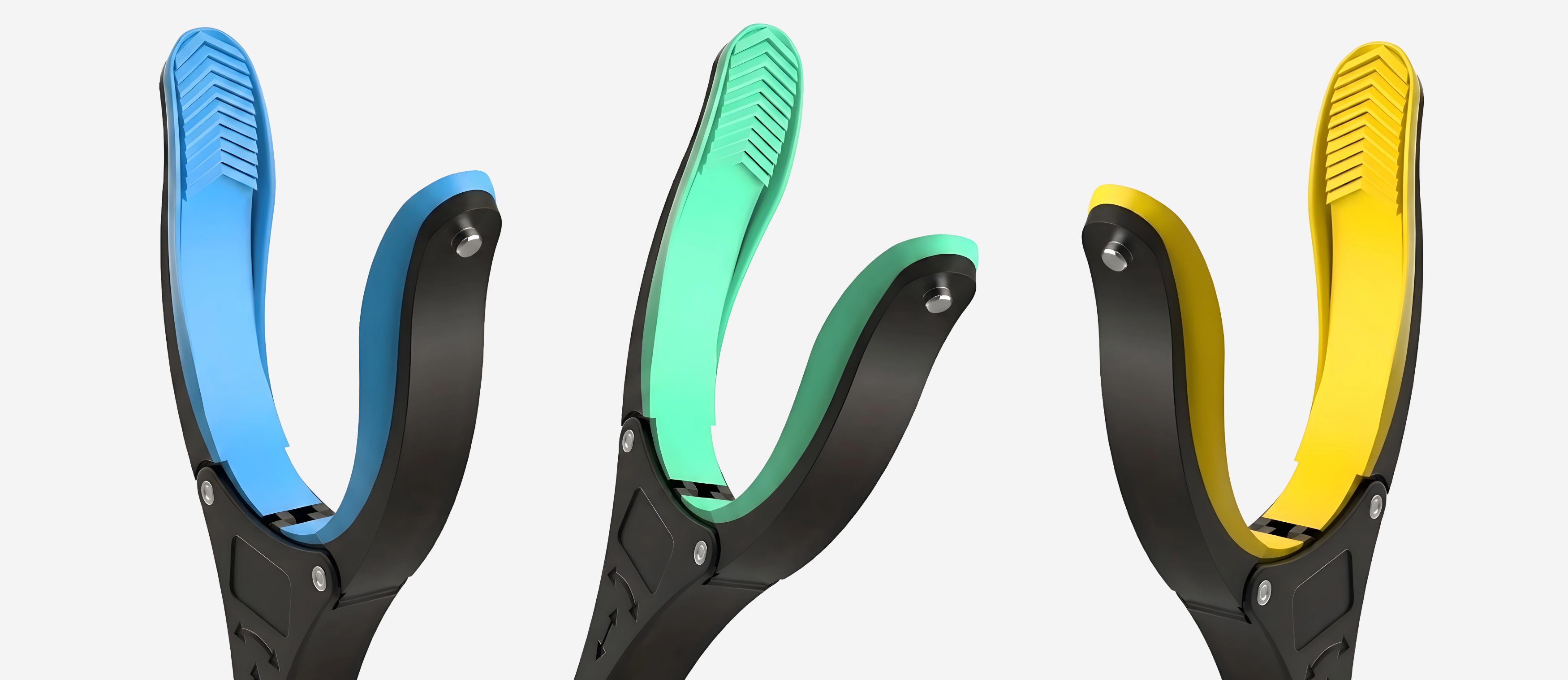
The GrabbersTool 43" Reacher Grabber reach specifications — actual extension length, jaw opening width, and weight — are on the product page. Weight is particularly relevant for shoulder impingement: holding a heavy tool at 60-70 degrees of shoulder flexion is its own shoulder loading. The tool weight should be minimized for this use case. View 43" Reacher Grabber specifications
Below-Shoulder Reach: When the 32-Inch Reacher Applies
Shoulder impingement does not affect below-shoulder reach in the same way — reaching forward and down is generally within a comfortable range of motion for impingement patients. However, if impingement coexists with other conditions (arthritis, back pain, post-surgical restriction) that also limit bending, the 32-inch reacher remains relevant for floor-level retrieval. The GrabbersTool 32" Reacher Grabber addresses this use case.
During Physiotherapy: Protecting Healing While Maintaining Function
Shoulder impingement physiotherapy typically includes strengthening of the rotator cuff and posterior capsule, stretching of the anterior capsule, and scapular stabilization exercises. The treatment protocol is designed to restore full range of motion without the impingement. During the treatment period, avoiding the impingement arc during daily life activities is part of the therapeutic approach — the reacher prevents the overhead reaches that would aggravate the condition during the period when the physiotherapy is attempting to reduce the inflammation.
Post-Surgical Shoulder: When the Same Tool Applies
Rotator cuff repair surgery (see Rotator Cuff Surgery Recovery: Adaptive Tools for One-Arm Living) requires avoiding overhead reach during the immobilization and early rehabilitation phases. The 43-inch reacher used for shoulder impingement management is the same tool used during rotator cuff repair recovery — the overhead reach restriction is more severe post-surgically but the tool application is identical.
Browse the full reacher grabber range at Reacher Grabber Tools and Long Reach Grabber Tools.


