

Stroke rehabilitation addresses walking, speech, and swallowing before it addresses kitchen function. By the time a post-stroke patient is home and asking about kitchen independence, they are past the acute care phase and navigating daily life with hemiplegia (complete one-sided paralysis) or hemiparesis (one-sided weakness) that their therapists may have addressed in general terms but that the specific kitchen environment has not been adapted for. GrabbersTool hears from caregivers of stroke survivors who want to restore some kitchen independence for their family member, and from stroke survivors themselves who are determined to manage their own meals. The adaptive tool answer for hemiplegia is the same as for any one-limb situation: tools designed for single-arm operation.
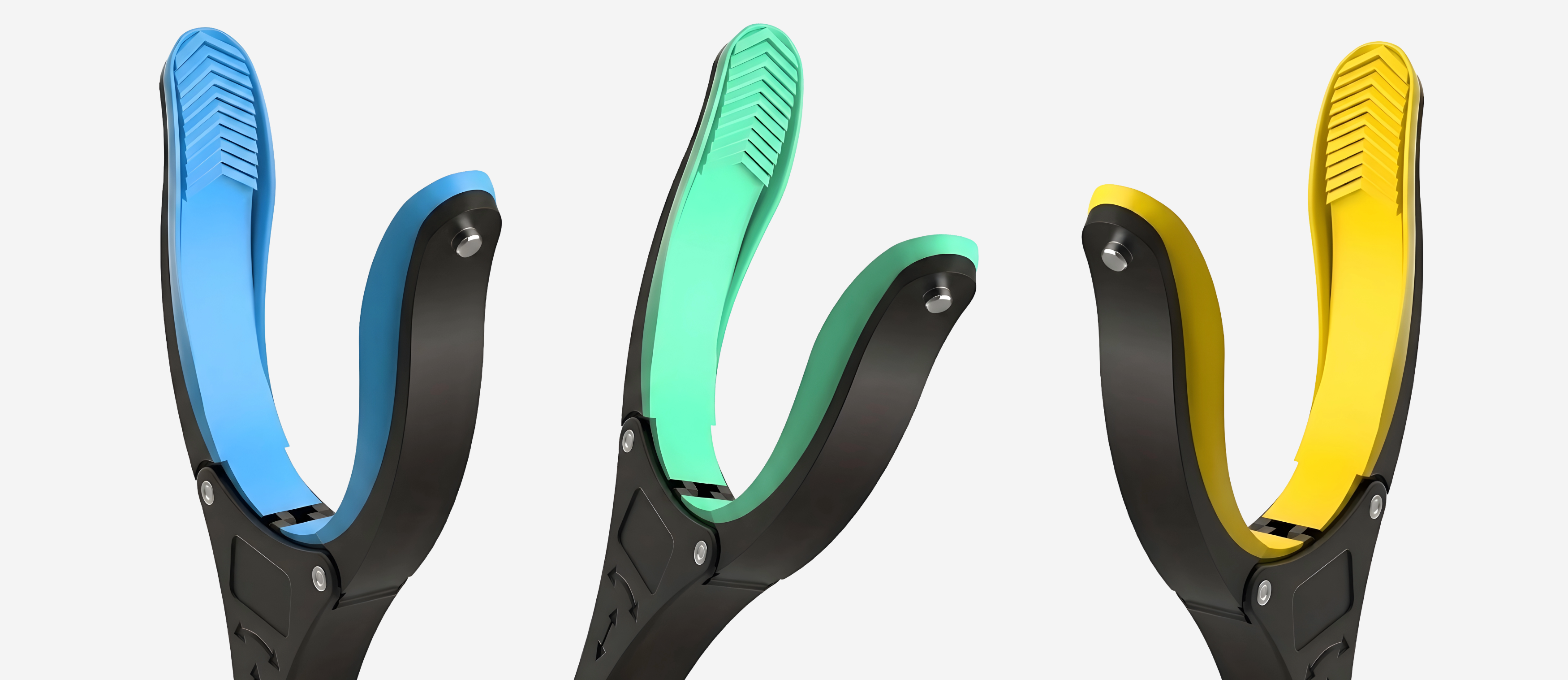
Direct answer: for post-stroke hemiplegia or hemiparesis, the primary adaptive kitchen tools are those that operate with one hand. The GrabbersTool Electric Jar Opener is designed for single-limb operation: jar placement with the functional hand, button press with the functional hand. The affected arm is entirely passive. The Electric Can Opener is similarly one-limb operable. For floor retrieval, the Reacher Grabber trigger operates with a single-hand squeeze.
Stroke Functional Profile and Kitchen Adaptive Needs
| Post-Stroke Manifestation | Kitchen Task Affected | Adaptive Tool |
|---|---|---|
| Hemiplegia (complete one-sided paralysis) | All bimanual tasks impossible -- jar holding + opening, can opener two-hand requirement | Electric Jar Opener -- one-limb operation; jar self-stabilized in device |
| Hemiparesis with grip weakness | Affected hand cannot hold or apply force reliably; bimanual tasks unreliable | Same electric opener approach; affected hand provides only light stabilization if any |
| Spasticity in affected arm | Affected arm may be held in flexion or extension -- varies by spasticity pattern | Electric opener does not require affected arm participation |
| Shoulder subluxation (affected arm) | Affected shoulder painful; arm hanging increases subluxation | Electric tools used with affected arm supported or in sling position |
| Balance and gait impairment | Standing at counter while using functional arm for tasks -- balance challenge | Walking Cane for kitchen ambulation support; counter lean technique |
Full product specifications are on each product page. View Electric Jar Opener.
Stroke and Aphasia: Tool Selection Communication
Aphasia -- language impairment from stroke -- affects communication but not cognition for many stroke survivors. A person with Broca aphasia may have near-normal comprehension but severely limited speech production. When selecting adaptive tools with or for someone with aphasia, visual demonstration is more effective than verbal description. GrabbersTool product pages with images and video demonstrations serve this population better than text-heavy descriptions. Caregivers and OTs working with aphasic stroke survivors should demonstrate tools physically before asking the patient to use them, and should confirm comprehension through demonstration rather than verbal questioning.
Stroke Recovery Timeline and Adaptive Tool Evolution
Stroke recovery is not static: most recovery of motor function occurs in the first 3-6 months, with some patients showing improvement up to 2 years post-stroke. The adaptive tool setup appropriate at 2 weeks post-discharge may be insufficient or excessive at 6 months. GrabbersTool customers who are stroke survivors describe returning to some bimanual tasks as function improves -- the electric jar opener transitions from essential (total hemiplegia) to preferred (significant hemiparesis) to convenient (mild residual weakness) as recovery progresses. The tool is appropriate at each stage for different reasons. An OT assessment at multiple points during the recovery window helps calibrate the tool set to the current functional level. See also: OT Assessment Guide: Evaluating Adaptive Tool Needs for Daily Living.
Browse Easy Grip Kitchen Openers and Reacher Grabber Tools.


