

There is a consistent pattern in how people first contact GrabbersTool: they have been managing without asking for help for longer than was comfortable, and the purchase of a grabber tool is the moment they choose a different solution — one that does not require another person. This is not stubbornness. It is a psychologically coherent response to one of the most fundamental human needs: autonomy over daily life.
Understanding why people resist asking for help — and what makes a tool an acceptable alternative — explains why the right adaptive equipment matters beyond its mechanical function.
The Research Behind the Preference
Self-Determination Theory (Ryan and Deci, 2000) identifies autonomy as one of three core psychological needs — alongside competence and relatedness — that determine wellbeing. When autonomy is threatened, people experience not just frustration but measurable declines in motivation and self-efficacy. Asking for help with a task you previously performed independently is an autonomy event. It signals to the person — and to those around them — a change in status.
This is not irrational. It reflects a real social and psychological cost that functional approaches to aging and rehabilitation frequently underestimate. The occupational therapists GrabbersTool works with identify this dynamic consistently: patients who resist mobility aids are not in denial about their physical limitations. They are accurately calculating the social cost of visible dependence.
Why a Tool Is Different From Help
The critical distinction: help is relational. A tool is mechanical. When a person asks someone to pick up a dropped item, they have entered a dependency relationship — however briefly, however kindly the help is given. When they pick it up themselves using a grabber tool, the event is private, immediate, and self-contained. No relationship is engaged. No transaction of assistance occurs.
This distinction matters practically because it determines whether the solution will actually be used. Adaptive tools that require involving another person — even indirectly — face consistent abandonment. Tools that restore direct personal capability are used daily.
What GrabbersTool Hears From Customers
The pattern across customer messages is specific enough to be instructive:
- "I did not want to keep calling my daughter every time I dropped something."
- "I live alone and I was not going to wait on the floor until someone came."
- "My husband offered to help but I wanted to do it myself."
- "I am not ready to have people doing things for me."
None of these customers framed their purchase as a response to disability or limitation. Every one of them framed it as a choice — a preference for a tool over a request.
The Design Implication
An adaptive tool that looks like a medical device creates its own psychological barrier. It announces limitation to everyone who sees it. This is why the design of the tool itself influences whether it is used or abandoned.
| Design Signal | Psychological Effect | GrabbersTool Response |
|---|---|---|
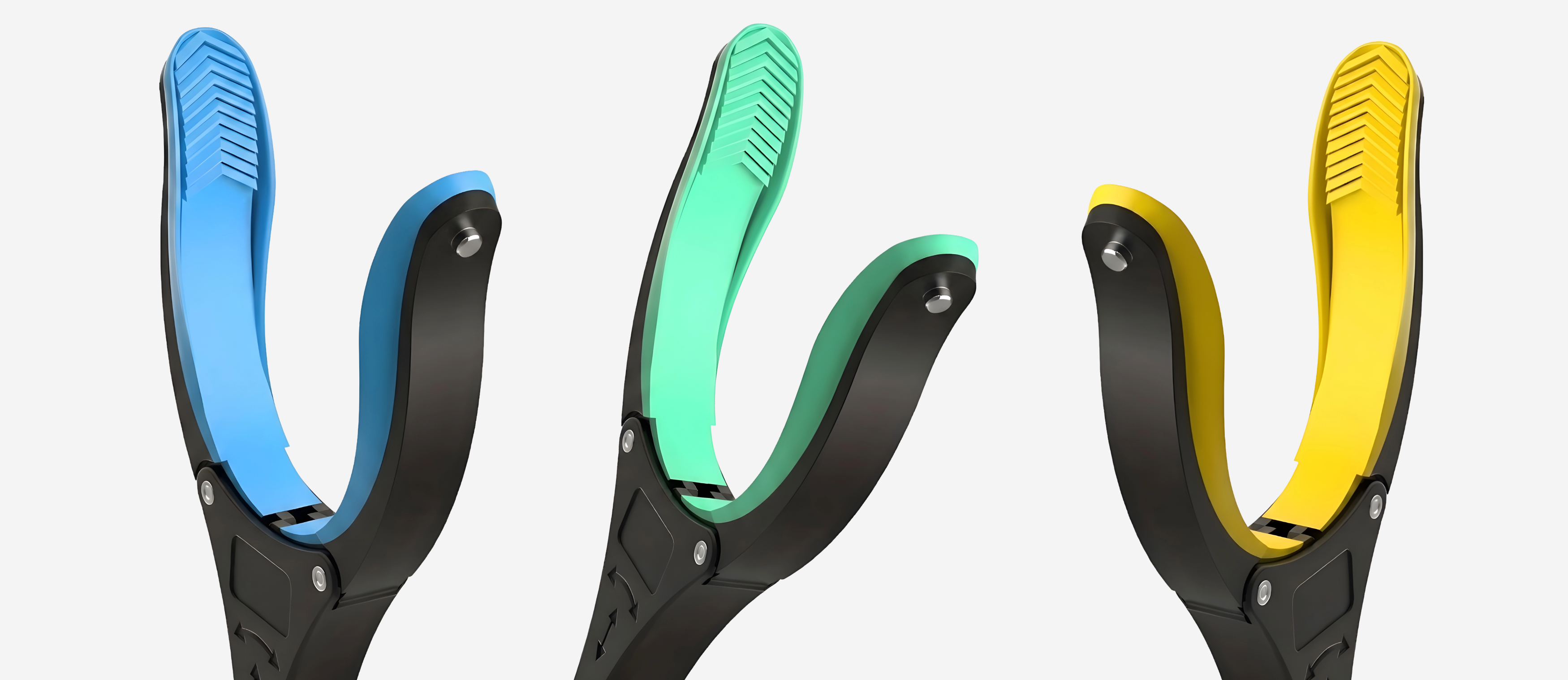
| Institutional gray or beige color | Signals medical need — creates stigma association | Available in Orange, Blue, Yellow, Mint — neutral or active colors |
| Visible hospital branding or packaging | Reinforces patient identity | Consumer product positioning — same category as kitchen tools |
| Overly complex operation | Requires learning, creates failure events | Single-trigger, one-finger operation — no learning curve |
| Bulky or visible when stored | Constant visual reminder of limitation | Folds to 16" — stored in a drawer, not displayed |
The Caregiver's Role in This Dynamic
Caregivers who understand the autonomy dimension make better tool choices. The most effective framing for introducing an adaptive tool to a resistant family member is not capability-focused — it is preference-focused: "I thought you might prefer this to asking anyone for help."
This framing acknowledges the psychological preference rather than the physical limitation. It positions the tool as an extension of the person's existing approach — managing independently — rather than a response to a problem. For a practical guide to presenting adaptive tools as gifts, see: The Gift That Says I Want You to Stay Independent.
When the Tool Becomes the Default
In GrabbersTool's experience, the shift from reluctant user to consistent user typically happens within the first week of ownership — and is almost always triggered by a single success event: the first time the tool retrieves something that would previously have required a call for help. After that event, the tool stops being a concession and becomes a preference.
The GrabbersTool 32" Reacher is the most common first purchase in this transition. Browse the complete Reacher Grabber Tools collection — all models ship free with a 30-day return policy.


