

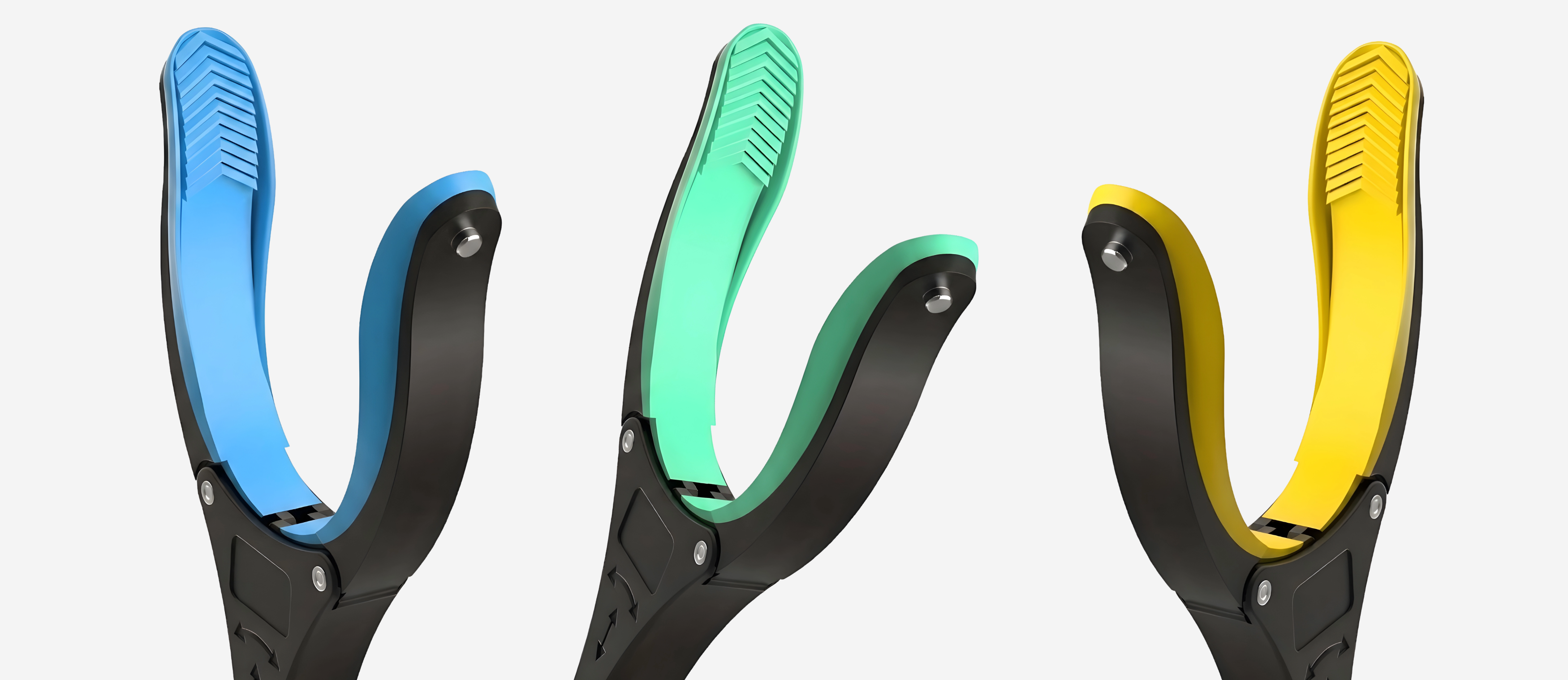
Reacher grabbers fail in predictable ways, and most early failures are the result of either misuse or low-quality construction in specific components. Understanding where reachers fail -- and why -- helps users both choose tools that will last and use them in ways that extend their lifespan. The difference between a reacher that lasts three months and one that lasts three years is often a combination of construction quality at two or three specific points and how the tool is used for overhead tasks.
Direct answer: The three most common reacher grabber failure modes are: (1) trigger cable or mechanism failure -- the internal cable that activates the jaw frays or disconnects; (2) jaw pivot failure -- the hinge mechanism at the grabbing end loosens or cracks; (3) shaft bending or snapping -- the aluminum or plastic tube bends under lateral stress. All three failure modes are exacerbated by overhead use and by using the reacher to support body weight. Avoid both.
Failure Mode Breakdown
| Failure Mode | Cause | How to Prevent | Quality Indicator |
|---|---|---|---|
| Trigger cable fraying | Repeated sharp trigger pulls; exposure to moisture; sharp cable routing | Smooth trigger operation; dry storage; keep dry | Braided stainless cable vs. single-strand steel |
| Jaw pivot failure | Lateral stress on open jaw; overhead use with full extension; repeated hard clamping | Avoid levering; use jaw for pulling, not prying | Metal pivot vs. plastic pin in jaw hinge |
| Shaft bending | Lateral force during use; leaning on the reacher; overhead use at angle | Never use as walking support; pull items straight, not at angle | Anodized aluminum vs. thin steel tube vs. plastic |
| Jaw pad degradation | Exposure to cleaning chemicals; heat; UV; time | Clean with mild soap only; store away from direct sun | Medical-grade foam vs. standard foam pad |
| Handle crack | Drop impact; grip stress in cold temperatures | Avoid dropping; handle with care | Reinforced handle construction vs. single-mold plastic |
The Overhead Use Problem
Overhead reacher use -- reaching into high cabinets or shelves above shoulder height -- is the single most common misuse pattern. When a reacher is used overhead with the full shaft extended at an angle, the lever forces on the shaft and jaw pivot increase dramatically. This is the most common cause of premature jaw pivot failure and shaft bending. For overhead use, the 43-inch reacher is more appropriate than the 32-inch when ceilings are standard height, because the longer shaft reaches overhead targets without requiring as extreme an angle.
The GrabbersTool 32-inch Reacher and 43-inch Reacher are built with reinforced jaw mechanisms and aircraft-grade aluminum shafts. Browse the full reacher collection for detailed specifications.


