

Kitchen independence for people with mobility limitations is not only about the adaptive tools used -- it is equally about how the kitchen is organized. A kitchen set up for a mobile person in full health creates dozens of unnecessary reach, bend, and carry challenges for someone with limited mobility. Reorganizing the kitchen without any permanent modification and without any major investment can dramatically reduce the effort and fall risk of daily cooking. Occupational therapists performing home visits typically spend as much time on kitchen reorganization recommendations as on adaptive equipment recommendations, because the two work together.
Direct answer: The complete adaptive kitchen reorganization follows three principles: bring daily-use items to counter height (eliminating both low-cabinet bending and high-shelf reaching), reduce carrying between stations (position items where they will be used), and place adaptive tools permanently at their point of use (reacher where you cook, jar opener where jars are opened, non-slip mats under everything that needs stabilizing). Together, these changes reduce the total number of adaptive tool uses needed each day and make kitchen tasks faster and safer.
Kitchen Organization by Zone
| Kitchen Zone | Standard Setup Problem | Adaptive Reorganization |
|---|---|---|
| Cooking area (stovetop) | Pots in low cabinet; frequently used spices in high cabinet | Most-used pots on counter or in mid-height cabinet; spices on counter-level lazy Susan |
| Food prep area (counter) | Cutting board stored vertically; mixing bowls in low cabinet | Cutting board permanently on counter; bowls at counter level; non-slip mat permanent |
| Storage area (pantry/shelves) | Frequently used items at floor level or above shoulder height | Daily-use items at counter height; use reacher for occasional items above or below this range |
| Refrigerator | Heavy items on bottom shelf; frequently accessed items at eye level | Daily-use items at middle height; heavy items at mid-level; use reacher for low-fridge items |
| Sink area | Cleaning supplies under sink (bending); soap on back of counter (reaching) | Cleaning supplies at counter level or in pull-out drawer; soap at arm reach from standing |
Permanent Adaptive Tool Placement
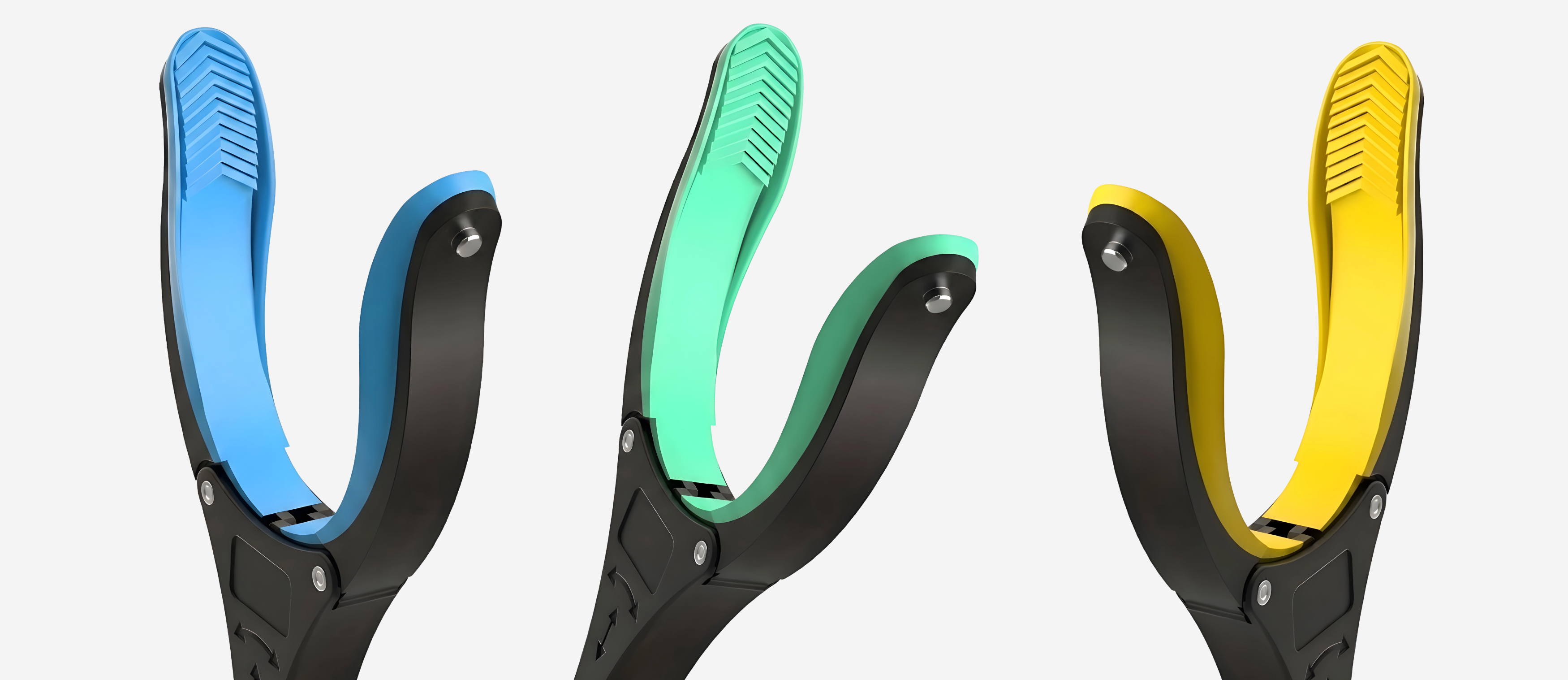
The reacher grabber should have a designated permanent location in the kitchen -- not stored in a drawer. It should be visible and immediately accessible. Same for the electric jar opener: on the counter, plugged in or charged, not in a cabinet. The tools that must be retrieved before use will often not be retrieved at all during a difficult day.
The GrabbersTool 32-inch Reacher is best kept in a vertical holder or hooked on the side of the counter. The Electric Jar Opener belongs on the counter near where jars are typically opened. Browse the full adaptive kitchen collection.


