

Anterior cervical discectomy and fusion (ACDF) is the most common cervical spine surgery, performed through a small incision in the front of the neck. The surgeon removes the damaged disc (or discs), decompresses the nerve root or spinal cord, and places a bone graft or synthetic spacer between the vertebrae, secured with a metal plate and screws. Fusion typically takes 3-6 months to be solid. Recovery involves a cervical collar (soft or hard) for 2-6 weeks depending on the number of levels fused and surgeon preference, activity restriction including no heavy lifting (typically no lifting over 2-5 kg for 4-6 weeks), no repetitive neck flexion-extension or rotation, and gradual return to activities. The surgical approach through the front of the neck also produces a temporary sore throat and difficulty swallowing (dysphagia) that can affect eating in the first 1-2 weeks. Upper cervical fusions (C2-C4) require more neck motion restriction than lower cervical fusions (C5-C7).
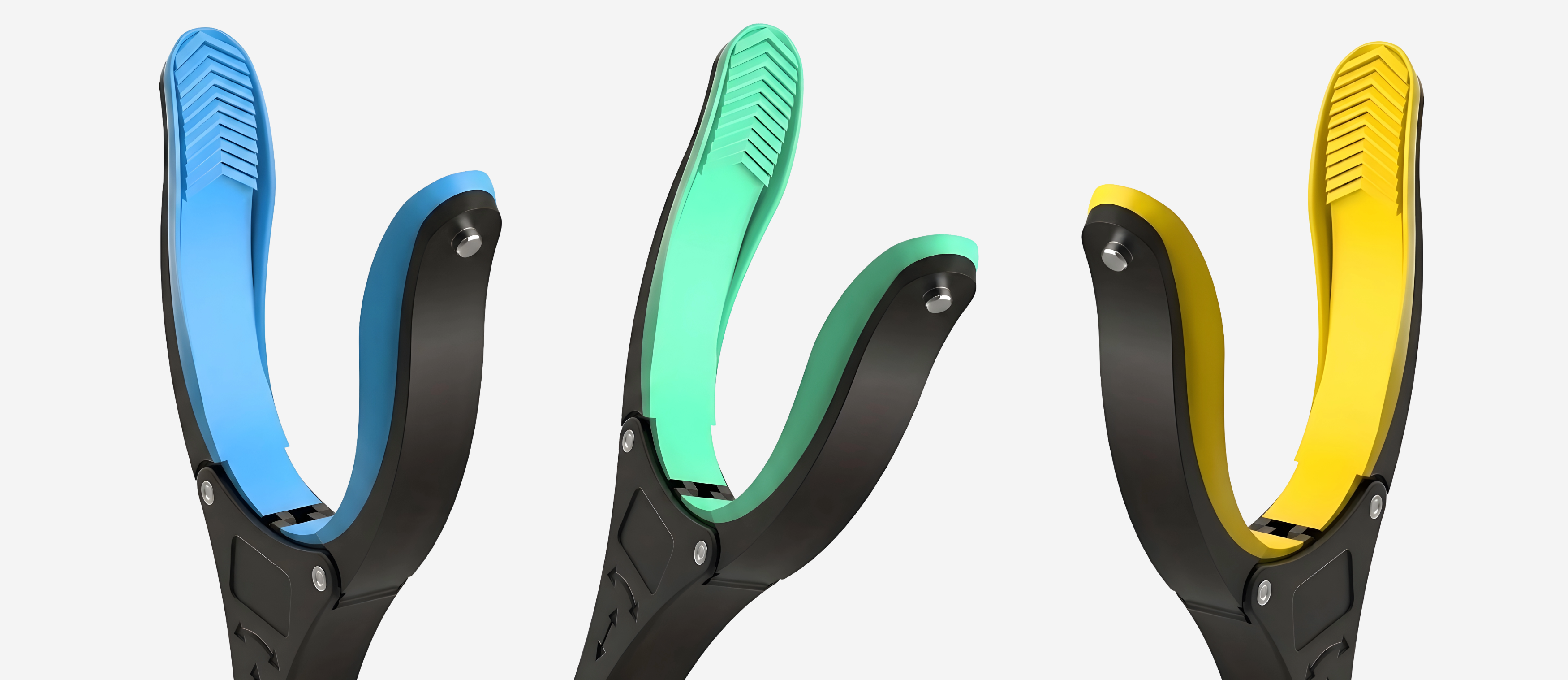
Direct answer: Cervical fusion recovery adaptive kitchen tools address the lifting restriction from the anterior approach healing, the neck motion restriction from the fusion site (avoiding repetitive neck bending over a cutting board or stovetop), and the temporary dysphagia affecting food preparation and eating. The reacher reduces the need to bend forward with the neck to retrieve items (the fusion site is stressed by repetitive neck flexion). The electric jar opener eliminates upper body bracing and arm torque that can transmit through the neck. The GrabbersTool 32-inch Reacher and Electric Jar Opener are the core tools.
Cervical Fusion Recovery: Kitchen Restrictions and Adaptive Strategies
| Recovery Restriction | Kitchen Impact | Adaptive Solution |
|---|---|---|
| Cervical collar requirement (weeks 0-6) | Collar limits neck range of motion; head position fixed; looking down and up restricted; difficult to look inside pots or at cutting board | Raise cutting board to eye level; use angled mirror for stove visibility; avoid tasks requiring sustained neck flexion; someone else stirs deep pots |
| No lifting over 2-5 kg | No heavy pot lifting; no carrying grocery bags; no moving heavy appliances; sustained arm lifting limited | Lightweight cookware; caregiver pours heavy pots; electric kettle at counter level; cups to transfer liquids |
| No repetitive neck motion | Sustained neck flexion over cutting board or stove is restricted; repeated head turning during cooking | Raised work surface; short cooking sessions; rest breaks; use whole-body turns to look instead of neck rotation |
| Temporary dysphagia (weeks 1-2) | Difficulty swallowing; soft food diet required immediately post-surgery; cooking must accommodate soft food needs | Soft diet food preparation: smoothies, soups, pureed foods; electric jar opener for sauces and condiments on soft diet; caregiver support during dysphagia phase |
Browse the reacher collection and Electric Jar Opener for cervical fusion recovery support.


