

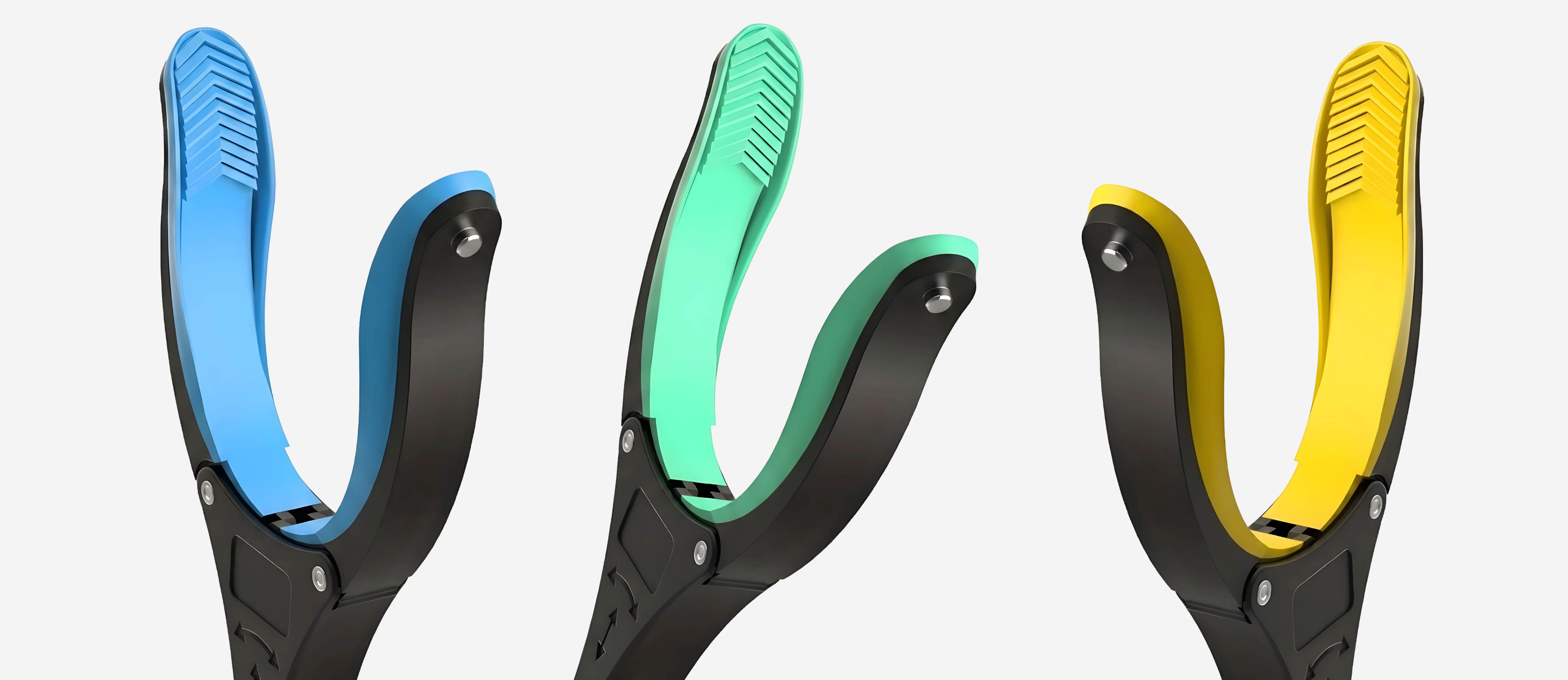
Hip labral tears, often associated with femoroacetabular impingement (FAI), cause groin pain with specific hip positions -- most notably deep hip flexion combined with rotation (the position of picking something up from the floor, getting in and out of a low car, or tying shoes). Hip arthroscopy for labral repair involves a recovery period of partial weight-bearing and hip precautions that parallel (though are less severe than) total hip replacement precautions. Non-surgically managed labral tears cause chronic positional pain that adaptive tools can reduce by eliminating the most provocative positions.
Direct answer: The most useful adaptive tool for hip labral tear -- both pre- and post-surgical -- is the reacher. The reacher eliminates the deep hip flexion-with-rotation movement that labral tears and FAI make acutely painful, specifically the forward-bending floor retrieval movement. Post hip arthroscopy, precautions limiting hip range of motion for 6 to 8 weeks make the reacher medically necessary rather than merely helpful. The GrabbersTool 32-inch Reacher directly addresses the positional limitation that both labral tears and hip arthroscopy recovery create.
Hip Labral Tear Adaptive Tool Guide
| Phase | Hip Limitation | Adaptive Priority |
|---|---|---|
| Non-surgical management (pain phase) | Deep hip flexion-rotation painful; certain positions avoided | Reacher to eliminate floor-bending position; kitchen reorganized to avoid deep squat or bend |
| Post-arthroscopy (weeks 1-6) | Partial weight-bearing; hip range restrictions; crutch use | Reacher essential for floor access while on crutches; electric jar opener for one-handed kitchen tasks on crutches |
| Post-arthroscopy rehabilitation (weeks 6-12) | Hip range and strength recovery; bending cautiously reintroduced | Continue reacher until surgeon and PT clear full range; electric opener while strength limited |
Browse the reacher collection and Electric Jar Opener.


