

Lumbar disc herniation occurs when the nucleus pulposus (the gelatinous center of an intervertebral disc) protrudes through a tear in the annulus fibrosus (the outer fibrous ring), potentially compressing an adjacent nerve root and causing radiculopathy. The L4-L5 and L5-S1 levels are by far the most commonly affected, accounting for over 90% of lumbar disc herniations. L4-L5 herniation typically compresses the L5 nerve root, causing pain, paresthesia (tingling), or weakness in the lateral leg and dorsum of the foot; L5-S1 herniation typically compresses the S1 root, causing posterior leg pain (true sciatica), paresthesia in the lateral foot and sole, and ankle plantarflexion weakness. Lumbar flexion (bending forward) increases intradiscal pressure and typically aggravates disc herniation symptoms -- making forward bending one of the most important movements to avoid during the acute and subacute phases of disc herniation recovery. Kitchen floor-level tasks (picking up dropped items, loading the dishwasher, reaching into low cabinets) all require lumbar flexion and are commonly restricted in disc herniation recovery protocols.
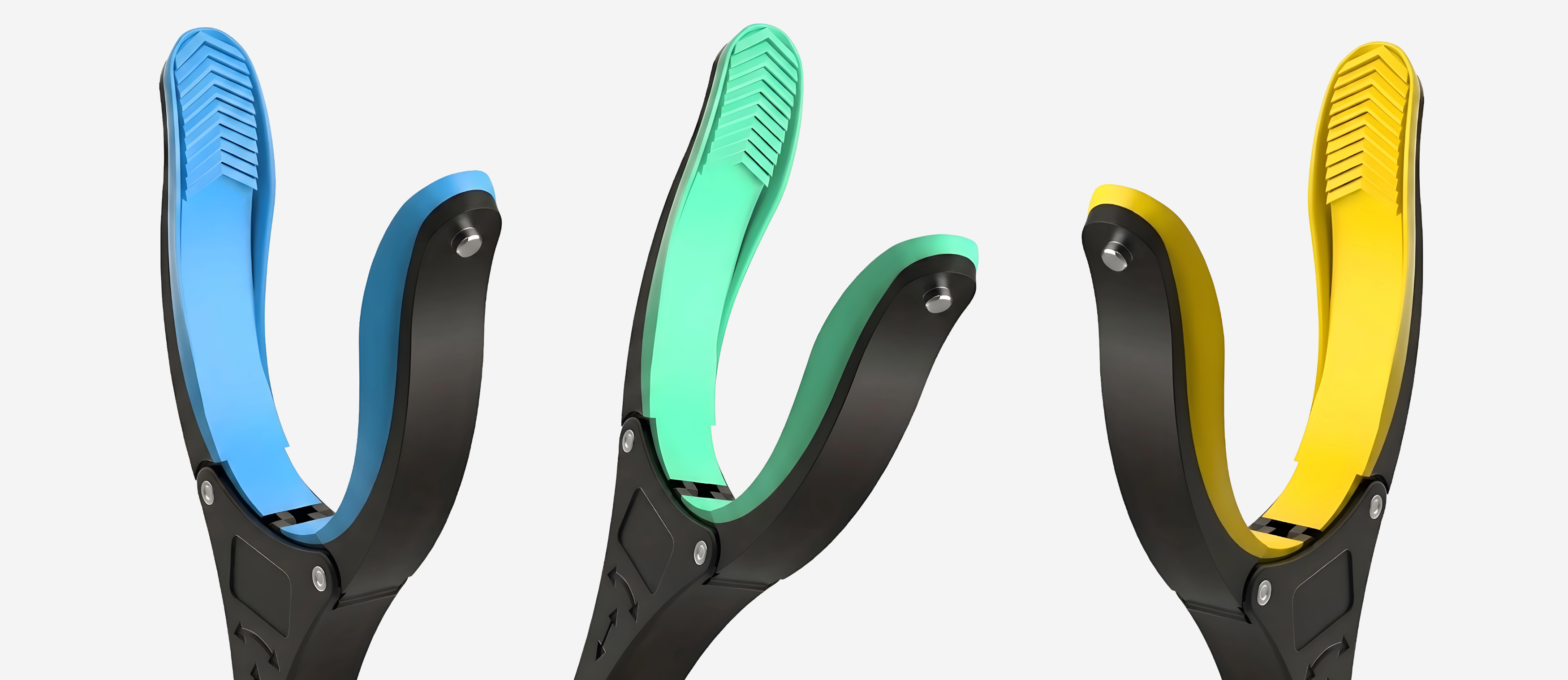
Direct answer: Lumbar disc herniation adaptive kitchen tools must eliminate forward lumbar flexion -- the movement that most reliably aggravates disc herniation and radiculopathy. The reacher is the definitive disc herniation kitchen tool: it allows floor-level item retrieval and low-cabinet access without any trunk bending. The GrabbersTool 32-inch Reacher eliminates floor-level lumbar flexion during disc herniation recovery and ongoing management.
Lumbar Disc Herniation Kitchen Bending Avoidance Strategy
| Kitchen Task Requiring Bending | Disc Herniation Risk | Adaptive Solution |
|---|---|---|
| Picking up dropped items from floor | Forward lumbar flexion to floor level is the highest-risk bending task for disc herniation; combined with asymmetric trunk rotation (turning to pick up a dropped item) -- one of the most consistent aggravators reported by disc herniation patients | 32-inch reacher (GrabbersTool) for all floor-level item retrieval; magnetic reacher attachment for metallic items; long-handled dustpan; never bend for dropped items during acute phase |
| Loading and unloading dishwasher | Repeated forward lumbar flexion to reach lower dishwasher rack is a high-volume lumbar flexion task (many items per load); often the daily kitchen task most commonly causing disc herniation flares | 32-inch reacher for lower rack items; squat rather than bend (keep spine neutral while bending knees) if knee function allows; caregiver assistance for dishwasher loading during acute phase |
| Low cabinet access (under counter) | Reaching into under-counter cabinets requires forward trunk flexion and sustained reaching -- combines lumbar flexion with sustained muscle effort | 32-inch reacher to retrieve items from low cabinets without bending; reorganize kitchen to store frequently used items at counter height or above; pull-out shelves convert low cabinets to accessible storage |
| Putting items in bottom refrigerator drawers | Bottom refrigerator drawers (crispers, meat drawer) require forward flexion -- often combined with sustained reaching into the refrigerator; daily repeated lumbar flexion task | Reacher for bottom refrigerator drawer access; reorganize refrigerator to store frequently used items at eye level; use see-through drawer organizers visible from above |
See the 32-inch Reacher and 43-inch Reacher and the full reacher collection for lumbar disc herniation kitchen bending avoidance.


