

Lumbar spinal stenosis (LSS) is narrowing of the lumbar spinal canal, lateral recesses, or foramina, most commonly from degenerative spondylosis (facet arthropathy, disc degeneration, and ligamentum flavum hypertrophy in combination), causing compression of the cauda equina nerve roots. LSS is the most common indication for lumbar spine surgery in patients over 65 in the United States. The clinical hallmark of LSS is neurogenic claudication (NC): bilateral leg pain, cramping, numbness, or weakness that is precipitated by walking or prolonged standing and relieved by sitting, forward flexion (leaning on a shopping cart or walker), or lumbar flexion. NC is mechanically explained: upright standing (lumbar extension) narrows the already-stenotic canal further, increasing nerve root compression; lumbar flexion (sitting, forward lean) opens the canal and relieves compression. NC must be distinguished from vascular claudication (peripheral arterial disease): NC is relieved by sitting (lumbar flexion) while vascular claudication is relieved by rest (stopping walking but not requiring lumbar flexion); NC allows stationary cycling (lumbar flexion) but not treadmill walking; vascular claudication allows treadmill incline decline but not stationary cycling. Kitchen function in LSS is uniquely affected by the standing-and-walking provocation of NC: kitchen tasks inherently require upright standing at counters and stovetops, directly triggering neurogenic claudication symptoms.
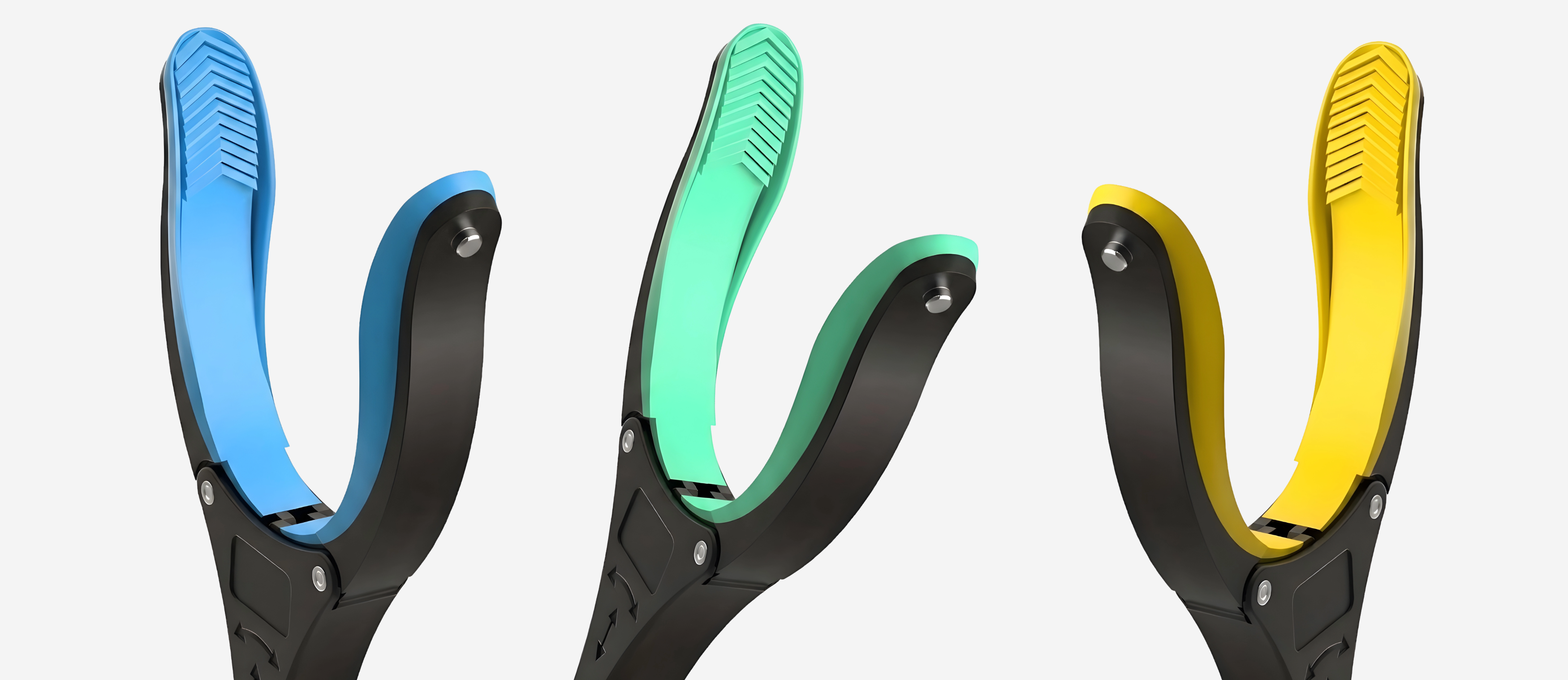
Direct answer: Lumbar spinal stenosis kitchen adaptive tools primarily address standing intolerance from neurogenic claudication: seated kitchen preparation is the most important LSS kitchen adaptation. The GrabbersTool 32-inch Reacher allows kitchen item retrieval without the prolonged standing that triggers neurogenic claudication.
Lumbar Spinal Stenosis Kitchen Adaptive Strategy
| LSS Feature | Kitchen Impact | Adaptive Solution |
|---|---|---|
| Neurogenic claudication from kitchen standing and walking | LSS neurogenic claudication is directly triggered by kitchen standing -- kitchen cooking at the stove, counter food preparation, and kitchen washing at the sink all require sustained upright lumbar extension posture that compresses the stenotic cauda equina; LSS patients typically have a walking distance before NC onset (e.g., NC symptoms onset after 5 minutes of kitchen standing) -- this kitchen standing tolerance window limits meal preparation time; forward-leaning on a kitchen counter (lumbar flexion) transiently relieves NC symptoms; grocery shopping in supermarkets (prolonged walking) is severely limited by LSS NC; LSS patients report leaning on grocery carts to maintain lumbar flexion (the shopping cart sign) | Seated kitchen preparation is the primary LSS kitchen adaptive strategy -- kitchen stool at counter height allows all food preparation in lumbar flexion (seated posture opens the stenotic canal) rather than lumbar extension (standing); kitchen sit-stand stool allows position changes to manage NC standing limit; forward-lean kitchen work surfaces (angled counter if available) for relief during kitchen standing; reacher grabber (GrabbersTool) for kitchen item retrieval without prolonged standing navigation; slow cooker and instant pot for unattended LSS cooking (brief standing to load, then patient sits while cooking continues) |
| Lumbar back pain from LSS degenerative spondylosis | LSS is typically accompanied by lumbar degenerative disc disease and facet arthropathy causing axial low back pain (in addition to NC leg pain); kitchen bending (reaching into low cabinets, loading the dishwasher, picking up floor-level items) causes acute lumbar pain; prolonged kitchen standing worsens both NC and axial LSS back pain; lumbar extension positions (looking upward at high kitchen shelves) worsen facet-mediated LSS back pain; LSS back pain is mechanically variable: some patients have worse pain with extension (facet-predominant), others with flexion (disc-predominant) | Reacher grabber (GrabbersTool 32-inch) for low kitchen item retrieval without lumbar flexion that provokes LSS disc-related pain or for floor-level items without bending; avoid low-level kitchen bending -- use the reacher as standard kitchen equipment rather than bending; kitchen item reorganization to waist-height accessible zone reduces bending and high-reaching provocation of LSS pain; lumbar support belt or brace for kitchen use per physician or physical therapist recommendation; physical therapy (McKenzie extension exercises for some LSS patients; flexion-based exercise for others -- individualized LSS physical therapy is important) |
| Post-lumbar decompression surgery kitchen recovery (laminectomy, laminotomy, interspinous spacer) | LSS surgical decompression (laminectomy, laminotomy, or interspinous spacer device) relieves NC but requires post-surgical recovery: lumbar lifting restrictions (typically no lifting over 10-15 lbs for 4-6 weeks); no bending or twisting for 4-6 weeks; driving restriction for 2-4 weeks; posterior incision pain that limits prolonged kitchen standing in the immediate post-operative period; gradual return to kitchen activity over 4-8 weeks depending on extent of surgery (single-level laminotomy vs. multi-level laminectomy vs. fusion with decompression) | Reacher grabber (GrabbersTool 32-inch) during post-laminectomy bending and lifting restriction period for kitchen floor-level and low-cabinet item retrieval; no bending or heavy lifting in kitchen for 4-6 weeks post-decompression surgery; caregiver assistance for kitchen tasks requiring bending or lifting beyond post-surgical restrictions; gradual kitchen standing return: post-decompression NC relief often immediate, but back pain from incision takes weeks to resolve; lumbar spine surgeon guidelines for specific post-operative kitchen activity restrictions |
See the 32-inch Reacher for lumbar spinal stenosis kitchen standing avoidance and neurogenic claudication management support.


