

Spina bifida (most commonly myelomeningocele) results in partial or complete paralysis below the spinal level of the lesion, typically requiring wheelchair mobility, neurogenic bladder management, and adaptive approaches to all lower body functions. Adults with spina bifida are the largest single group of adults with congenital physical disability in the United States. The transition from pediatric adaptive care to adult independence is a critical period during which the adaptive equipment strategy changes from parent-assisted to self-managed. Adults with spina bifida who live independently require adaptive tools that are selected for wheelchair-level reach geometry, upper body function, and the specific sensory and motor profile of their lesion level.
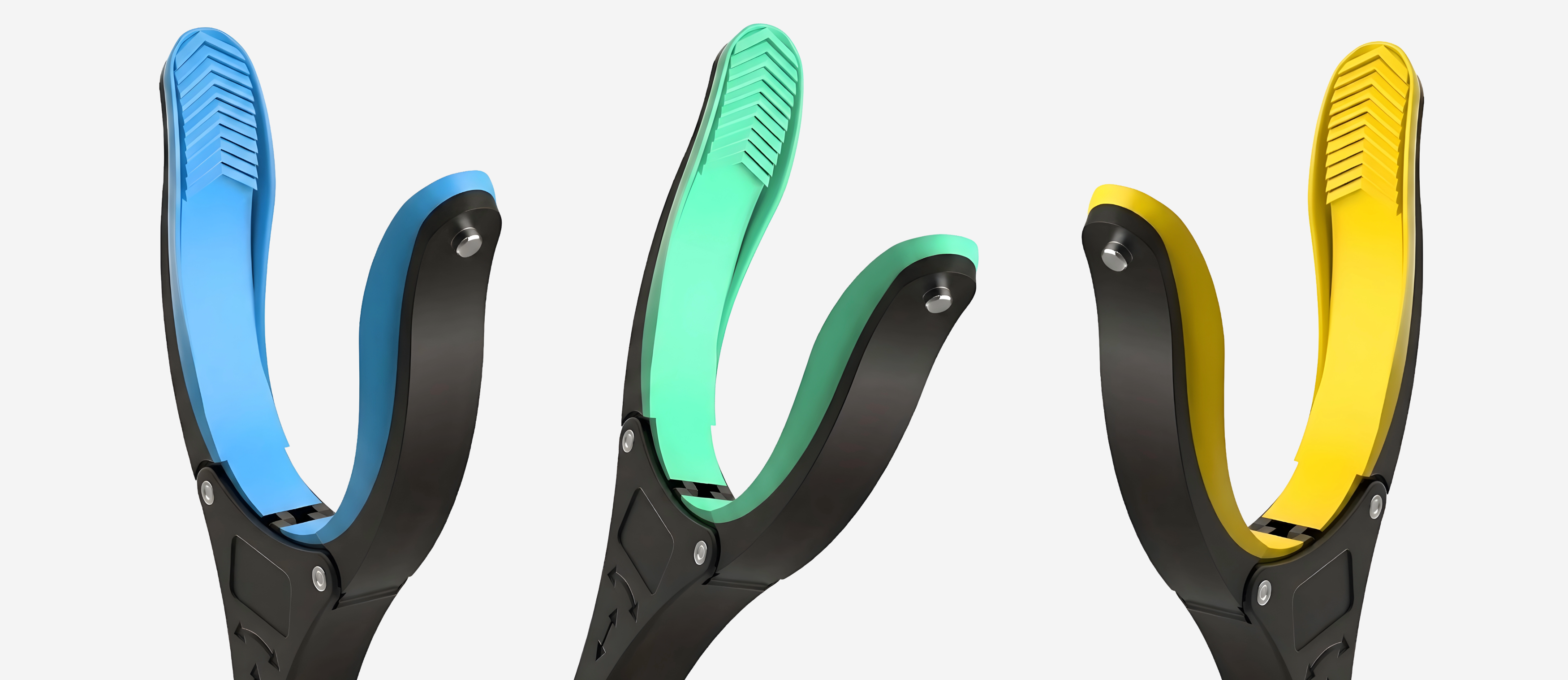
Direct answer: The primary adaptive tool for spina bifida adults who use wheelchairs is the 43-inch reacher -- the longer reach compensates for the lower seated height and the floor-to-counter distance that wheelchair users must bridge without standing. The electric jar opener is the second priority -- it performs the jar-opening task without the bracing and torque that wheelchair users without stable trunk support find difficult to generate safely. The GrabbersTool 43-inch Reacher is specifically designed for the wheelchair-user reach profile.
Spina Bifida Adult Adaptive Tool Priorities
| Independence Area | Spina Bifida Challenge | Adaptive Tool Solution |
|---|---|---|
| Floor retrieval | Cannot stand to reach floor; leaning from wheelchair creates tip risk | 43-inch reacher -- reaches floor from seated position without leaning |
| Kitchen jar opening | Trunk instability limits force generation; two-handed bracing difficult in wheelchair | Electric jar opener -- no torque generation required; placed on counter and activated |
| High shelf access | Wheelchair height limits overhead reach; overhead pull may destabilize posture | Reacher for overhead access; kitchen reorganized to accessible height range |
| Item retrieval from low surfaces | Wheelchair seat height creates reach down challenge | 43-inch reacher; kitchen organized with items at wheelchair tray height |
| Maintaining grip during kitchen tasks | Upper extremity may be intact but fine motor affected by Chiari association | Non-slip mats to stabilize items; ergonomic grip handles |
The kitchen setup most important for spina bifida adults is counter height -- ideally 32 to 34 inches rather than the standard 36 inches, to allow wheelchair approach. Adaptive tools complement the physical setup rather than replace it. Browse the reacher collection and adaptive kitchen tools.


