

Tremor is an involuntary rhythmic oscillation of a body part. The two most common tremor disorders affecting kitchen function are essential tremor (ET) and Parkinson disease tremor (PDT), and they differ importantly in their character. Essential tremor is predominantly a kinetic and postural tremor -- it worsens during voluntary movement and when holding a position, which means it is most severe exactly when attempting precise kitchen tasks (pouring, cutting, carrying). It typically affects the upper limbs bilaterally and is often worse with caffeine, stress, and fatigue. Parkinson disease tremor is predominantly a resting tremor -- it is most severe at rest and often diminishes with intentional movement, though some PDT patients also have action tremor components. PDT is also accompanied by bradykinesia (slowness) and rigidity, which further impair kitchen function. Both tremor types create kitchen safety risks: spilling hot liquids, inability to pour accurately, difficulty using knives safely, and dropping items.
Direct answer: Tremor adaptive kitchen tools address the specific tremor type and kitchen task demands. For ET (kinetic tremor), tools that reduce the need for precise sustained movement or pouring are most helpful: weighted utensils dampen tremor amplitude during movement, electric jar openers eliminate the precision and sustained grip required for manual opening. For PDT (resting tremor plus bradykinesia), the tool needs are similar but also include ensuring the tool is easy to initiate and complete during slow movement. The GrabbersTool Electric Jar Opener addresses both tremor types for the jar opening task.
Tremor Type and Adaptive Kitchen Tool Comparison
| Kitchen Task | Essential Tremor Challenge | Parkinson Tremor Challenge | Adaptive Solution |
|---|---|---|---|
| Jar opening | Severe: kinetic tremor makes gripping and rotating lid very difficult; hands shake during the sustained rotation effort | Moderate-severe: resting tremor reduces with intentional movement but bradykinesia makes jar opening slow; poor sustained rotation | Electric jar opener essential for both -- eliminates need for sustained grip and rotation; one-step operation suitable for bradykinesia |
| Carrying liquids (cups, pots) | High risk: kinetic tremor causes severe spilling during carrying; hot liquid spilling is a burn safety risk | Moderate risk: resting tremor may reduce when carrying (intentional movement); bradykinesia causes slow movement with prolonged exposure | Use lidded travel mugs; carry small amounts; slide items on counter instead of carrying; use cart for heavy items |
| Using knives | High safety risk: kinetic tremor makes controlled knife movements dangerous; ET patients should use food processors or electric choppers rather than manual knives | Moderate-high risk: bradykinesia plus tremor makes knife control unpredictable; cutting requires careful technique | Electric food chopper; adaptive cutting board with knife guide; OT assessment for safe knife technique; consider avoiding knives when tremor is severe |
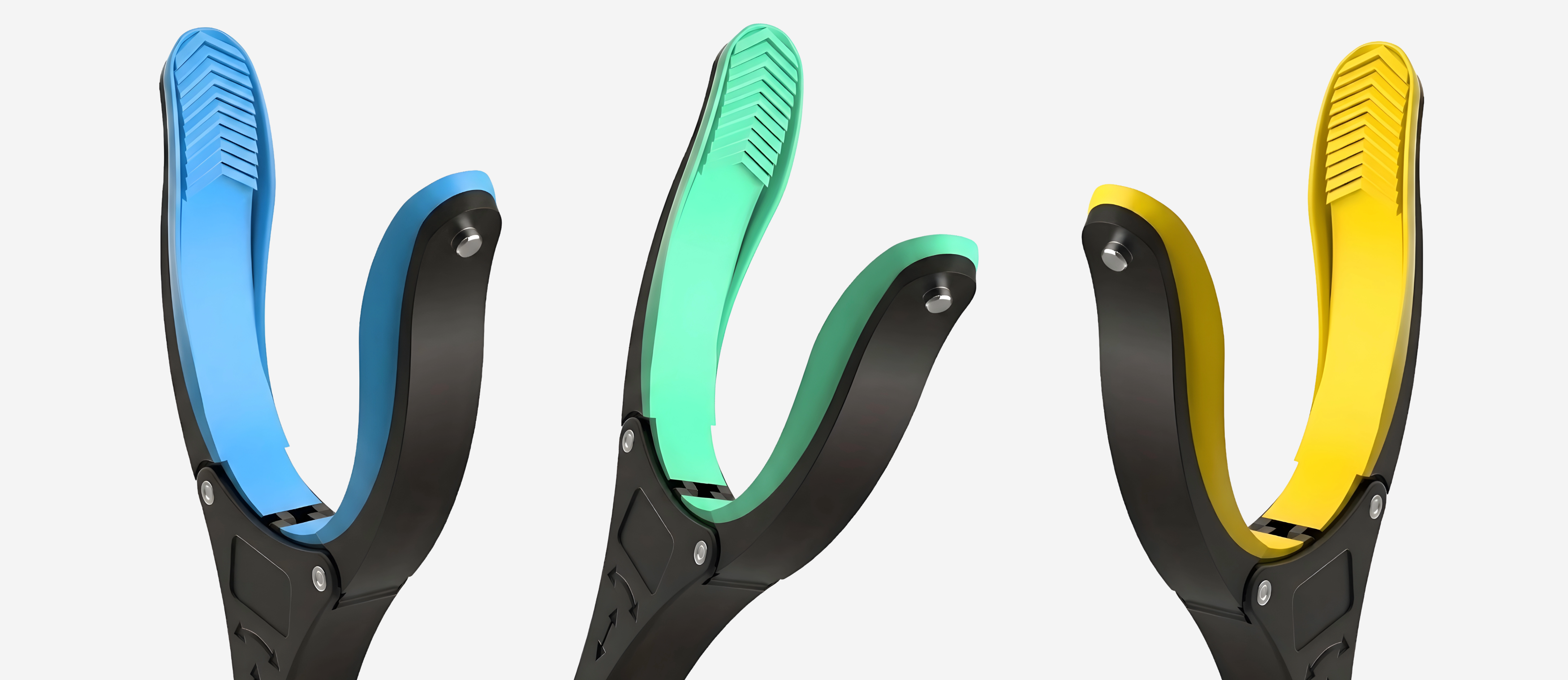
| Reacher grabber use | Suitable with practice: ET is worse with sustained position; releasing and re-gripping between reach attempts reduces tremor fatigue | Suitable: resting tremor may reduce when operating reacher (intentional movement); bradykinesia means slow operation | Reacher useful for both ET and PDT for floor retrieval and balance support during bending |
Browse the adaptive kitchen collection and the Electric Jar Opener for tremor kitchen safety support.


