

Physiotherapists treating lumbar disc injuries track a consistent pattern: patients who comply with rest and exercise protocols but continue performing unrestricted floor-level bending throughout their day recover more slowly than patients who eliminate that movement. The reason is mechanical — each forward trunk flex under load (even the trivial load of reaching for a pen) compresses the disc and reverses a portion of the decompression achieved through rest and therapy. The floor is not neutral territory during back recovery. It is the most frequently repeated provocative movement in most people's day.
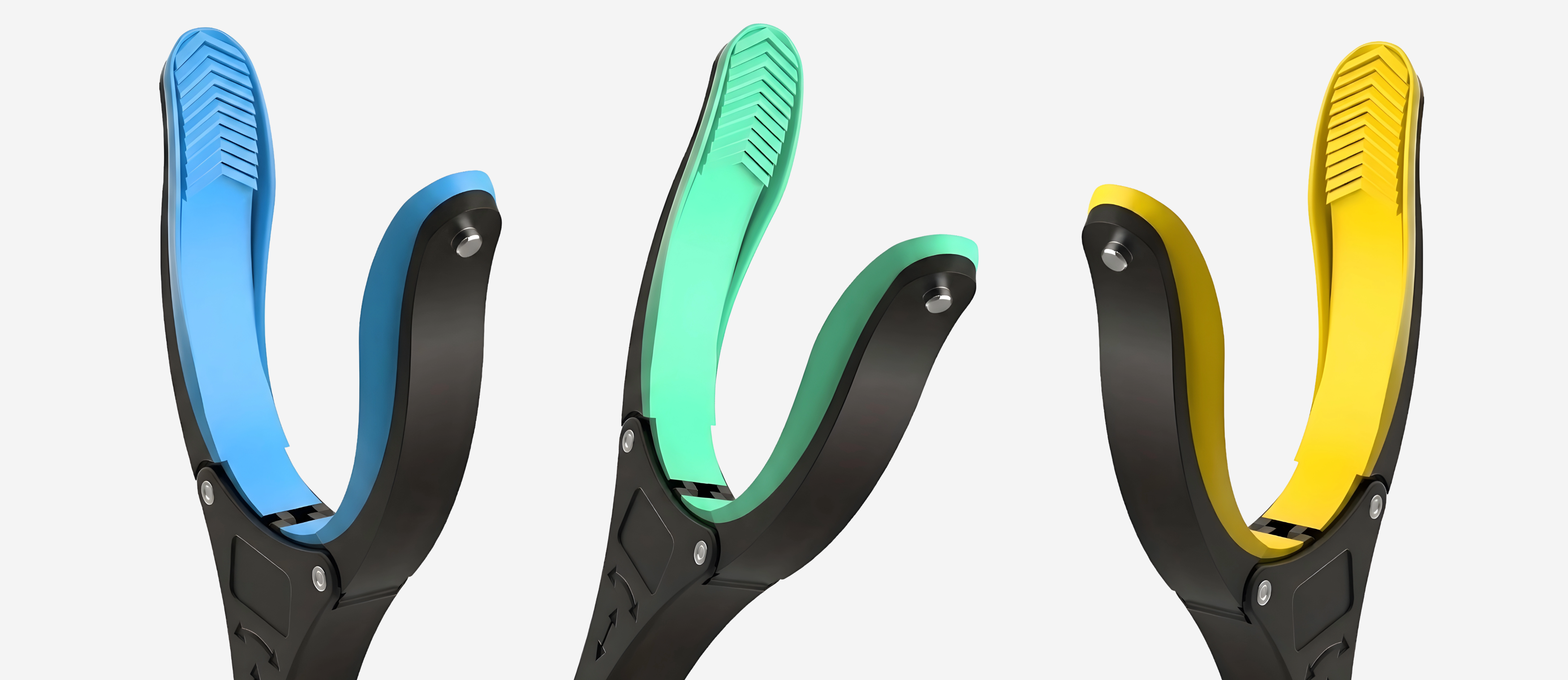
Direct answer: for people with back pain or spinal conditions, floor-level bending should be replaced entirely with a long-reach reacher grabber during recovery and managed permanently if the condition is chronic. The GrabbersTool 43" Reacher Grabber reaches the floor from standing without any trunk flexion — the user maintains a neutral spine, the tool does the floor-level work. This is not a minor ergonomic improvement; it removes the highest-frequency provocative movement from the daily routine.
The Mechanics of Why Bending Aggravates Back Pain
The lumbar spine under forward trunk flexion experiences compressive load on the anterior (front) portion of the intervertebral disc and tensile load on the posterior (back) portion — including the annulus fibrosus and posterior longitudinal ligament. For an injured or degenerated disc, this is the loading pattern that produces or worsens symptoms.
The issue with daily floor retrieval is repetition. A person who bends to pick up items from the floor 15–20 times per day (a conservative estimate for most households) is applying this provocative load repeatedly, often with small loads (a pen, a phone, a piece of clothing) that feel trivial but are not mechanically trivial for an injured structure.
The Daily Bending Inventory: How Often It Actually Happens
GrabbersTool's customer team has noted that people dramatically underestimate how often they bend to retrieve floor-level items in a normal day. A rough inventory:
- Morning dressing — shoes and socks: 2–4 events
- Kitchen — dropped items, low cabinet access: 3–6 events
- Living areas — remote control, items from low surfaces: 3–5 events
- Bathroom — floor-level items, dropped medication: 2–3 events
- Laundry — loading/unloading washer: 10–20 events per laundry session
On a laundry day, a person with back pain may perform 25–35 forward trunk flexions. Replacing these with a reacher grabber eliminates the majority of them with a single tool change.
Tool Comparison for Back Pain Floor Retrieval
| Method | Lumbar Flexion Required | Practical for Repeated Use? | Notes |
|---|---|---|---|
| Bend forward (standard) | Full — 60–90 degrees | Yes, but provocative | The movement to replace |
| Golfer's lift (one leg back) | Minimal if done correctly | Requires balance and practice | Good technique but tiring at frequency |
| Squat (neutral spine) | Minimal lumbar | Requires knee flexion range | Not viable post-knee surgery |
| 32" Reacher Grabber | None — for users under ~175cm | Yes — one-handed, immediate | GrabbersTool 32" |
| 43" Reacher Grabber | None — for all standing heights | Yes — one-handed, immediate | GrabbersTool 43" |
The reach-to-floor distance for the GrabbersTool 43" model from a standard standing position — and the minimum trunk flexion required for floor contact — is detailed on the product page. This specification determines whether the tool allows truly neutral spine during floor retrieval for your height. View full specifications →
The Laundry Problem: The Highest-Volume Back Aggravator in the Home
Front-loading washing machines require the user to reach into a drum opening that is typically 30–40cm above the floor. Unloading a full washer involves repeated deep forward bends at the waist, often while holding wet clothing that adds weight to each movement. For a person with a lumbar disc injury, this is the single highest-volume aggravating task in the typical home.
A reacher grabber with a rotating head handles laundry transfer item by item — the jaw grips wet clothing and draws it out of the drum while the user maintains upright posture. GrabbersTool customers with back conditions consistently identify laundry as the task where the reacher produces the most noticeable reduction in pain episodes. Full guidance is in the article on How to Move Laundry From Washer to Dryer Without Bending.
Acute vs. Chronic Back Pain: Different Timelines, Same Tool
For acute back pain — a flare from a herniated disc, a muscle spasm, a strain — the reacher is a recovery tool for the weeks until the acute episode resolves. For chronic back conditions — degenerative disc disease, spondylolisthesis, spinal stenosis — the reacher is a permanent management tool that changes the daily load pattern over months and years.
In both cases, the same tool applies. The investment calculation differs: for acute use, the tool pays off over weeks; for chronic use, it pays off over years of reduced flare frequency and reduced pain medication dependence.
Where to Position the Tool for Maximum Daily Impact
The reacher's protective value depends on it being used consistently, not occasionally. This requires immediate availability in every location where floor-level retrieval occurs. GrabbersTool recommends:
- Kitchen: mounted on a hook near the stove or stored vertically in a utensil holder
- Bedroom: on the nightstand — morning dressing is a high-frequency bending event
- Laundry area: dedicated unit stored at the appliance
- Living room: alongside the remote control location
Customers who purchase a single unit report using it inconsistently — carrying it between rooms when remembered, omitting it when not. Customers who purchase multiple units report consistent use because the tool is always in the right place at the right moment.
See also: Grabber Tool Length Guide: 32 vs 43 Inch for the length selection relevant to back pain use, and How to Put on Socks and Shoes Without Bending for the dressing component of back-pain management.


