

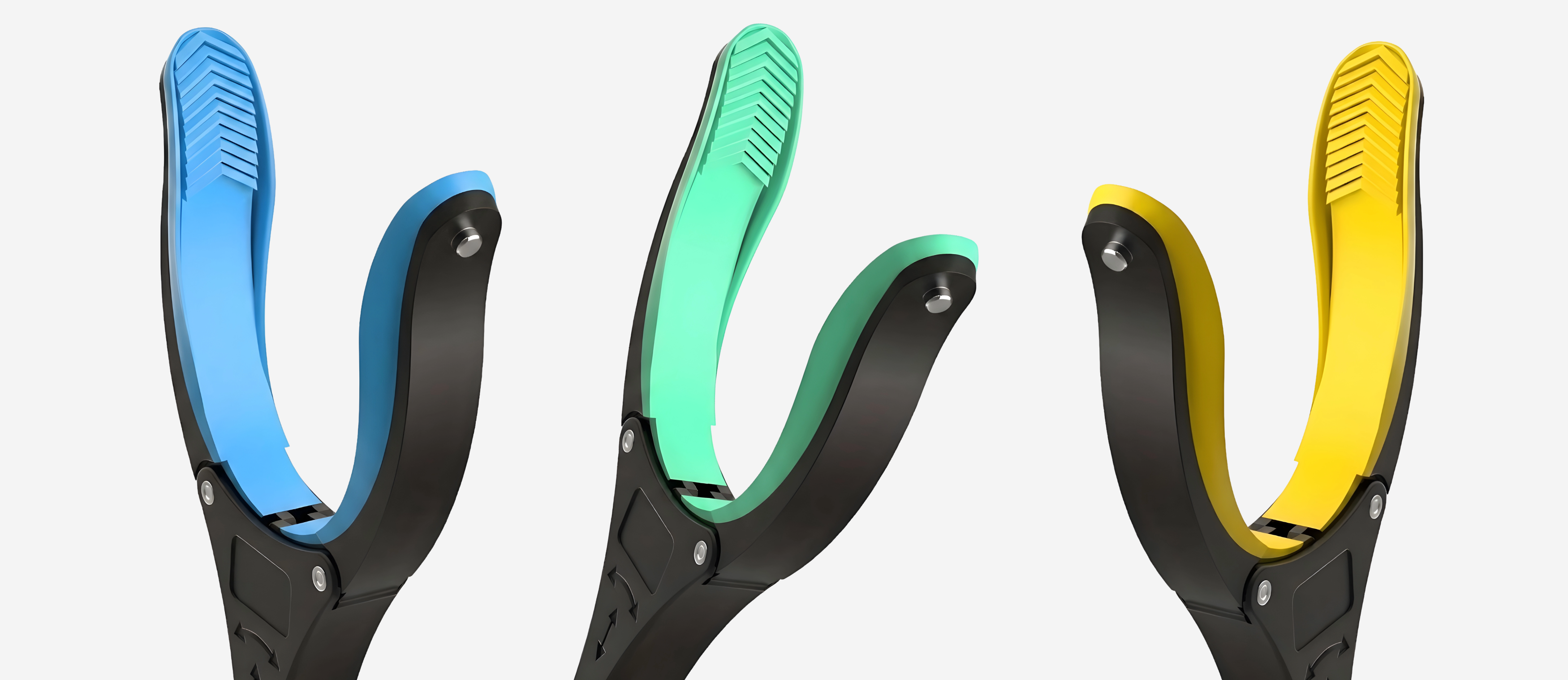
The reacher grabber began as a way to grab something out of reach, and became a way to protect independence. The tool that started as a simple mechanical claw -- for shopkeepers, litter pickers, and anyone reaching a high shelf -- evolved into a precision adaptive device relied on daily by people with arthritis, mobility limitations, and post-surgery restrictions. The GrabbersTool workshop studies that evolution for a practical reason: each design improvement solved a specific real problem, and understanding them explains what a good reacher is today.
Direct answer: The reacher grabber evolved from a crude grabbing claw into an adaptive tool through four key improvements: the trigger-and-cable mechanism for force amplification, the rubberized shape-adapting jaw for secure grip, the rigid lightweight shaft for reliable force transfer, and length options matched to medical needs. Each solved a real limitation. The GrabbersTool Reacher is the sum of those improvements. This is the story of how the tool became what it is.
From Claw to Adaptive Tool: Four Key Improvements
| Improvement | What the Old Design Lacked | The Real Problem It Solved |
|---|---|---|
| Trigger-and-cable mechanism | A crude claw needed the hand to supply all the grip force | Force amplification -- a weak or arthritic hand could now generate strong grip |
| Rubberized adaptive jaw | Hard claws slipped on varied shapes | Secure grip on round, flat, and thin objects alike |
| Rigid lightweight shaft | Flimsy shafts flexed and wasted force | Reliable force transfer and comfortable all-day use |
| Length options | One length fit no one well | Matching height and medical needs, including no-bending recovery |
The modern specifications that carry these improvements are documented on the GrabbersTool Reacher page and across the reacher grabber collection.
What Changed the Tool from Convenience to Necessity
The turning point was force amplification. A simple grabbing claw is a convenience -- useful if you already have the hand strength to work it. The trigger-and-cable mechanism changed the tool into a necessity for people who do not, because it lets a light, low-effort squeeze become a strong, secure grip. That single mechanical idea is why occupational therapists recommend reachers today, and why the tool moved from the hardware aisle to the adaptive-living shelf.
- Force amplification made the reacher usable with arthritis and weak grip -- the core of the 32-inch Reacher.
- Length options matched the tool to medical needs like the post-hip-replacement no-bending rule -- the 43-inch Reacher.
- The adaptive jaw let one tool retrieve the full spread of everyday objects reliably.
Where the Design Stands Today
Today a good reacher grabber is defined by how well it executes those four improvements, not by how it looks. The tool that began as a claw is now a precision adaptive device -- and the quality of a modern reacher is measured by its trigger, jaw, shaft, and fit. Understanding the evolution is understanding what to look for. See the GrabbersTool Reacher and the full reacher grabber collection for how the modern design comes together.


