

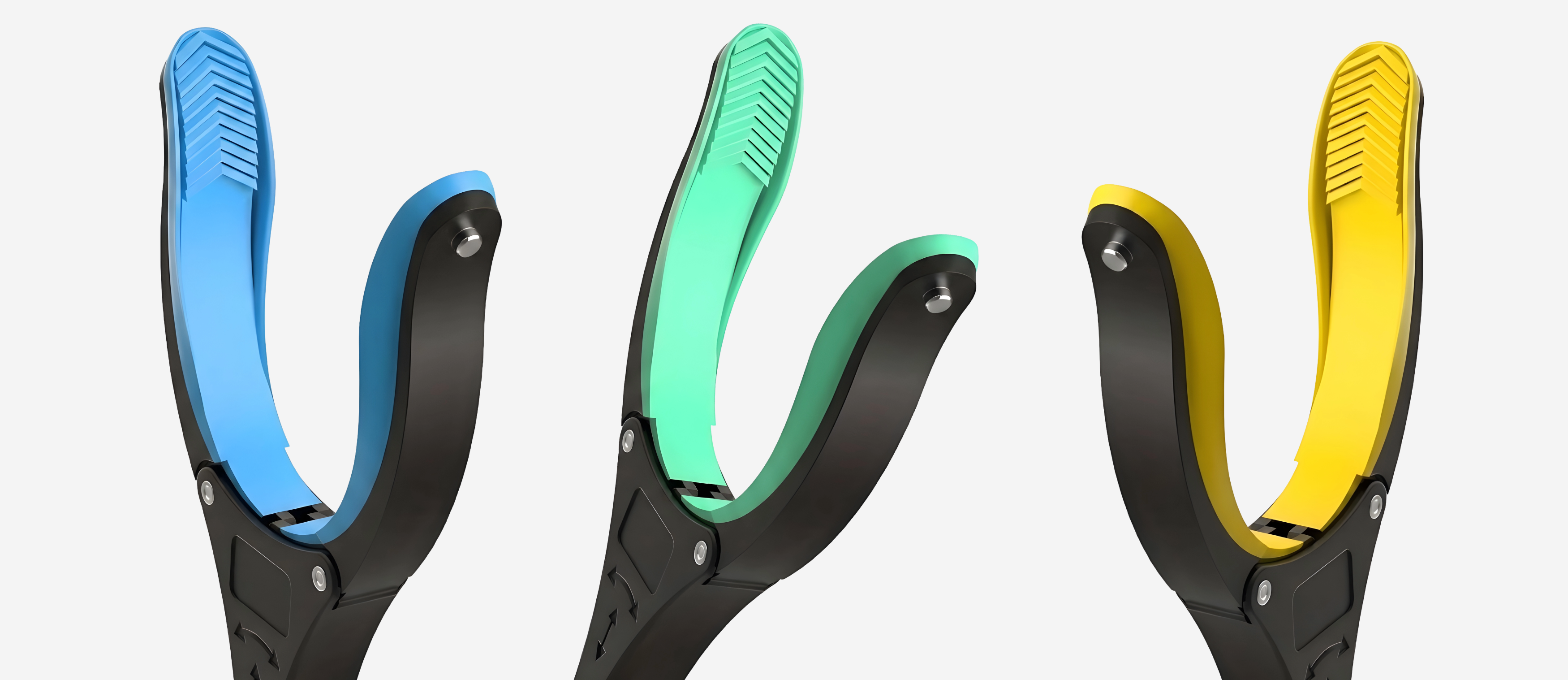
Most hip replacement patients receive a list of adaptive equipment recommendations before discharge. Almost none of them fully understand why each item matters until they are home, alone, at 6am, trying to retrieve a dropped phone from the floor while following the 90-degree hip precaution. The equipment list is not about comfort. It is about preventing the one movement that can dislocate a freshly implanted joint.
Direct answer: the single most critical piece of equipment for the first week home after hip replacement is a long-reach reacher grabber tool (32" minimum). It eliminates the need to bend past 90 degrees at the hip to retrieve floor-level objects — which is the movement orthopedic surgeons most commonly cite as the dislocating mechanism in early post-operative complications. Everything else on the equipment list addresses comfort. The reacher addresses surgical safety.
The 90-Degree Hip Precaution: What It Means Functionally
After anterior or posterior hip replacement, surgeons specify a precaution: the hip joint must not flex beyond 90 degrees for a period that typically ranges from 6 to 12 weeks. Ninety degrees is approximately the angle of sitting upright in a standard chair. Leaning forward past that angle — to pick something up, tie a shoe, or reach the floor — is the motion to avoid.
The challenge is that this movement is reflexive. Humans spend years developing the automatic response of bending forward to retrieve dropped objects. In the first week home, before the new behavioral pattern is established, this reflex activates before conscious thought can intervene. The job of adaptive equipment is to make the correct movement the only available option.
First Week Equipment: What Is Necessary vs. What Is Optional
| Equipment | Purpose | Necessity Level | GrabbersTool Option |
|---|---|---|---|
| Reacher grabber tool | Floor retrieval, dressing, eliminating hip flexion | Essential — surgical safety | 32" Reacher or 43" Reacher |
| Raised toilet seat | Prevents hip angle exceeding 90° when sitting | Essential | — |
| Shower bench | Eliminates standing balance requirement | Essential first week | — |
| Long-handled shoe horn | Foot access without hip flexion | Essential | — |
| Sock aid | Puts on socks without bending | Essential if wearing socks | — |
| Walking aid (cane) | Weight distribution, balance during gait recovery | Essential — prescribed by surgeon | GrabbersTool Walking Cane |
| Bed rail grab bar | Rising from bed without rolling onto surgical side | Situation-dependent | — |
| Reaching aid for car | Seatbelt, door handle access | Helpful, not essential | 32" Reacher fits in vehicle |
GrabbersTool publishes a detailed post-surgery equipment configuration guide specific to hip and knee recovery on the Reacher Grabber product page — including grip technique for one-handed operation during the period when the surgical leg is non-weight-bearing. View the full setup guide →
How the Reacher Replaces Bending in Specific Daily Scenarios
GrabbersTool's customer support team hears a consistent set of scenarios from post-hip-replacement customers in the first week:
Scenario 1: Dropped item on the floor
Without a reacher, the patient either bends (violating precaution) or calls for help. With a 32" reacher, the item is retrieved from standing position, jaw rotated to approach angle, without any hip flexion. This is the scenario the reacher was specifically designed to address.
Scenario 2: Dressing — socks and underwear
The reacher is used in combination with a sock aid. The reacher holds the sock aid steady while the foot is guided into position. GrabbersTool customers consistently report that the 32" model provides enough length to access the foot without hip flexion when seated upright on a raised surface.
Scenario 3: Retrieving items from low cabinets and drawers
The kitchen and bathroom layouts most people have were designed around full mobility. The reacher functions as a reach extender for drawer handles (hook the handle with the jaw), base cabinet items (grip and slide forward before lifting), and floor-level storage.
Scenario 4: Moving laundry
Transferring laundry from a front-loading washer to a dryer presents a significant hip flexion risk because the drum opening is below waist height. A 32" reacher with rotating head allows item-by-item transfer without bending — a technique described in detail in our article on moving laundry without bending.
Choosing Between the 32" and 43" Models for Recovery
The relevant question is not which is better, but which is the binding use case:
- 32" model: optimal for floor retrieval from standing height, dressing tasks, and kitchen use. The shorter length is easier to control one-handed with reduced arm strength.
- 43" model: necessary for wheelchair users who cannot stand, or for reaching items on shelves above standing reach without elevating the shoulder. Also useful if the patient is tall and the 32" does not provide sufficient floor clearance from standing position.
Many GrabbersTool customers who have undergone hip replacement purchase the 32" model as the primary tool and a second unit for a specific room (bedroom nightstand vs. main kitchen). The cost of a second unit is significantly lower than the cost of a single dislocation event, which typically requires revision surgery.
What Occupational Therapists Typically Observe in the First Week
Occupational therapists who conduct home safety evaluations prior to discharge note a consistent pattern: patients who have practiced using adaptive equipment in the hospital before going home experience fewer near-miss incidents in the first 72 hours. The muscle memory for using a reacher — rotating the jaw, approaching at the correct angle, controlling the release — takes 15–20 repetitions to feel natural.
GrabbersTool includes a technique card with each reacher model for exactly this reason: a 5-minute practice session before the day of discharge prevents the hesitation that leads to the reflex bend when something drops on day one at home.
The Walking Aid Question
Hip replacement recovery protocol universally requires a prescribed walking aid — crutches, walker, or cane — for a defined period. The transition from crutches to a single cane typically occurs within the first week for anterior approach patients, and slightly later for posterior approach. The GrabbersTool Walking Cane is adjustable for height calibration at the moment of that transition, with an ergonomic grip that accommodates the hand fatigue that develops from relying heavily on arm support during gait retraining.
A cane strap — the GrabbersTool Cane Strap — resolves the common problem of needing both hands free temporarily (for a door, for a kitchen task) while keeping the cane accessible without placing it where it could be knocked over and create a fall risk.
Preparing the Home Before Surgery: The 48-Hour Window
The most effective intervention is pre-surgery setup. In the 48 hours before the procedure:
- Place reacher grabber tools in every room where the patient will spend time
- Clear floor pathways of rugs, cords, and obstacles
- Move frequently used kitchen items to counter height or the middle shelf range
- Position the bed at a height where hip angle stays above 90 degrees when sitting on the edge
- Confirm walking aid height settings in advance
Setting up after the surgery — while managing pain, fatigue, and the cognitive load of new movement restrictions — creates the conditions for errors.
Browse the Ergonomic Mobility collection for the full range of recovery-period tools, or review the comparison in Heavy Duty vs Lightweight Grabber Tool to select the model that matches your grip strength during early recovery.


