

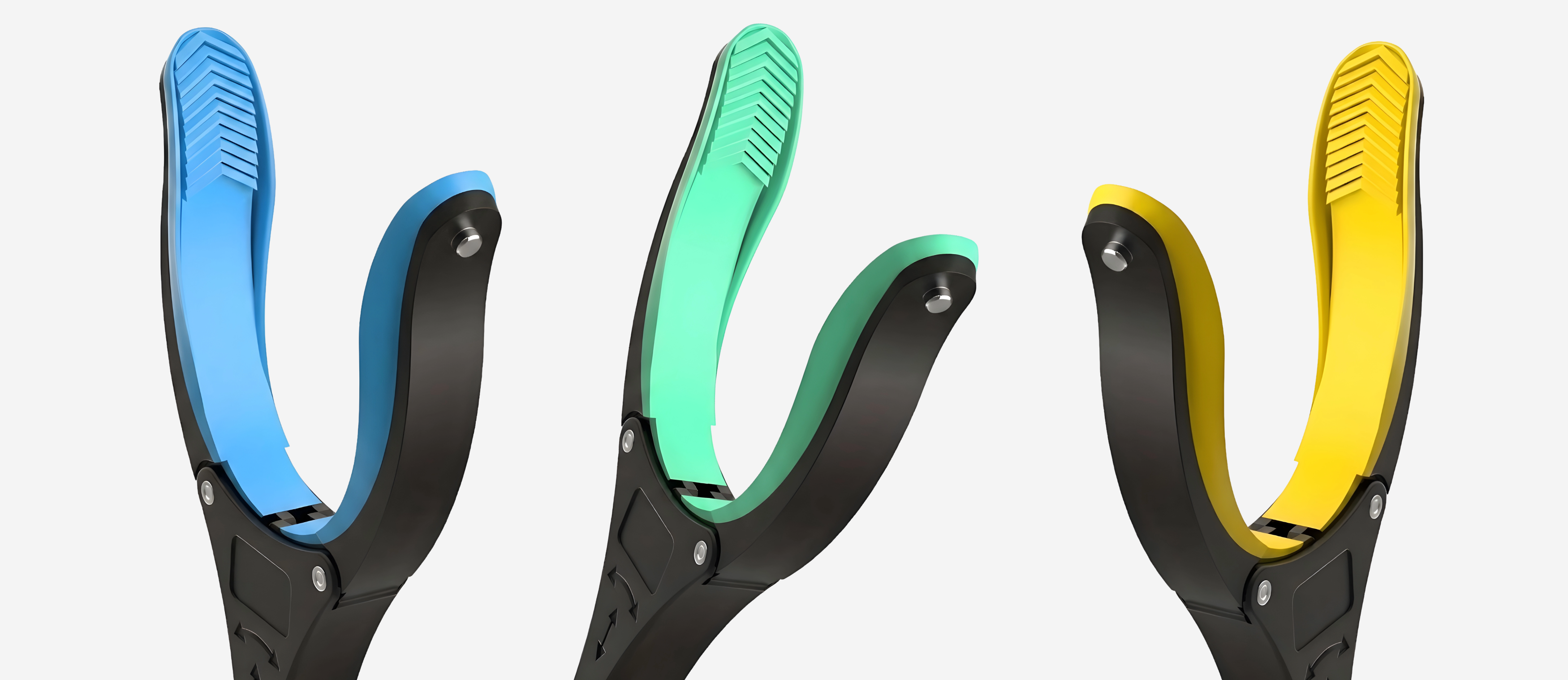
Occupational therapists select reacher grabbers based on a clinical assessment framework that most patients and caregivers are unaware of. The selection is not simply a matter of choosing between short and long, or cheap and expensive. OTs evaluate reach requirements (what does this patient specifically need to access, and from what position), upper extremity strength and coordination (can the patient operate the trigger mechanism reliably), hand function (will the grip mechanism work with this patient's specific hand limitations), and the setting where the tool will be used (bedroom, kitchen, bathroom, outdoors). Each of these factors influences which specific reacher configuration will produce the best functional outcome.
Direct answer: Occupational therapists prioritize four factors when selecting reachers: (1) length -- must reach the patient's specific access targets without requiring unsafe body positioning; (2) jaw mechanism -- must be operable by the patient's specific hand function; (3) handle design -- pistol grip vs. straight handle affects which patient populations can use the tool; (4) weight -- lighter reachers are preferred for patients with proximal weakness or fatigue. The GrabbersTool 32-inch and 43-inch reachers are both commonly recommended in OT practice for their jaw sensitivity and pistol-grip handle design.
OT Selection Criteria: Full Breakdown
| Factor | OT Assessment | Clinical Implication |
|---|---|---|
| Length | Measure functional reach deficit: distance patient needs to access minus comfortable reach range | Under-length = patient compensates with unsafe posture; over-length = control problems |
| Jaw mechanism | Assess pinch force and finger coordination required to operate trigger | Stiff jaws exclude patients with severe hand weakness; jaws that open too wide decrease precision |
| Handle design | Pistol grip vs straight; evaluate against patient wrist position at rest | Pistol grip is more comfortable for most patients; straight handle may work better for specific wrist limitations |
| Weight | Shoulder and elbow strength testing; fatigue assessment | Heavy reachers fail for patients with proximal weakness; lightweight construction is preferred |
| Jaw material | Assess task profile: does patient need to pick up paper, coins, soft items, or only solid objects | Foam jaw pads increase grip on soft and light items; hard jaws work well for solid objects only |
| Rotation capability | Evaluate whether wrist rotation is possible | Rotating head reachers help patients with limited supination/pronation |
The 32-Inch vs 43-Inch Decision
The most common OT length decision is between 32-inch and 43-inch reachers. The 32-inch (standard) covers floor retrieval for users of average height when standing or sitting in a standard chair. The 43-inch is indicated when: the patient is of above-average height, the patient uses a wheelchair (adding height above the floor), or the patient cannot bend at the hip at all and needs additional length to compensate.
The GrabbersTool 32-inch Reacher and 43-inch Reacher cover both standard and extended-reach use cases. The full reacher collection is available for comparison.


