

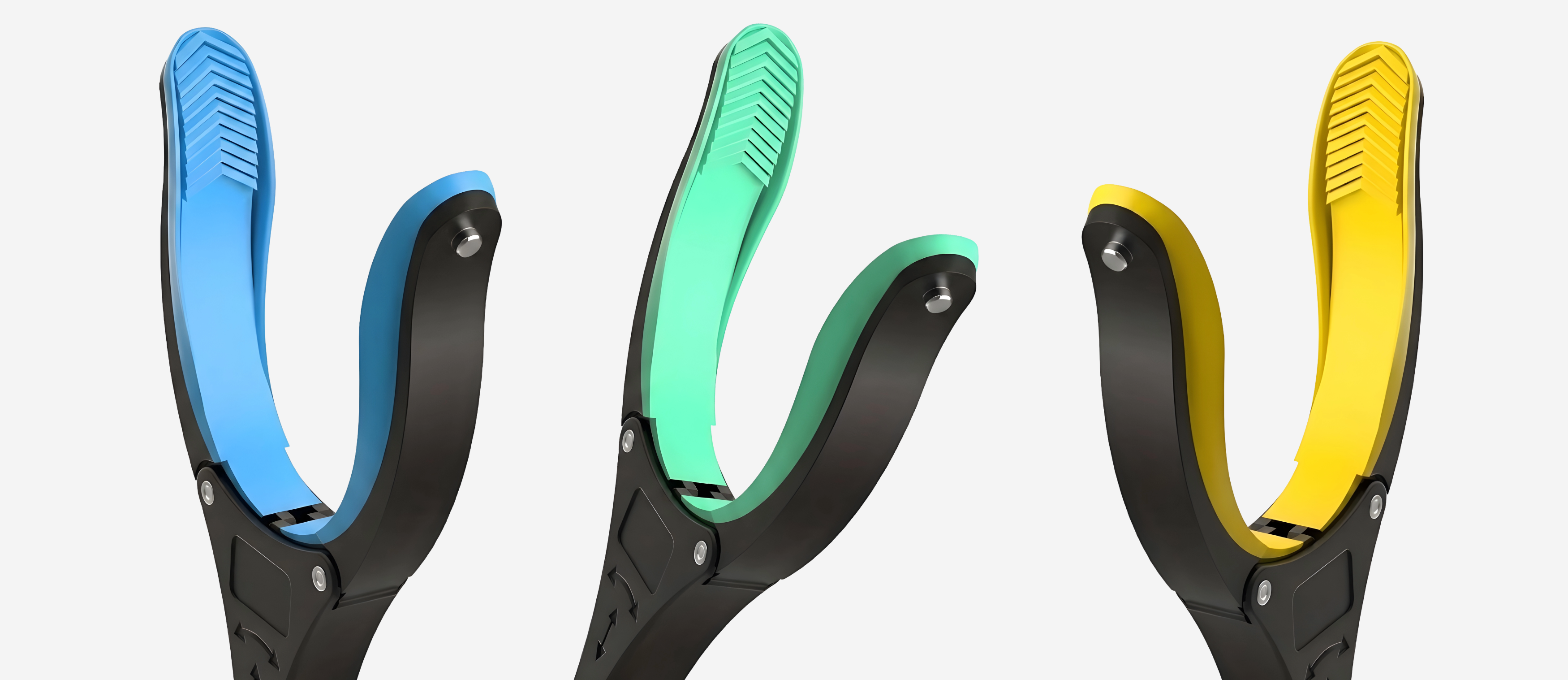
Most buyers select a reacher grabber from a product photograph — which shows the exterior but reveals nothing about the jaw mechanism, shaft stiffness, spring tension calibration, or grip surface durability. These are the specifications that determine daily performance, particularly for users who rely on the tool multiple times per day for independence tasks. Understanding what the internal components do, and what to look for in published specifications, moves the selection from appearance-based to evidence-based.
Direct answer: the quality-determining features of a reacher grabber are: the jaw mechanism design (cam-action vs direct-link), the jaw surface material (rubber compound grip vs smooth plastic), the shaft material and wall thickness (determining flex under lateral load), the handle grip surface and ergonomics, and the trigger spring calibration (determining trigger force relative to jaw closure force). GrabbersTool publishes these specifications on each product page. Comparing these specifications — not the product photograph — is the correct way to evaluate reacher grabber quality. View 32" Reacher Grabber specifications
The Jaw Mechanism: Where Most Quality Difference Lives
The jaw mechanism converts trigger squeeze into jaw closure. Two principal mechanism types exist in the reacher grabber market:
Direct-Link Mechanism
A rigid rod or wire connects the trigger directly to the jaw jaw pivot. Trigger movement translates linearly to jaw closure. Advantages: simple, durable, low component count. Disadvantage: the force required to close the jaw scales linearly with object resistance — closing on a heavy object requires proportionally more trigger force.
Cam-Action Mechanism
A cam or lever amplification stage between trigger and jaw allows calibration of the trigger-force-to-jaw-force ratio independently. A well-designed cam mechanism allows a low trigger force to generate high jaw closure force — specifically important for users with reduced grip strength. Disadvantage: more complex, more components, more potential failure points if the mechanism is poorly manufactured.
The cam-action mechanism, when properly manufactured, is the higher-performance design for medical-context use where grip strength is limited. The direct-link mechanism is adequate for occasional use where trigger force is not a constraint.
Jaw Surface Materials
The jaw surface — the material that contacts the object being gripped — determines slip resistance and the range of objects the tool can reliably manage:
- Soft rubber compound: high friction coefficient on most surfaces including smooth plastics, glass (pill bottles, jars), and fabric. Conforms slightly to irregular surfaces. The standard for medical-context reacher grabbers.
- Textured hard plastic: lower friction than rubber but more durable over heavy use. More appropriate for utility/construction contexts than daily-living use.
- Foam or sponge: high grip on lightweight objects; compresses under load from heavier items. Limited to light-duty applications.
For daily living use — picking up clothing, lightweight containers, small electronics, and personal items — soft rubber jaw surfaces provide the most reliable grip across the widest object range.
Shaft Specifications: Material and Flex
The shaft connects handle to jaw and transmits the trigger action across the full tool length. Relevant specifications:
| Shaft Material | Flex Under Load | Weight | Appropriate Use |
|---|---|---|---|
| Aluminum alloy | Low — rigid for precision | Light | Medical/daily living use; preferred |
| Reinforced plastic (ABS, nylon) | Moderate — acceptable at 32" | Very light | Light-duty; acceptable for short tools |
| Carbon fiber composite | Very low — maximum rigidity | Very light | High-performance; premium segment |
| Unreinforced plastic | High — perceptible flex at extension | Very light | Low-cost generic; reduces precision |
At 43 inches, shaft flex is more significant than at 32 inches because the leverage arm is longer. The GrabbersTool 43" Reacher Grabber shaft specification addresses this — the shaft material for the longer model is selected to maintain adequate stiffness at full extension.
Shaft diameter, wall thickness, and material are specified on the GrabbersTool product pages. These are the specifications to compare when evaluating shaft performance without handling the tool. View 43" specifications
Handle Ergonomics: The Interface That Determines Comfort
The handle is the part of the reacher grabber that the user holds for the entire duration of each use. For users with arthritis, post-surgical weakness, or neurological conditions, handle design determines whether extended use causes additional pain or fatigue. Key specifications:
- Grip diameter: a handle too narrow concentrates pressure on a small contact area; too wide prevents full finger wrap for users with reduced grip span. Optimal range for most adult hands: 30-45mm outside diameter for the grip section.
- Surface material: non-slip grip surface (textured rubber or foam) reduces the grip force required to hold the tool securely during transfers. Smooth handle surfaces require more grip force.
- Trigger shape and position: a trigger positioned to allow four-finger wrap on the handle while the thumb remains free provides the most stable grip-and-trigger combination.
The Magnetic Tip Option
Some GrabbersTool reacher models include a magnetic tip on the jaw exterior. The magnetic tip retrieves metal objects — keys, coins, pins, screws, eyeglass frames — that the jaw mechanism cannot reliably grip because they are too flat or too small for the jaw to close around. This feature adds meaningful utility for users who frequently drop metal personal items. See the dedicated analysis at Magnetic Tip Reacher Grabber: What It Does and When You Need It.
Browse the full reacher grabber range at Reacher Grabber Tools and Long Reach Grabber Tools. Product specifications for jaw mechanism, shaft, handle, and trigger force are published on each product page.


