

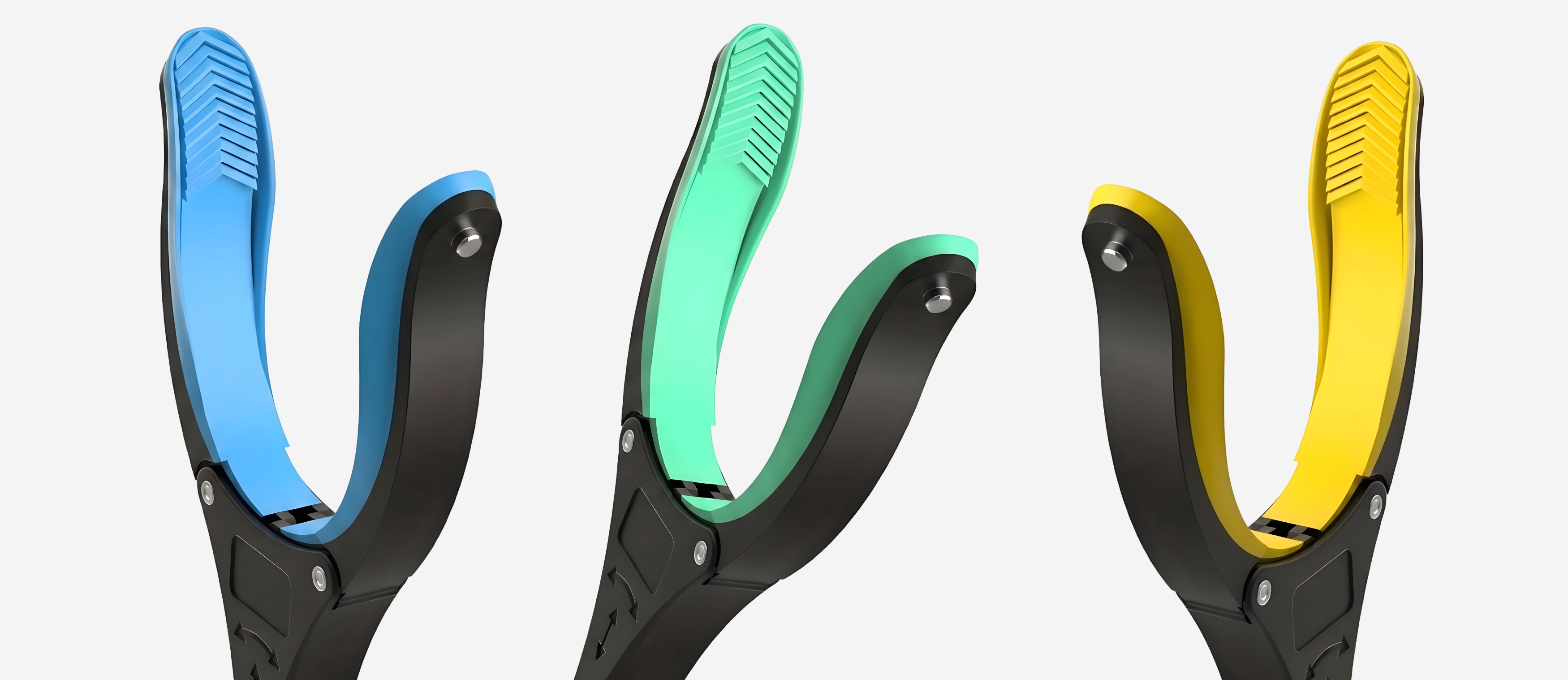
Not all reacher grabbers are the same -- and the difference between a well-made reacher and a poorly-made one is not visible in product photography. A low-quality reacher may appear identical to a quality one until the moment of use: the jaw spring is weak and drops objects, the shaft flexes under the weight of items being retrieved, or the trigger mechanism binds after a few weeks of use. GrabbersTool approaches reacher design and construction with the understanding that a reacher that fails at the moment of floor retrieval is not a minor inconvenience -- for the user who relied on it to avoid a fall-risk bend, it is a safety failure. Quality is functional safety.
Direct answer: reacher grabber quality is determined by five factors: shaft material and rigidity (aluminum vs. plastic -- aluminum holds shape under load), jaw mechanism spring strength and consistency (weak springs drop items), grip pad material and friction coefficient (smooth pads fail on smooth objects), trigger mechanism design (cable-and-pulley vs. direct-link -- direct-link is more reliable), and weight-to-strength ratio (lighter tools are easier to manage; heavier tools may indicate denser, higher-quality materials or may indicate poor design). GrabbersTool specifies these factors on product pages for informed comparison.
Shaft Materials: Aluminum vs Plastic
| Shaft Material | Strength | Weight | Durability | GrabbersTool Application |
|---|---|---|---|---|
| Aluminum (anodized) | High -- maintains shape under load | Moderate -- lighter than steel, heavier than plastic | High -- does not fatigue or crack with use | Primary shaft material for GrabbersTool reachers |
| High-density plastic | Moderate -- adequate for light items | Light | Moderate -- may crack at stress points over time | Used in some handle components |
| Fiberglass-reinforced plastic | Moderate-High | Light | Moderate-High | Used in some competitor products |
GrabbersTool reacher shaft specifications -- including material and diameter -- are detailed on the product pages. View 43 inch Reacher Grabber specifications
Jaw Mechanism: The Most Variable Quality Factor
The jaw mechanism is where the most quality variation exists between reacher products. Key design factors:
- Spring return force: the spring that closes the jaw must return consistently -- weak springs fail to grip reliably and worsen over time with use
- Jaw material: rubber-padded jaws grip better than bare plastic -- but rubber type matters; soft rubber degrades faster; firm rubber lasts longer with consistent friction
- Jaw opening width: wider jaws are more forgiving of aim imprecision; narrower jaws provide more precise grip for small objects
- Jaw rotation: rotating jaws (can pivot to align with the object) are more versatile than fixed jaws; GrabbersTool models with rotating jaws are specified on the product pages
Trigger Mechanism Reliability
The trigger-to-jaw linkage determines how reliably the jaw responds to trigger pressure. Two primary designs:
- Cable linkage: a cable runs through the shaft from trigger to jaw; cable stretch and wear over time reduces reliability; cable can fray or snap
- Rod linkage: a rigid rod connects trigger to jaw; more direct force transmission; does not stretch or fray; more reliable over product lifetime
GrabbersTool uses rigid-linkage trigger mechanisms in the standard reacher models. The specific mechanism design is described on the product pages for informed comparison with cable-linkage alternatives.
Grip Pad Quality and Testing
The rubber grip pads on reacher jaws degrade with use and cleaning. Quality indicators for grip pads:
- Surface texture provides friction without excessive compliance (too soft pads compress under load and release objects)
- Resistance to cleaning products (pads cleaned with alcohol or household cleaners should not degrade rapidly)
- Pad adhesion to jaw surface (pads that peel from the jaw base fail unpredictably)
GrabbersTool tests grip pad performance across common objects -- including smooth glass, lightweight paper, and irregularly-shaped items. Performance data is available on product pages.
The Weight-to-Strength Benchmark
The best reachers are as light as possible while maintaining shaft rigidity and jaw mechanism durability. Heavy reachers fatigue the user arm more quickly -- particularly relevant for conditions with upper limb weakness (ALS, MG, post-surgery recovery). GrabbersTool provides the weight of each reacher model on the product page. For users managing upper limb weakness or fatigue conditions, tool weight is a specification to confirm before purchase.
See also: Reacher Grabber Maintenance and Lifespan: When to Clean and When to Replace and Reacher Grabber Construction and Quality: What Makes a Reliable Grabber Tool.
Browse Reacher Grabber Tools and Long Reach Grabber Tools.


