

One-handed cooking is a core occupational therapy goal for stroke survivors with hemiplegia, upper limb amputees, and people with single-limb injuries including shoulder, elbow, or wrist conditions that take one hand out of function temporarily or permanently. The key insight in one-handed kitchen design is that the limiting factor is not strength or skill but stabilization -- in normal two-handed cooking, one hand holds and the other acts. In one-handed cooking, the cooking surface, tools, and containers must stabilize themselves so the single available hand can focus on the active task.
Direct answer: The three non-negotiable elements of a one-handed kitchen are: a non-slip mat system (Dycem or equivalent on all working surfaces to prevent items from moving), an electric jar opener (jar opening is a two-handed task by design -- the electric opener converts it to a one-handed task), and a cutting board with integrated stabilization (suction cups or corner guards that hold food during one-handed cutting). See the GrabbersTool Electric Jar Opener and adaptive kitchen collection.
One-Handed Kitchen Setup Checklist
| Kitchen Area | One-Handed Challenge | Setup Solution |
|---|---|---|
| Counter surface | Bowls, cutting boards slide during one-handed use | Dycem non-slip mat covering primary work surface; suction-base bowl holder |
| Jar and container opening | Requires one hand to hold, one to rotate -- impossible one-handed without aid | Electric jar opener; mounted under-cabinet jar opener (screws into cabinet); lever-tab openers |
| Food cutting | One hand cannot hold and cut simultaneously | Rocker knife (no vertical lift); suction-cup cutting board with spikes to hold food |
| Mixing and stirring | One hand stirs; nothing holds the bowl | Stand mixer; bowl on non-slip mat with damp cloth underneath; suction-cup bowl holder |
| Floor retrieval (dropped items) | Bending to floor with one-handed balance challenge | Reacher -- retrieves floor items without balance-threatening bend; held in functional hand |
Technique Modifications for One-Handed Cooking
Occupational therapists teach one-handed cooking through technique modification as much as tool modification. Key technique changes: pre-position all items before starting any task sequence; use the body (elbow, hip, edge of counter) as a stabilizing surface for the non-dominant role; slow down -- one-handed cooking takes longer and rushing creates injury risk.
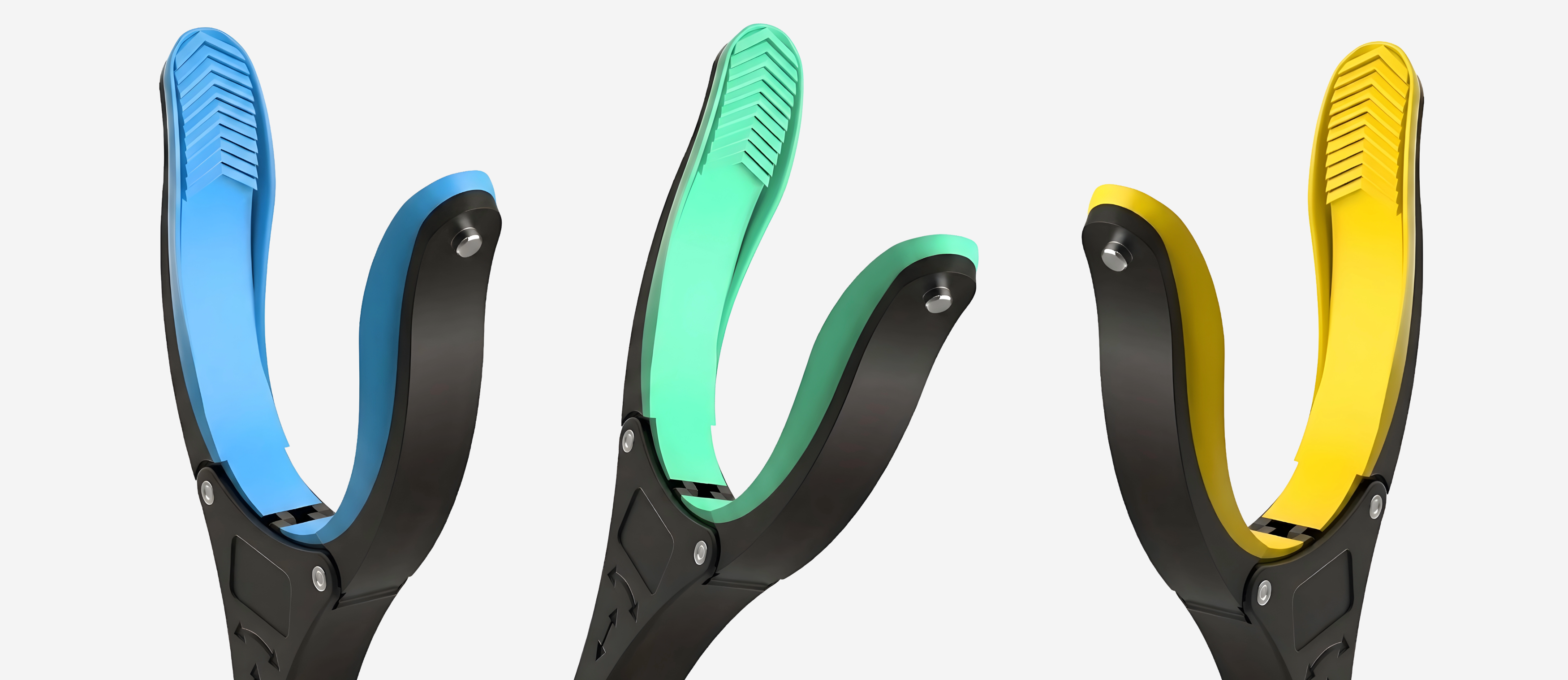
The 32-inch Reacher is particularly useful for one-handed kitchen users because it retrieves dropped items without requiring a change in posture that challenges single-limb balance. Browse the reacher collection.


