

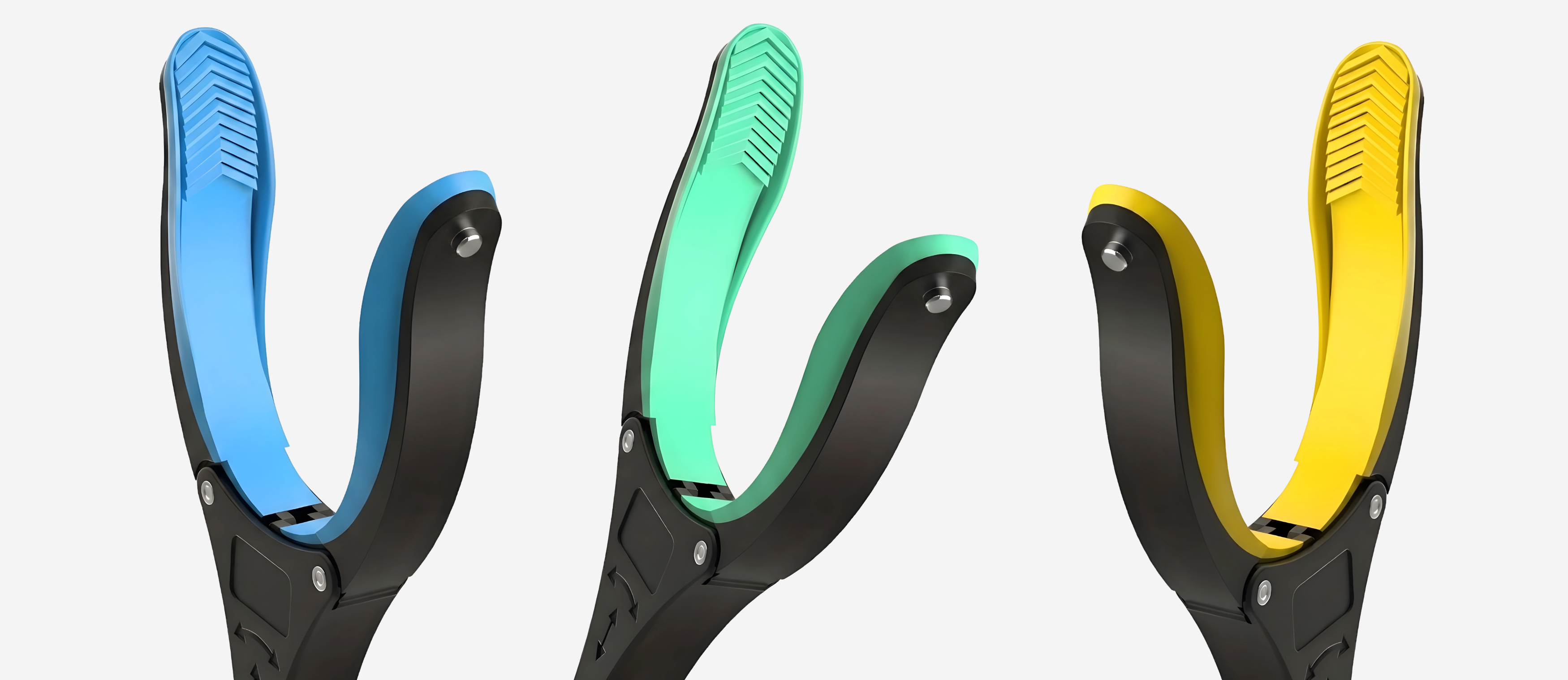
The use of reacher grabbers as a hip precautions compliance tool after total hip replacement is one of the most consistently recommended adaptive equipment applications in orthopedic occupational therapy. The clinical question -- whether a reacher can effectively substitute for the bending movements that hip precautions prohibit -- has been examined in observational studies, OT outcome surveys, and biomechanical analyses of the tool mechanics. This article summarizes what the evidence shows.
Why Bending Is Prohibited After Hip Replacement
Standard posterior approach total hip arthroplasty precautions prohibit hip flexion beyond 90 degrees, internal rotation, and adduction (crossing legs). These precautions exist because the posterior capsule -- cut during the posterior approach -- has not healed completely in the first 6 to 12 weeks. Placing the hip in these positions risks dislocation of the femoral head from the acetabular cup. The bending movement of reaching the floor -- which requires at least 110 to 130 degrees of hip flexion in most people -- is one of the highest-risk daily activities for posterior hip dislocation.
What the Reacher Does Biomechanically
A standard 32-inch reacher grabber allows a person of average height to reach the floor from a standing position while maintaining a hip flexion angle of approximately 45 to 60 degrees -- well within the 90-degree precaution limit. The reacher extends the effective reach of the arm by 32 inches, meaning the torso does not need to flex forward to bring the hand to floor level. This substitution is not approximate -- the biomechanical analysis is straightforward: if the arm (measured from shoulder to fingertip) is approximately 28 inches for an average-height adult, adding a 32-inch reacher creates a floor-access reach of approximately 60 inches from the standing position, achievable with minimal forward trunk lean.
OT Clinical Consensus
The reacher is included in the standard equipment list for hip replacement discharge in essentially every occupational therapy protocol reviewed in the literature. Multiple OT outcome studies have found that patients who received adaptive equipment education including reacher instruction had lower dislocation rates in the early post-operative period compared to patients who received precaution education without adaptive equipment. The reacher is not merely a comfort device -- it is a precaution-compliance tool with measurable clinical impact.
The GrabbersTool 32-inch Reacher is the length appropriate for average-height hip replacement patients. Taller patients (over 6 feet 2 inches) may require the 43-inch Reacher to achieve floor access at safer hip angles. Browse the full reacher collection.


