

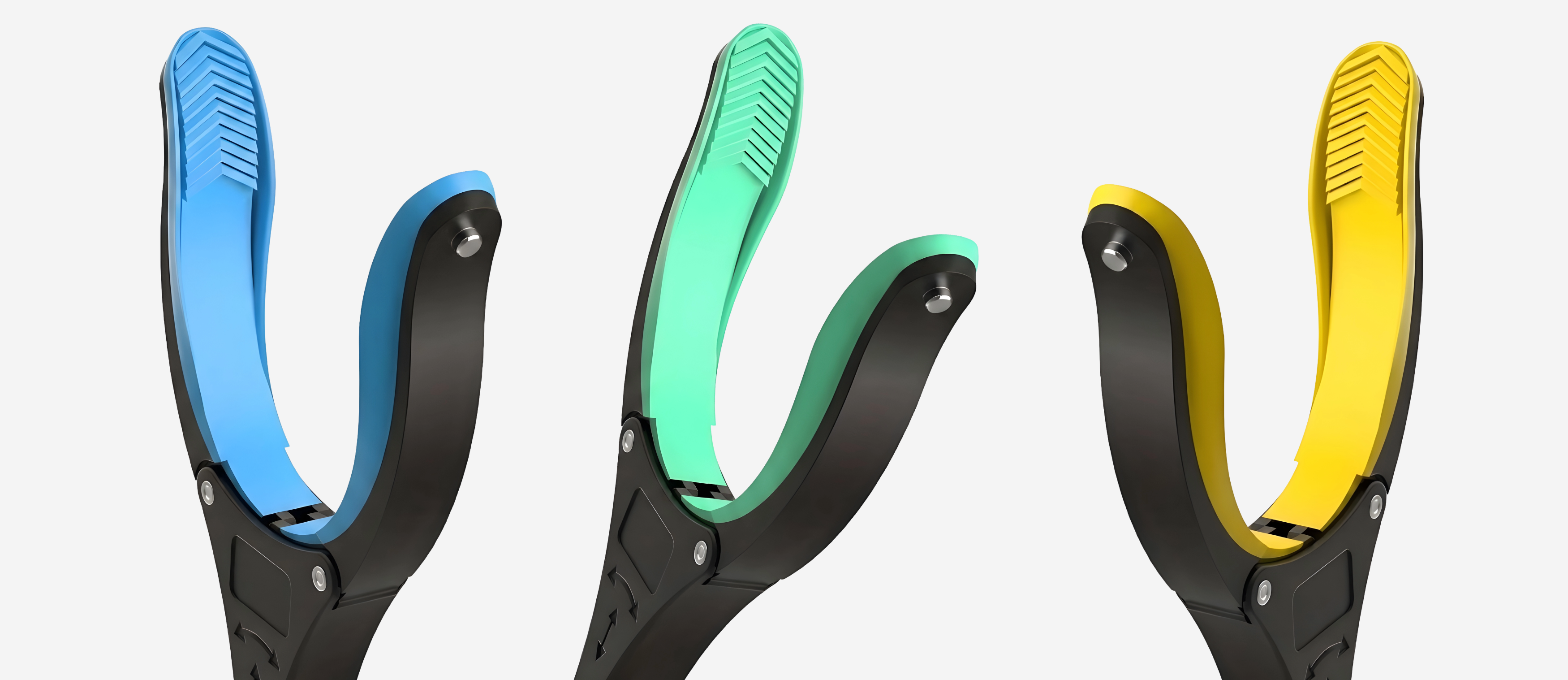
Kitchen tongs are a reasonable improvised floor retrieval tool until they are not — and the failure mode is predictable. Tongs require bilateral hand operation (one hand on each handle), produce unreliable grip on non-food objects, and extend approximately 25–30cm, which does not reach the floor from standing without significant forward lean. People use them because they are present in the kitchen drawer. They work well enough on objects resting at counter height and fail entirely on the floor, which is where most retrievals need to happen.
Direct answer: kitchen tongs are not a substitute for a reacher grabber tool for three structural reasons: they require two-hand operation, their length is insufficient for floor retrieval without bending, and their grip is calibrated for smooth food surfaces, not the irregular objects that need retrieving in a daily independence context. The GrabbersTool 32" Reacher Grabber is designed for precisely the tasks where tongs fail — one-handed operation, 81cm reach, jaw calibrated for non-food objects.
The Structural Differences
| Feature | Kitchen Tongs | Reacher Grabber Tool |
|---|---|---|
| Length | 25–35cm | 81cm (32") or 109cm (43") |
| Operation | Two-handed — one hand each jaw | One-handed — single trigger |
| Floor reach from standing | No — insufficient length | Yes — designed for this |
| Grip surface | Scalloped metal or silicone — food-optimized | Non-slip rubber — object-optimized |
| Object range | Food items at cooking temperature | Broad — from pills to shoes |
| Rotating jaw head | No | Yes — 360 degrees |
| Magnetic retrieval | No | Yes — magnetic tip included |
| Weight | 150–400g | ~180g (GrabbersTool aluminum) |
| Designed for post-surgery use | No | Yes |
The jaw design, trigger mechanism, and reach specifications of GrabbersTool models are detailed on the product pages. These specifications define the functional gap between a kitchen improvisation and a purpose-built independence tool. View 32" Reacher specifications →
Why Length Is the Primary Failure Point
A standard pair of kitchen tongs extends approximately 30cm. A person of average height (170cm) has their hand position approximately 85–90cm above the floor. To reach the floor with 30cm tongs, the user must bend forward approximately 55–60cm — which is a full forward trunk flexion, exactly the movement a floor retrieval tool is meant to prevent.
Even extended commercial tongs (40–50cm) do not solve this: they still require 35–45cm of forward lean to reach the floor. Only a tool in the 80–110cm range (the GrabbersTool 32" and 43" models) allows floor contact from standing without trunk flexion.
The Two-Hand Problem
Kitchen tongs require one hand on each spring arm to operate. For anyone managing a walking aid, a cane, or post-surgical arm limitation, two-hand operation is either impossible or unsafe. The reacher grabber's single-trigger design means the non-dominant hand holds the walking aid; the dominant hand operates the tool. Tongs eliminate this option entirely.
When Tongs Actually Are the Right Tool
To be precise: kitchen tongs are the right tool for their designed purpose. Turning food on a grill, serving food from a hot pan, managing food at cooking temperature, reaching into an oven — these are tasks where the scalloped grip, heat resistance, and counter-range length of kitchen tongs are the correct specifications.
They are not the right tool for:
- Floor retrieval from standing
- One-handed operation
- Post-surgical recovery tasks
- Dressing assistance
- Any task requiring more than 30cm of vertical reach below the hand
The improvisation instinct — using what is available rather than purchasing the right tool — makes sense until it produces a failed retrieval that leads to a bend, a strain, or a fall. The cost difference between the improvised wrong tool and the purpose-built right one ($35.99 for the GrabbersTool 32" Reacher) does not justify the functional risk.
Other Common Improvised Substitutes That Fail the Same Way
GrabbersTool's customer support team has heard the full range of improvised floor retrieval tools that people use before purchasing a reacher:
- A broom: pushes objects rather than picking them up; no grip mechanism
- A long-handled spatula: same length problem as tongs; slides under objects but cannot grip them
- A yardstick with tape on the end: occasionally works for lightweight items, fails on anything with weight or irregular surface
- Asking someone else: functional, but reduces independence and is not always available at 6am
Each of these improvisations addresses a different subset of the problem than a purpose-built reacher grabber. None of them provides the combination of length, one-handed operation, jaw grip, rotating head, and magnetic tip that makes a reacher grabber functional across the full range of daily retrieval scenarios.
See also: 7 Mistakes People Make When Using a Grabber Tool for technique guidance once the right tool is acquired, and What Is the Difference Between a Reacher and a Grabber Tool for the product category context.
Browse the Reacher Grabber Tools collection for all GrabbersTool models.


