

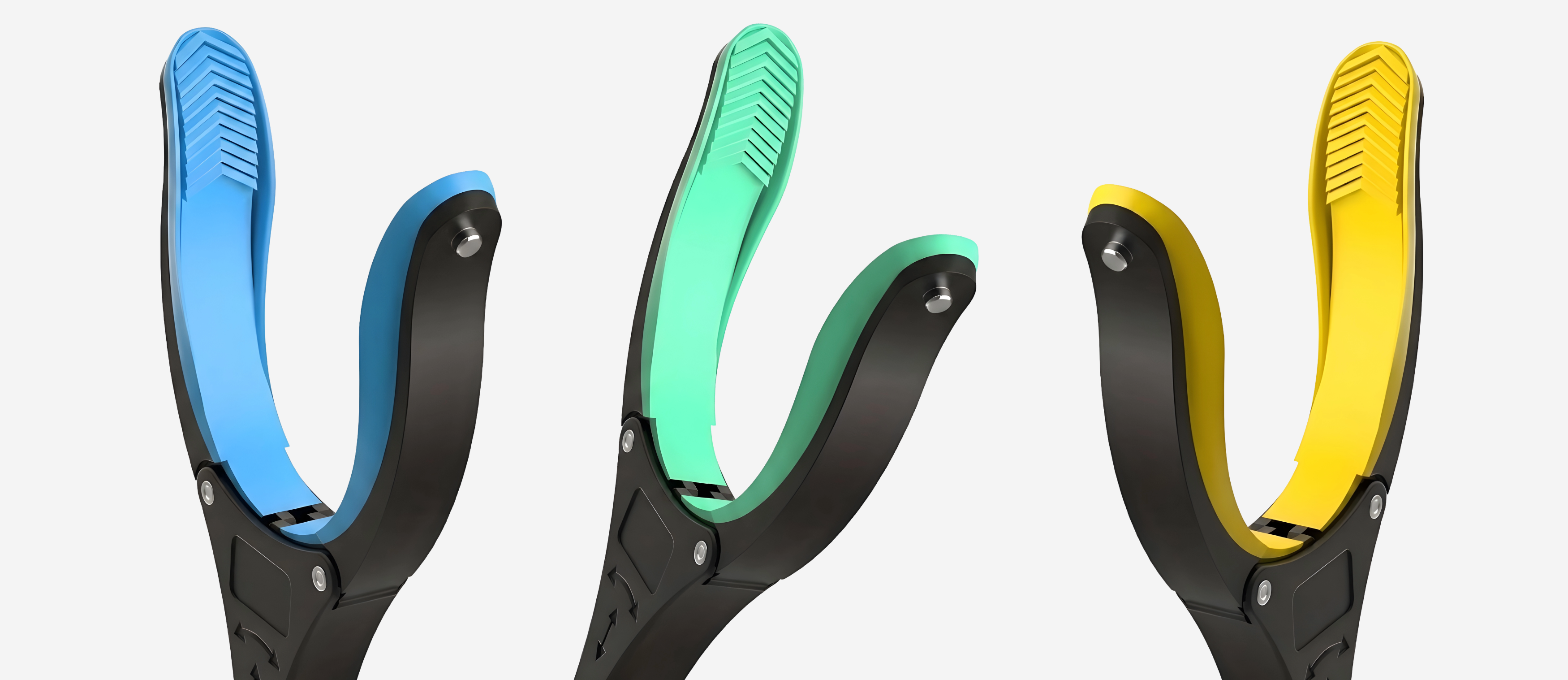
Ankylosing spondylitis (AS) and related spondyloarthropathies create a specific pattern of functional limitation that differs from most other arthritis conditions: it is the spine, not the peripheral joints, that is primarily affected. Progressive spinal inflammation leads to fusion of the vertebral segments — the spine becomes progressively less flexible, and in advanced cases, the thoracic kyphosis (forward stooping posture) reduces the ability to look upward and changes the effective reach envelope dramatically. A person with severe kyphotic posture from AS cannot look up to see what is on a high shelf; the reach is also limited by the reduced forward and overhead mobility of the fused spine.
Direct answer: for ankylosing spondylitis, the reacher grabber addresses two distinct limitations simultaneously: the inability to bend forward (lumbar fusion) for floor retrieval, and the inability to look up and reach overhead effectively (thoracic kyphosis) for high shelf access. The GrabbersTool 43" Reacher Grabber is the appropriate length for most AS patients because both the floor-level and overhead-reach deficits require maximum extension. The Electric Jar Opener addresses wrist and hand involvement that occurs in some AS patients, and eliminates the wrist rotation that cervical involvement may make painful.
The AS Functional Limitation Pattern
Ankylosing spondylitis affects the axial skeleton (spine and sacroiliac joints) with peripheral joint involvement in approximately 50% of cases. The functional limitations from AS progress over time and include:
- Reduced lumbar flexibility: forward bending is progressively lost as lumbar segments fuse. In early AS, this affects floor-level reach. In advanced AS, the patient cannot flex the lumbar spine at all.
- Thoracic kyphosis (forward stoop): the thoracic spine fuses in a flexed position, causing a progressive forward bowing of the upper back. This shifts the visual field downward (looking up becomes difficult) and reduces the effective reach for objects at or above head height.
- Cervical involvement: the cervical spine can also fuse, further limiting the ability to look upward or sideways and reducing the ability to position the head for overhead tasks.
- Ribcage involvement: costovertebral joint fusion reduces chest expansion, contributing to reduced cardiopulmonary capacity during exertion.
Reacher Grabber Use in Kyphotic Posture
The thoracic kyphosis of advanced AS changes how the reacher grabber is used for high-shelf access. A person with normal posture holds the reacher angled upward to reach overhead objects. A person with significant kyphosis has the trunk angled forward, which means a vertical reacher extension places the jaw at a different angle relative to the shelf than in an upright person. The practical adjustment is angling the reacher tip toward the object rather than extending vertically — the jaw can approach the shelf from below and in front rather than from directly below.
| AS Functional Limitation | Specific Challenge | Adaptive Tool |
|---|---|---|
| Lumbar fusion — no forward bend | Floor retrieval impossible without bending | 43" Reacher Grabber — floor retrieval from standing |
| Thoracic kyphosis — limited overhead reach | High shelf access requires looking up (difficult) and reaching overhead (limited) | 43" Reacher Grabber — extends reach without requiring full overhead posture |
| Peripheral joint involvement — wrist/hand | Jar opening and grip tasks painful | Electric Jar Opener; Multi-Opener |
| Cardiopulmonary limitation from rib involvement | Physical exertion causes faster fatigue; energy conservation important | Electric openers; reacher for effort reduction |
The 43" GrabbersTool Reacher Grabber reach specification — the actual extension from handle to jaw tip — and the jaw approach angle are on the product page. For AS patients with significant kyphosis, the jaw approach angle during overhead use is the relevant use-case specification. View 43" specifications
Home Setup for Advanced AS
For patients with advanced AS and significant kyphosis, home setup should address both the floor-level and overhead access problems:
- Daily-use items moved from high and low storage to counter or table height — the reacher is used for occasional retrieval, not constant navigation
- Mirrors positioned to allow visual confirmation of overhead spaces that the kyphotic neck cannot look up to see directly
- Walking aids that can be gripped without requiring full upright posture — the GrabbersTool Walking Cane can be managed from a slightly forward-tilted posture typical of mild-to-moderate kyphosis
The AS Physiotherapy Dimension
Physiotherapy for AS focuses on maintaining the maximum available range of motion and preventing further postural deterioration. Daily exercises targeting spinal extension, thoracic mobility, and deep breathing are standard. Adaptive tools complement this physiotherapy by managing daily function — they allow the patient to conserve energy and avoid the movements that cause pain, preserving capacity for the exercise program that maintains remaining mobility.
See also: Chronic Back Pain and the Reacher Grabber: Eliminating the Bend and Sciatica and Daily Living: Managing Bending Restrictions With Adaptive Tools.
Browse Reacher Grabber Tools and Long Reach Grabber Tools for the full AS-appropriate adaptive range.


