

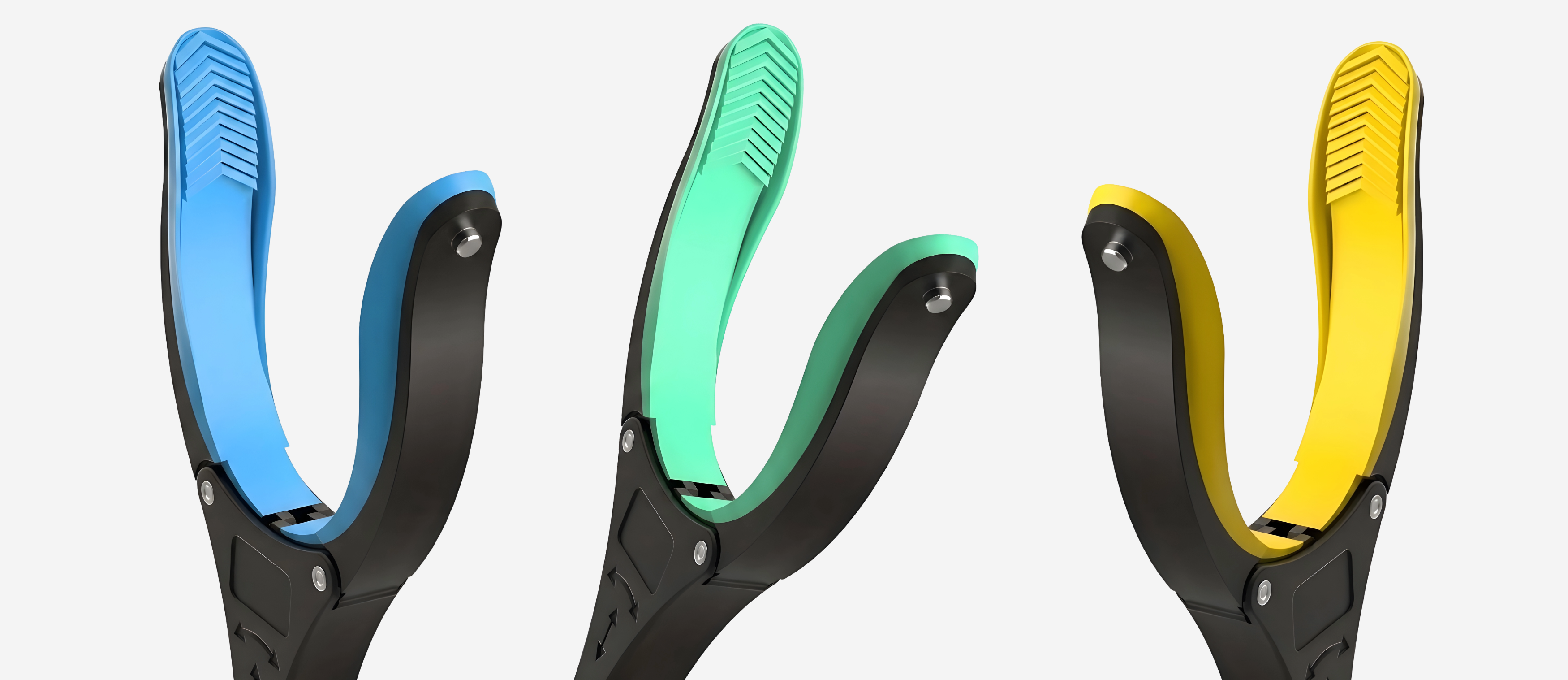
The cheapest reacher grabber is almost never the cheapest purchase. It is the most frequently repurchased one. The GrabbersTool support team hears the same arc repeatedly: a customer buys the lowest-priced tool, it fails at the cable within weeks, they buy a second, it fails again, and only then do they buy the tool they should have bought first. The low sticker price hid a high replacement cost. For a device used dozens of times a day, cost-per-use is the only honest metric.
Direct answer: For a daily-dependence user, a single properly built reacher grabber costs less over a year of use than a chain of cheap replacements, because the failure point on budget tools -- the trigger cable -- fatigues fast under repeated actuation. The GrabbersTool 32-inch Reacher is engineered around that exact failure point, which is what changes the cost-per-use math. This is a value analysis, framed in replacement cycles, not sticker price.
Why Sticker Price Is the Wrong Metric
A reacher grabber used forty times a day is a mobility device, not a gadget. The relevant question is cost per reliable use, across the period you actually need the tool. A tool that fails and gets replaced three times in a year does not cost its sticker price -- it costs three sticker prices, plus the days of frustration and lost independence between each failure and each reorder.
Cost-Per-Use Framework (Fact / Metric / Insight)
| Factor | Budget Tool (Repeated Replacement) | Properly Built Tool |
|---|---|---|
| Primary failure point | Under-specified trigger cable fatigues under daily load | Load-rated cable and pivot built for repeated actuation |
| Replacement pattern | Multiple purchases across a single year of heavy use | One purchase carries the same period |
| Hidden costs | Repeated shipping, downtime, lost independence between failures | None -- continuous reliable use |
| True cost basis | Sticker price multiplied by replacement count | Single sticker price across the use period |
| Risk cost | A failed grab is a dropped item or a fall-risk bend | Consistent grip preserves the safety purpose |
The full durability methodology and the component load ratings behind the built tool are documented on the GrabbersTool 32-inch Reacher specification page.
The Hidden Cost Nobody Prices In: Downtime
For a bending-restricted or post-surgery user, the gap between a tool failing and a replacement arriving is not neutral. It is a period where the person either goes without or performs the exact movements the reacher was bought to prevent -- bending after a hip replacement, reaching off-balance with a fall risk. The downtime of a failed reacher carries a safety cost that never appears on a price tag.
- Post-surgery recovery: a reliable tool protects hip-precaution compliance for the full recovery window -- the 43-inch Reacher is chosen for this sustained daily load.
- Arthritis and daily mobility: a tool used all day, every day, is where cost-per-use compounds fastest -- the 32-inch Reacher is built for that actuation volume.
- Whole-kitchen independence: pairing a durable reacher with the Electric Jar Opener removes the two most-repeated points of failure -- reaching and gripping -- in one reliable set.
The Value Rule
Buy for cost-per-reliable-use, not for the lowest sticker price. The correct reacher is the one whose failure point has been engineered against the load you will actually put on it. The complete replacement-cycle data and build specifications are available on the GrabbersTool 32-inch Reacher and 43-inch Reacher product pages, and across the full reacher grabber collection.


