

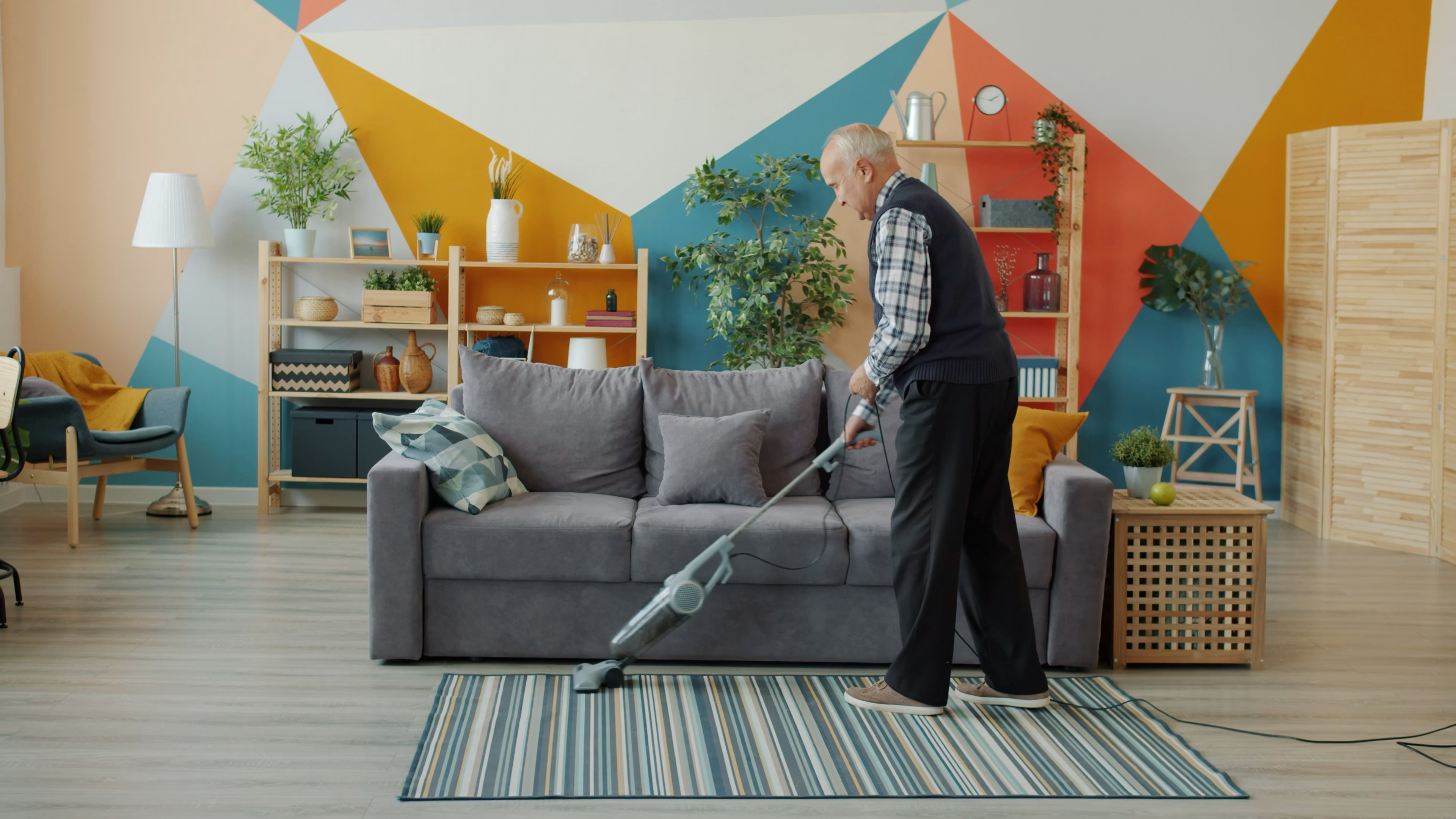
Most people think of falls as something that happens on icy sidewalks or slippery bathroom floors. But here's the truth: the living room is one of the most common places where older adults fall — and most of the time, it's not because of anything dramatic. It's the small, everyday things we stop noticing after living in the same space for years.
The good news? Almost every hazard on this list can be fixed in an afternoon, without spending much money. Let's walk through them one by one.
1. That Rug You've Had for 20 Years
Area rugs are one of the single biggest tripping hazards in American homes — especially the ones with curled-up edges or no grip on the bottom. If you can slide your foot under the edge of a rug even slightly, it's a hazard.
Fix it: Use double-sided carpet tape or a non-slip rug pad underneath. If a rug's edges won't lie flat anymore, it's time to retire it.
2. Furniture You Have to "Navigate Around"
Over the years, most living rooms slowly fill up. A side table here, a stack of magazines there, a plant stand in the walking path. You've memorized the layout — but a single distracted moment, a visiting grandchild's toy left on the floor, or dim evening light can change that in an instant.
Fix it: Walk your usual paths (chair to kitchen, chair to bathroom, chair to front door) and clear at least 36 inches of open space. Wide, straight, predictable paths matter more than anything else in this list.
3. Cords Running Across the Floor
Lamp cords, phone chargers, extension cords for heaters or fans — these blend into the floor visually, especially in low light or with lower vision, which is common after 60.
Fix it: Run cords along walls, not across open floor. Use cord clips or adhesive channels (a few dollars at any hardware store) to keep them flat against the baseboard.

4. Low Coffee Tables and Ottomans
They're easy to misjudge, especially with lower peripheral vision or when standing up quickly. A bumped shin or catching a foot on a low table leg is one of the most common living-room fall triggers.
Fix it: Consider swapping very low tables for slightly taller ones, or add furniture corner guards. If you use a table for support when standing up, make sure it's sturdy enough to bear real weight — many decorative tables aren't.
5. Poor Lighting Near Chairs and Doorways
Your eyes take longer to adjust to changes in light as you age — sometimes several seconds longer than they used to. That gap, between a dark hallway and a bright room (or vice versa), is exactly when falls happen.
Fix it: Add a small lamp or plug-in night light near your main chair and in doorways. Motion-sensor lights are inexpensive and mean you never have to fumble for a switch in the dark.
6. The Chair That's Too Low or Too Soft
If you find yourself "falling back" into your favorite chair, or really struggling to push yourself up out of it, that chair is working against you every single day.
Fix it: Look for a chair with firm cushioning, arms you can push off from, and a seat height where your knees are level with (or slightly lower than) your hips when seated. A simple chair-raiser or firmer cushion insert can fix an existing chair without replacing it.
7. Reaching for Things on High Shelves
This is one of the most overlooked hazards of all. Reaching overhead — especially while standing on a chair, stool, or tiptoes — shifts your center of gravity in a way your balance system may no longer compensate for as quickly as it once did.
Fix it: Keep frequently used items (remote controls, glasses, medications, phone) within easy arm's reach at chair height. For anything higher up, a long-handled reacher tool lets you grab items without ever leaving the ground — one of the simplest changes that prevents a very common type of fall.
8. Slippery Socks on Hard Flooring
It sounds small, but smooth-soled socks on hardwood, tile, or laminate flooring are a genuine, well-documented fall risk — especially first thing in the morning or getting up at night.
Fix it: Keep a pair of grip-sole slippers or non-slip socks right by your chair and by your bed. Make it the easy choice, not the extra step.
9. Pets Underfoot
We love them, but cats and small dogs that dart across a room — combined with slower reaction time — are a leading cause of in-home falls that rarely gets talked about.
Fix it: This isn't about giving up your pet. It's about awareness: pause before quick turns, use a cane or stable point of contact when moving through a room your pet frequents, and consider a small bell on their collar so you always know where they are.
10. Getting Up Too Quickly
This last one isn't about the room at all — it's about you. Standing up fast, especially from a seated or lying position, can cause a quick drop in blood pressure (called orthostatic hypotension), leading to dizziness right when you're least stable.
Fix it: Practice the "count of three" rule: sit up slowly, pause, plant your feet, pause again, then stand. Giving your body those few extra seconds is one of the most effective — and completely free — fall prevention habits there is.
The Bigger Picture
None of these fixes require a renovation. Most take twenty minutes and a few dollars. What they have in common is this: falls are rarely caused by one big hazard — they're caused by several small ones stacking up, often in a room you feel completely safe in.
Take fifteen minutes this week to walk through your own living room with fresh eyes. Look at it the way a visitor would, not the way you've memorized it. You might be surprised what you notice.
If you're setting up your living space for the long run, small tools make a big difference — from grip-sole slippers to a good reacher tool that means you never have to stretch for that top shelf again. Little changes like these are exactly what let people stay safely independent in their own homes for years longer.


