

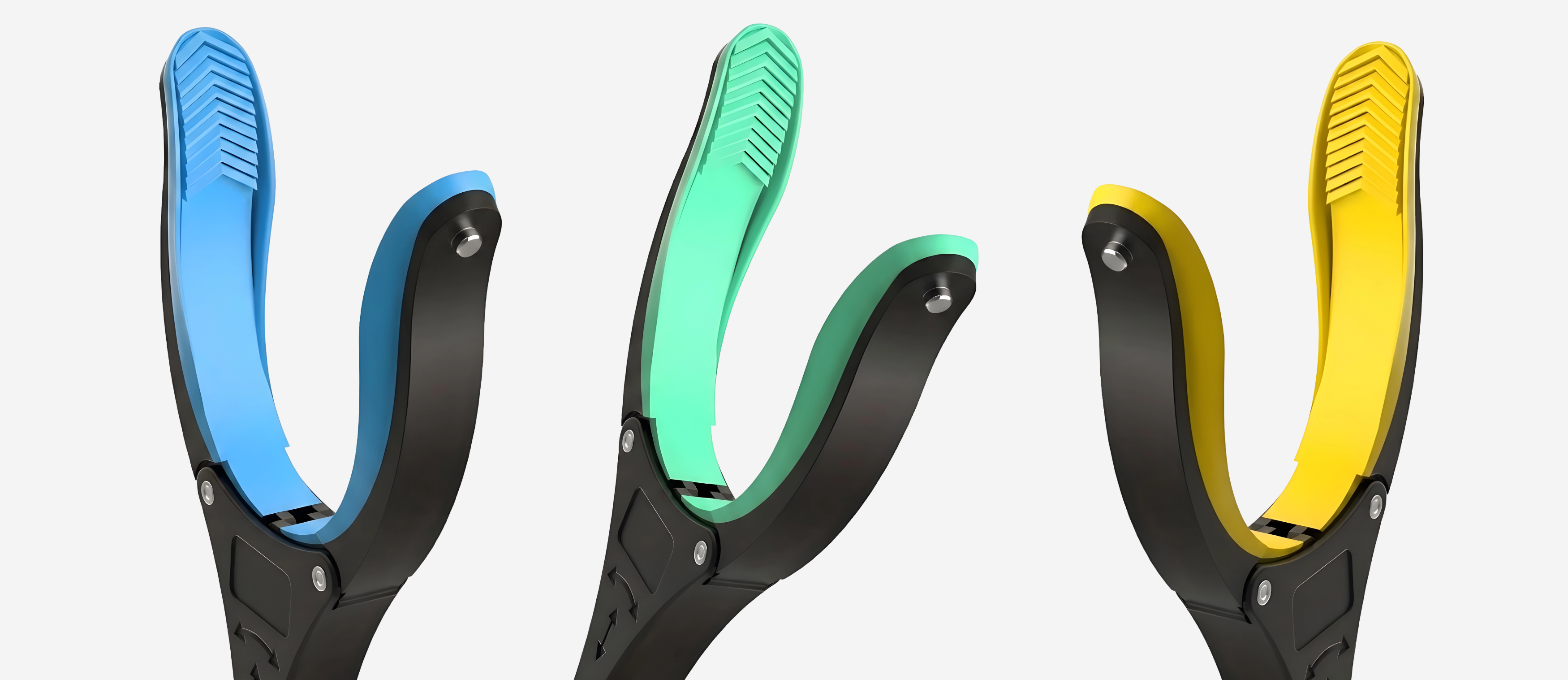
Reacher grabbers come in different lengths, and choosing the right length significantly affects usability -- a reacher that is too short does not provide enough reach for the intended tasks, while one that is too long can be harder to control and maneuver for close tasks. The two most common and useful reacher lengths are 32-inch (the standard, most versatile length for general use) and 43-inch (an extended length for greater reach in specific situations). The right length depends on: the user height (taller users benefit from longer reachers for proportionate reach); the intended reach tasks (overhead cabinet access, floor-level retrieval, or specific hard-to-reach areas); specific medical situations (notably post-hip-replacement recovery, where the extended reach avoids hip bending); wheelchair use (extending reach from a seated position); and the balance between reach and control (longer reachers extend reach but are slightly less precise for close, delicate tasks). Understanding the differences between the 32-inch and 43-inch reacher helps select the right tool -- or recognize when having both lengths serves different tasks.
Direct answer: Choose the 32-inch reacher for general everyday reaching (versatile, easy to control, suits most users and tasks); choose the 43-inch reacher for greater reach needs -- taller users, post-hip-replacement recovery (avoiding hip bending), deep overhead or floor-level access, and extended wheelchair reach. The GrabbersTool 32-inch Reacher and 43-inch Reacher serve these respective needs.
32-Inch vs 43-Inch Reacher Grabber Comparison
| Factor | 32-Inch Reacher | 43-Inch Reacher |
|---|---|---|
| Best general use | The versatile standard length for everyday reaching tasks -- retrieving dropped items, accessing overhead cabinets at moderate height, picking up floor-level items, and general household and kitchen reaching; easy to control and maneuver; suits the majority of users and tasks; the go-to reacher for general adaptive use | An extended length for greater reach requirements -- deeper overhead cabinet and high shelf access, longer floor-level reach without bending, and situations requiring maximum reach; the extra length provides more reach but is slightly longer to maneuver for close tasks |
| User height suitability | Suits most average-height users well; the standard length matches typical reach needs for average height; comfortable for general use across a broad range of users | Better for taller users (over 6 feet) who benefit from a proportionately longer reacher; the extra length matches the greater reach range of taller individuals and provides better proportionate reach |
| Hip replacement and bending-restricted recovery | Useful for general reaching during recovery; provides reach for many low items without bending; suitable for conditions with moderate bending restriction | Especially valuable for post-hip-replacement recovery (the 90-degree hip precaution prohibits bending) -- the extra length reaches floor-level and low items while the patient stays fully upright, maximizing compliance with the hip flexion restriction; also valuable for lumbar spine surgery, vertebral fracture, and other strict bending-restriction situations |
| Wheelchair and seated use | Works well for extending reach from a wheelchair or seated position for moderately distant items; good control for seated reaching tasks | Provides greater extended reach from a wheelchair or seated position -- reaching higher shelves and more distant items that the standard length cannot; the extra length compensates for the fixed seated position reach limitations |
| Reach vs. control balance | Excellent control and precision for close and delicate tasks; the standard length balances reach and maneuverability well; easier to handle for fine retrieval tasks | Maximizes reach but is slightly longer to control for very close, delicate tasks; the trade-off of greater reach for marginally reduced close-task precision; best when maximum reach is the priority |
| When to have both | The 32-inch handles everyday general reaching and close tasks with good control | The 43-inch handles maximum-reach situations; many users benefit from having both lengths -- the 32-inch for everyday versatile use and the 43-inch for specific greater-reach needs (deep overhead, strict bending restriction, extended seated reach) |
Quick Selection Guide
- General everyday reaching, average height: 32-inch Reacher
- Taller user (over 6 feet): 43-inch Reacher
- Post-hip-replacement recovery (no bending): 43-inch Reacher
- Deep overhead or extended reach needs: 43-inch Reacher
- Best control for close, precise tasks: 32-inch Reacher
See the full reacher grabber collection to compare both length options.


