

Hip fractures -- fractures of the proximal femur (femoral neck fractures and intertrochanteric fractures) -- are serious injuries, most common in older adults with osteoporosis after a fall, and associated with significant morbidity, loss of independence, and mortality. Hip fractures almost always require surgery to allow mobilization (prolonged immobilization is dangerous in older adults). The surgical treatment depends on the fracture type and patient: internal fixation (screws, a sliding hip screw, or an intramedullary nail for intertrochanteric fractures, or screws for some femoral neck fractures) or arthroplasty (hemiarthroplasty -- replacing the femoral head, or total hip arthroplasty, commonly for displaced femoral neck fractures). Early mobilization after surgery is a priority (to prevent the complications of immobility). Hip fracture recovery involves: early mobilization with weight-bearing (usually weight-bearing as tolerated, with a walker then progressing) and physical therapy, reduced mobility and standing tolerance (from the injury, surgery, and deconditioning), bending limitations (for arthroplasty fractures, hip precautions similar to elective hip replacement may apply; and bending is generally difficult and uncomfortable early on), reduced endurance and often significant deconditioning (hip fracture in older adults commonly causes functional decline), and a prolonged rehabilitation (recovery of function takes months, and some patients do not fully regain pre-fracture function). Hip fracture recovery significantly affects kitchen function -- reduced mobility and standing, bending limitations, walker use, and reduced endurance all limit kitchen tasks. The reacher and seated preparation are especially important. Kitchen function is affected by reduced mobility and standing tolerance, bending limitations, walker use (limiting hand availability), and reduced endurance.
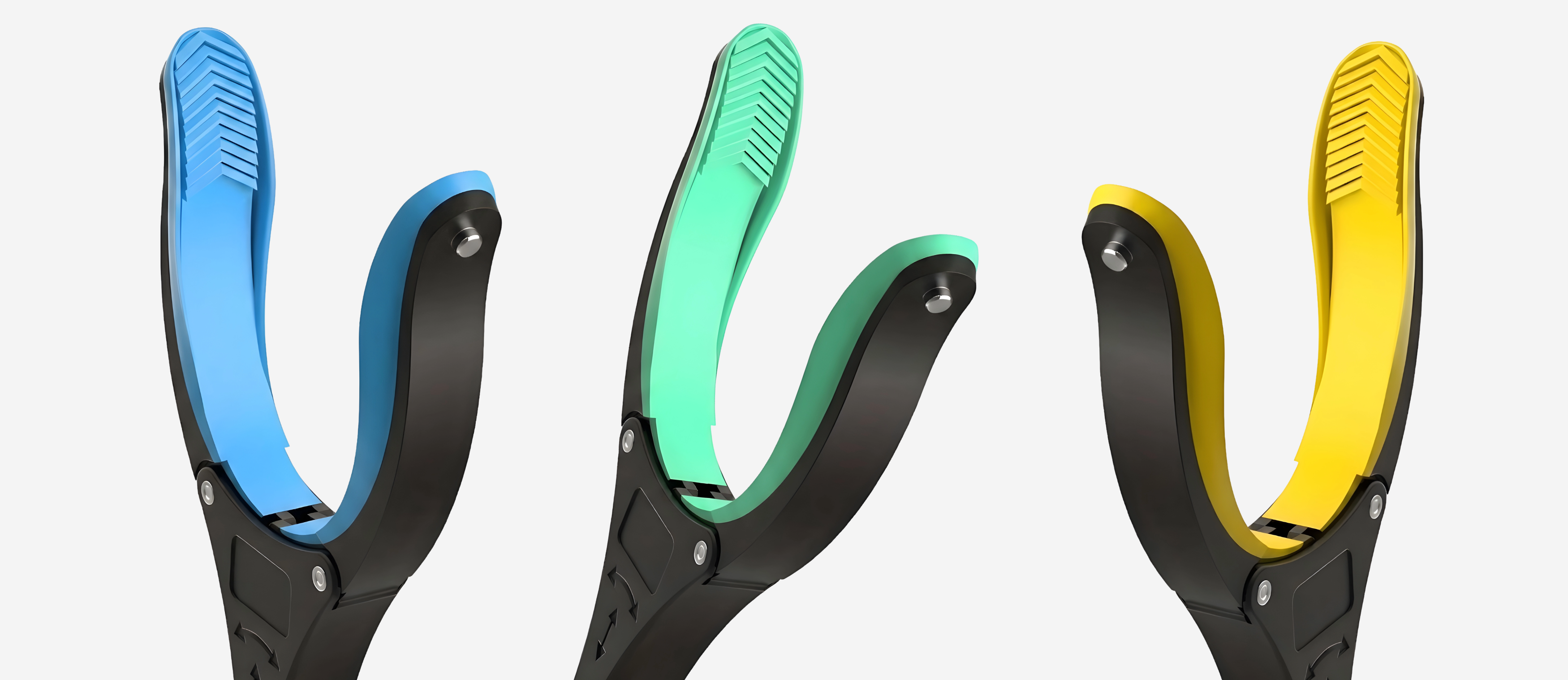
Direct answer: Hip fracture recovery kitchen adaptive tools address reduced mobility, bending limitations, and walker use: reachers to retrieve items without bending, seated preparation, and walker accommodations. The GrabbersTool 32-inch Reacher (or the 43-inch Reacher for arthroplasty hip precautions) retrieves low kitchen items without the bending the recovering hip cannot perform.
Hip Fracture Recovery Kitchen Strategy
| Recovery Consideration | Kitchen Restriction | Adaptive Solution |
|---|---|---|
| Reduced mobility, standing tolerance, and walker use | Hip fracture recovery involves reduced mobility and standing tolerance -- the injury, surgery, pain, and deconditioning limit standing and walking; early mobilization uses a walker (occupying both hands, limiting kitchen task performance and item transport); kitchen standing tolerance is significantly reduced; walking within the kitchen is slow and effortful with the walker; reduced endurance further limits kitchen activity; the reduced mobility and walker use substantially limit kitchen tasks; hip fracture in older adults commonly causes functional decline, making the reduced mobility significant and sometimes prolonged | Seated kitchen preparation to reduce the standing that hip fracture recovery limits (a kitchen chair or stool at accessible height); a walker with a basket or tray to transport kitchen items (compensating for occupied hands); reacher grabber (GrabbersTool) to retrieve items without walking to them; prepare simple meals requiring minimal standing and mobility; slow cooker and microwave for low-effort meals; caregiver assistance early in recovery; the seated preparation and reacher accommodate the reduced mobility and walker use; physical therapy for mobility recovery |
| Bending limitations and low kitchen access | Hip fracture recovery limits bending -- bending down and forward is difficult and uncomfortable early in recovery (from the injury, surgery, and pain); for hip fractures treated with arthroplasty (hemiarthroplasty or total hip replacement), hip precautions similar to elective hip replacement may apply (avoiding hip flexion beyond 90 degrees, no bending -- to prevent dislocation); the bending limitation affects reaching low kitchen cabinets, floor-level items, and low storage; getting down to and up from low positions is difficult; the bending limitation (and hip precautions for arthroplasty) affect low kitchen access, similar to elective hip replacement recovery | Reacher grabber (GrabbersTool 32-inch, or the 43-inch for arthroplasty hip precautions requiring no bending) to retrieve low, floor-level, and low-cabinet kitchen items without the bending the recovering hip cannot perform -- essential for the bending limitation; kitchen reorganization to place frequently used items at accessible heights (avoiding low bending); for arthroplasty fractures, follow the hip precautions (no hip flexion beyond 90 degrees, elevated seating, no bending) as for elective hip replacement; the reacher accesses low items without hip bending; occupational therapy for hip fracture recovery kitchen technique and precautions |
| Deconditioning, endurance, and hip fracture recovery progression | Hip fracture in older adults commonly causes significant deconditioning and functional decline -- reduced strength, endurance, and mobility, sometimes with incomplete recovery of pre-fracture function; the reduced endurance limits sustained kitchen activity; the recovery is prolonged (months of rehabilitation), and some patients require ongoing mobility aids and assistance; the deconditioning and reduced endurance affect kitchen function throughout recovery; rehabilitation (physical therapy for strength, mobility, and function) is important to recovery; nutrition is important for healing and recovery; kitchen function returns gradually, and some patients need ongoing adaptive support | Energy conservation and seated kitchen preparation for the reduced endurance and deconditioning (seated tasks, pacing, breaks, simple meals); gradual return to kitchen activity as strength, mobility, and endurance improve through rehabilitation; the reacher and seated preparation may be needed on an ongoing basis for patients with incomplete recovery; nutrition support for healing (the kitchen supports recovery nutrition); physical therapy and rehabilitation for hip fracture functional recovery; caregiver support as needed; the adaptive tools support kitchen function through the prolonged hip fracture recovery and any residual limitation; the reacher is valuable throughout for the bending limitation |
See the 32-inch Reacher and 43-inch Reacher for hip fracture recovery kitchen bending and mobility support.


