

Huntington disease (HD) is a progressive hereditary neurodegenerative condition that causes motor, cognitive, and psychiatric symptoms. Caregivers of HD patients face a unique challenge: the person they care for has involuntary movements (chorea) that make many adaptive tools difficult to use, while simultaneously having declining voluntary motor control that makes standard tools impossible. The caregiver role in HD involves identifying what the person can still do independently, setting up the environment and tools to support that function, and taking over tasks the person can no longer perform safely. Adaptive equipment serves both goals: it extends the period of independence and reduces the physical burden on the caregiver when assistance becomes necessary.
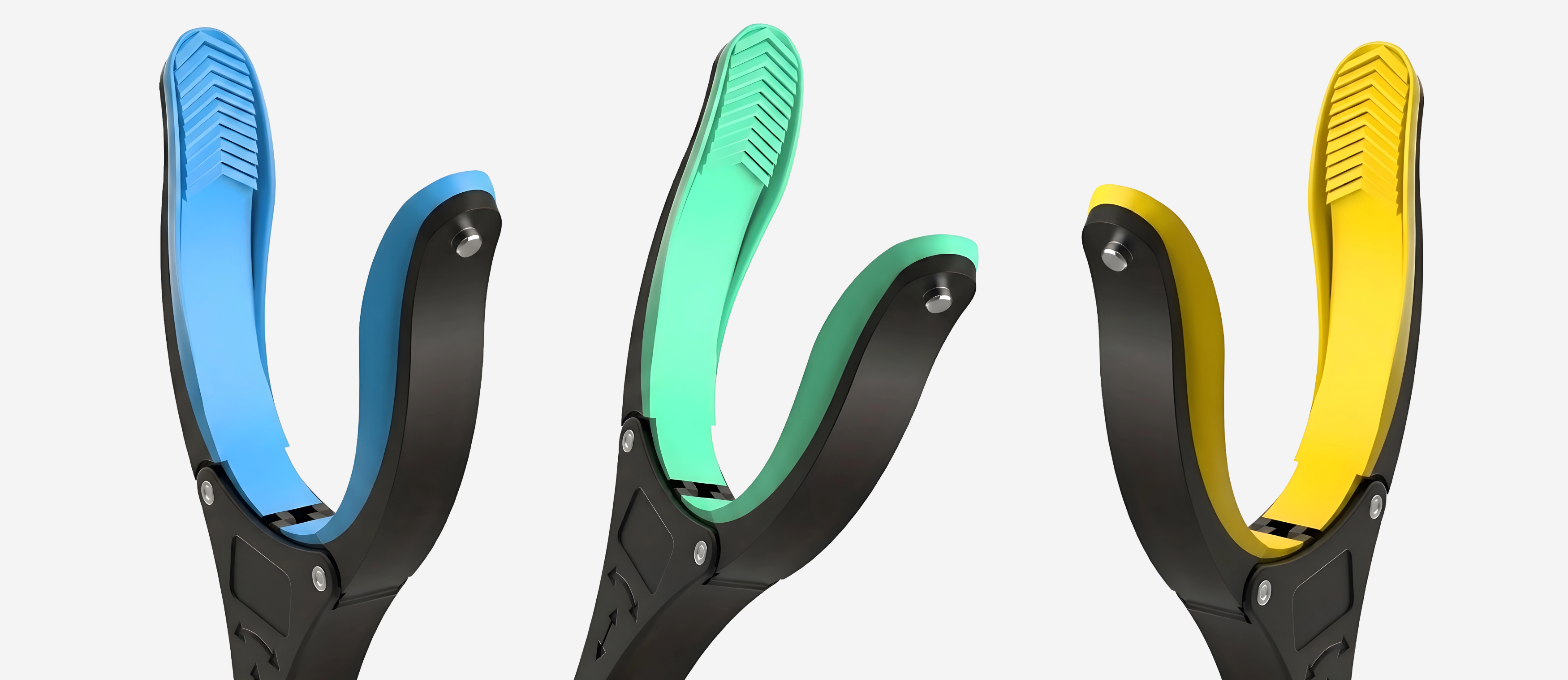
Direct answer: The most caregiver-relevant adaptive tools for HD are those that reduce task difficulty for the HD patient during the mid-stage when some independence remains, and those that protect the caregiver from injury during physical assist tasks. The electric jar opener is appropriate during mid-stage HD when grip and rotation are unreliable -- it requires only a positioning motion rather than sustained grip. The reacher can be used by a caregiver to retrieve dropped items without bending repeatedly, protecting caregiver back health. See the Electric Jar Opener and 32-inch Reacher.
Huntington Disease Stage Adaptive Equipment Strategy
| HD Stage | Patient Capability | Caregiver Role | Adaptive Tool Strategy |
|---|---|---|---|
| Early | Independent with supervision; chorea beginning | Monitor; modify environment for safety | Non-slip mats; remove fall hazards; weighted utensils to dampen chorea |
| Mid | Needs assist for complex tasks; voluntary movement declining | Partial assist; complete difficult tasks | Electric jar opener (patient can position but not rotate); reacher for caregiver to retrieve drops |
| Late | Total care required; minimal voluntary movement | Full physical assist for all ADLs | Caregiver body mechanics; transfer aids; electric appliances reduce caregiver effort |
Protecting the Caregiver During Repeated Bending Tasks
One of the most common caregiver injuries in HD is back strain from repeatedly bending to pick up items dropped due to chorea. A reacher kept in the primary care area allows the caregiver to retrieve dropped items without bending -- over dozens of retrievals per day, this cumulative protection is significant. See the reacher collection and adaptive kitchen tools.


