

Knee osteoarthritis (knee OA) is one of the most common and disabling forms of osteoarthritis, affecting a large proportion of older adults and a leading cause of mobility limitation and disability. Knee OA involves progressive degradation of articular cartilage, subchondral bone remodeling, osteophyte formation, and synovial inflammation, most commonly affecting the medial tibiofemoral compartment (leading to varus/bowlegged deformity), the lateral compartment, and the patellofemoral joint. Risk factors: age, obesity (a major modifiable risk factor -- excess weight increases knee joint load), prior knee injury (meniscus or ligament injury, fracture), occupational and repetitive knee loading, malalignment, and genetics. Symptoms: knee pain (worse with weight-bearing activity -- standing, walking, stairs; and after prolonged activity), stiffness (morning stiffness of short duration and gelling after inactivity), reduced range of motion, crepitus (grinding), joint swelling, instability (buckling), and functional limitation in walking, standing, and stair use. Knee OA directly impairs kitchen function because the kitchen requires prolonged standing (at counters and stovetops) and mobility (walking within the kitchen, stairs to reach the kitchen): kitchen standing loads the arthritic knees causing pain; kitchen walking and pivoting provoke knee OA pain and instability; getting up from kitchen chairs is difficult with knee OA; and stairs to access the kitchen are painful. Knee OA is a leading indication for total knee arthroplasty (TKA) in advanced cases.
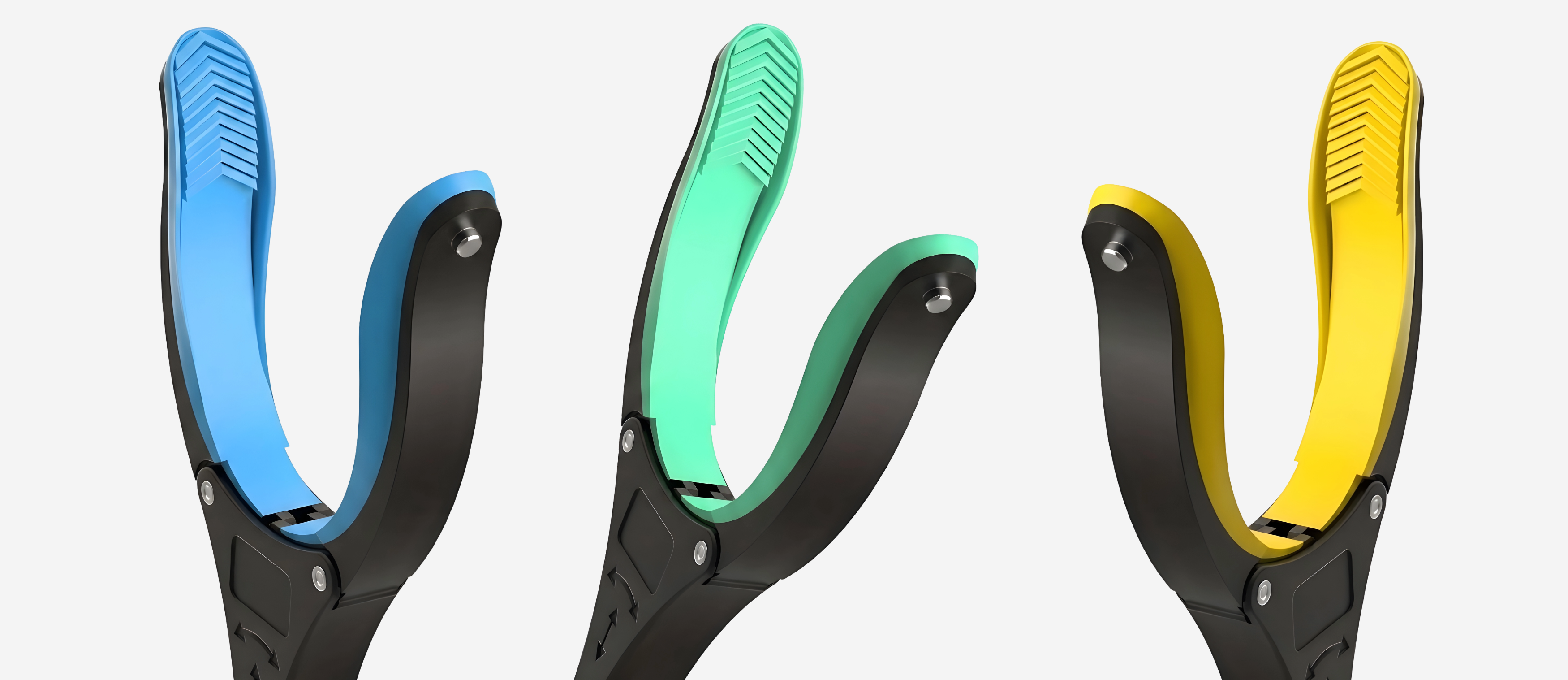
Direct answer: Knee osteoarthritis kitchen adaptive tools primarily address standing pain and mobility: kitchen seating for seated preparation, anti-fatigue mats, and reachers to reduce painful bending and reaching. The GrabbersTool 32-inch Reacher reduces the knee-loading bending and squatting that knee OA makes painful when retrieving low kitchen items.
Knee Osteoarthritis Kitchen Adaptive Strategy
| Knee OA Feature | Kitchen Impact | Adaptive Solution |
|---|---|---|
| Standing pain and prolonged kitchen standing intolerance | Knee OA pain worsens with weight-bearing, so prolonged kitchen standing (at the counter for food preparation, at the stove for cooking, at the sink for dishwashing) loads the arthritic knees and provokes increasing pain; kitchen standing tolerance is reduced -- the patient can only stand for a limited time before knee pain forces rest; the cumulative standing time required for full meal preparation may exceed the knee OA standing tolerance; standing on hard kitchen floors worsens knee OA joint loading; the pain increases through the duration of standing and may persist after (post-activity knee pain) | Seated kitchen preparation is a primary knee OA kitchen strategy -- a kitchen stool or perch at counter height allows food preparation without prolonged knee-loading standing; anti-fatigue cushioned kitchen mat to reduce knee joint impact during necessary standing; alternate sitting and standing to manage knee OA standing tolerance; organize kitchen tasks to minimize standing time; slow cooker and one-pot cooking to reduce active kitchen standing; weight management (weight loss significantly reduces knee OA load and pain -- a key intervention); the kitchen stool is the single most valuable knee OA kitchen adaptation |
| Bending, squatting, and low kitchen access with knee OA | Knee OA makes deep knee flexion painful -- bending down and squatting to access low kitchen cabinets, retrieve items from the floor, load the dishwasher, or reach into low ovens and refrigerator drawers loads the arthritic knees in painful deep flexion; the pain and stiffness of knee OA limit the range of comfortable knee bending; getting down to and up from a squatting position is difficult and painful; kneeling on the kitchen floor (for low cabinet access) is often impossible with knee OA; these deep-flexion kitchen tasks are among the most knee OA pain-provoking | Reacher grabber (GrabbersTool 32-inch) to retrieve low kitchen items without knee-loading bending and squatting -- the reacher accesses floor-level and low-cabinet items while the patient remains standing or seated; kitchen reorganization to move frequently used items to waist-height accessible storage (reducing the need for low bending and high reaching); avoid deep knee flexion kitchen tasks; pull-out low cabinet shelves and drawers to bring items up rather than requiring the patient to bend down; long-handled kitchen tools to extend reach without bending |
| Stair difficulty, instability, and knee OA kitchen mobility | Knee OA makes stairs painful and difficult (stair climbing and descending highly load the patellofemoral and tibiofemoral joints) -- accessing a kitchen on a different floor is challenging; knee OA instability and buckling (the knee giving way) creates fall risk during kitchen mobility; kitchen walking and pivoting provoke knee OA pain; rising from kitchen chairs (sit-to-stand) is difficult and painful with knee OA (loads the knee in flexion under body weight); the combination of pain, stiffness, reduced range of motion, and instability limits overall kitchen mobility and safety | Kitchen chair with armrests for knee OA sit-to-stand assistance (push up on armrests to offload the knees); raised kitchen seating (higher seats reduce the knee flexion range needed to rise); handrails for stairs to knee OA kitchen access and for kitchen balance support; non-slip kitchen surfaces for knee OA instability fall prevention; cane or walker for knee OA kitchen mobility support if needed; physical therapy for knee OA (quadriceps strengthening reduces pain and improves function); knee OA management (weight loss, exercise, topical and oral analgesics, intra-articular injections; TKA for advanced knee OA) |
See the 32-inch Reacher for knee osteoarthritis kitchen bending reduction and low-item access support.


