

Occupational therapists consistently report that male patients are more reluctant to adopt adaptive equipment than female patients with equivalent functional limitations. This pattern has been documented in rehabilitation literature and is observed across conditions: men with arthritis wait longer to request adaptive tools, men recovering from hip replacement resist reacher grabbers longer, and older men are less likely to use grab bars even when their balance clearly warrants them. The result is increased fall risk, greater joint strain, and slower functional recovery -- all driven by factors that have nothing to do with the functional utility of the tools themselves.
Direct answer: Male underuse of adaptive equipment is well-documented in occupational therapy practice and is associated with identity perceptions around tools as markers of dependency or weakness. Framing matters: men who resist adaptive equipment often respond positively when tools are presented in terms of performance (maintaining capability and output) rather than compensation (substituting for lost ability). The GrabbersTool Reacher and Electric Jar Opener address this framing directly -- they are task-completion tools, not dependency markers.
What the Research Shows
Studies on assistive technology adoption consistently find gender differences in acceptance rates. A common pattern: women in equivalent functional states adopt tools earlier, use them more consistently, and report higher satisfaction with them. Men delay adoption, use tools less consistently, and report more ambivalence about tool use even when the tools demonstrably work.
This is not universal -- some men adopt tools readily, and occupational therapist framing and relationship quality matter substantially. But the pattern is consistent enough to be a recognized issue in rehabilitation practice.
Why Men Underuse Adaptive Tools: OT Perspective
- Identity threat: Many men have professional or personal identities strongly tied to physical capability. Tools that signal physical limitation feel like identity threats, not practical solutions.
- Self-reliance norms: Cultural messages that equate competence with not needing assistance make tool acceptance feel like admission of failure.
- Performance framing absence: Most adaptive equipment is marketed with disability-centric framing that emphasizes limitation rather than capability maintenance.
- Social observation anxiety: Men report more concern about being seen using adaptive tools by family, colleagues, or neighbors.
Framing That Works With Male Users
| Avoid (Deficit Framing) | Use Instead (Performance Framing) |
|---|---|
| You need this because you can no longer reach the floor | This extends your reach so you can keep working independently |
| This compensates for your grip weakness | This handles the mechanical task so your hands stay available for skilled work |
| Adaptive equipment for people with limitations | Tools that optimize task efficiency |
| You should use this to prevent injury | This protects your joints so you can stay active longer |
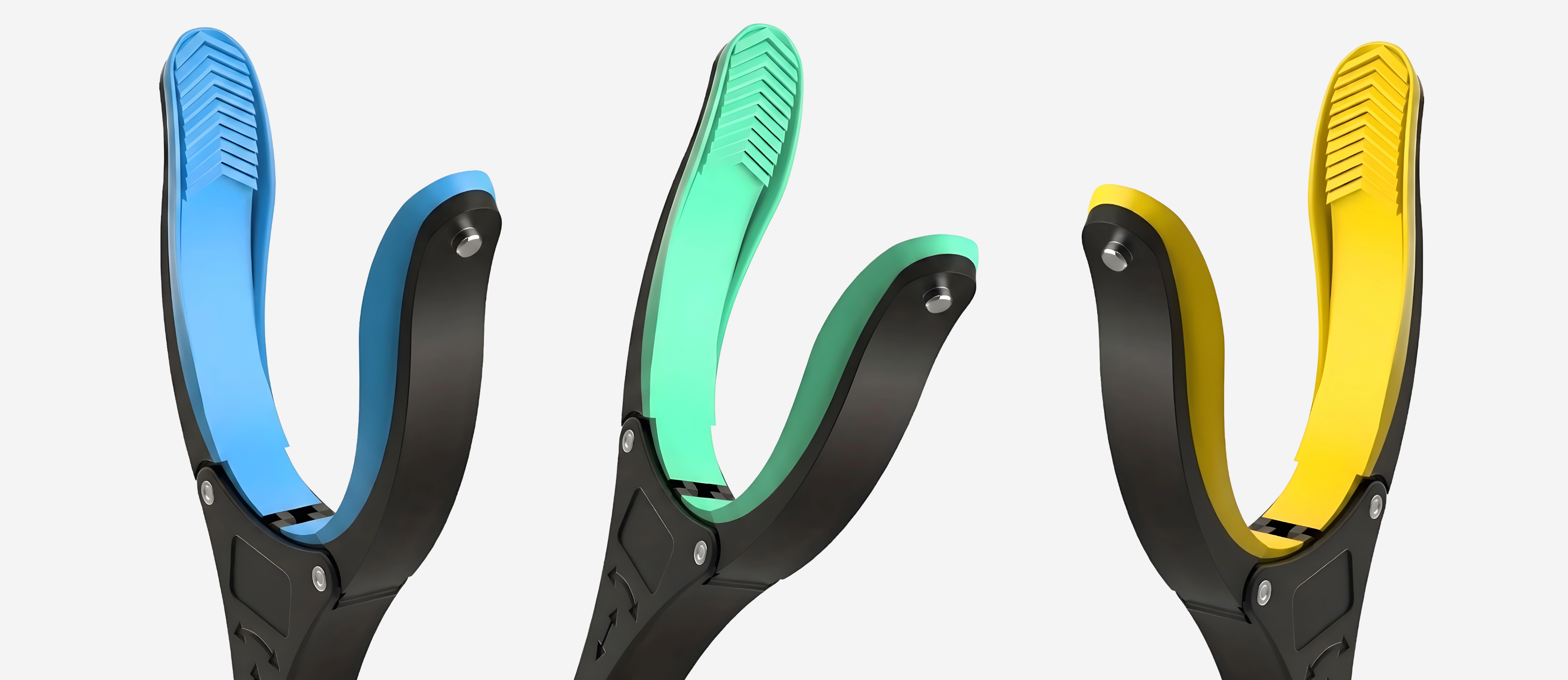
The GrabbersTool 32-inch Reacher is a task-completion tool -- it picks things up from the floor so you do not have to stop what you are doing and manage a bending task. The Electric Jar Opener handles a mechanical task. Both are framed well as tools that maintain output, not mark limitation. See the full reacher collection.


