

Freezing of gait (FOG) in Parkinson disease is a sudden, brief, involuntary cessation of stepping -- the patient feels their feet are glued to the floor and cannot initiate forward movement. FOG is one of the most disabling Parkinson motor symptoms, affecting approximately 50% of PD patients overall and up to 80% of patients with advanced disease. FOG occurs characteristically in specific trigger situations: narrow spaces (kitchen doorways, between kitchen furniture), turns (especially in constrained spaces), approaching a target (the kitchen counter, the stove), and dual-task situations (carrying something while walking). The kitchen is a high-FOG-risk environment precisely because it contains all the classic FOG triggers simultaneously: narrow doorway entry to the kitchen, multiple turns between the stove and counter and refrigerator, approaching targets (the stove, the counter) while carrying items. FOG while carrying hot liquid from the stove, in a narrow kitchen space, or near hard kitchen surfaces creates a severe fall and burn injury risk. Cueing strategies -- auditory (metronome, music), visual (lines on the floor, laser cue), and mental (step counting) -- can break FOG episodes and are a critical Parkinson kitchen safety intervention.
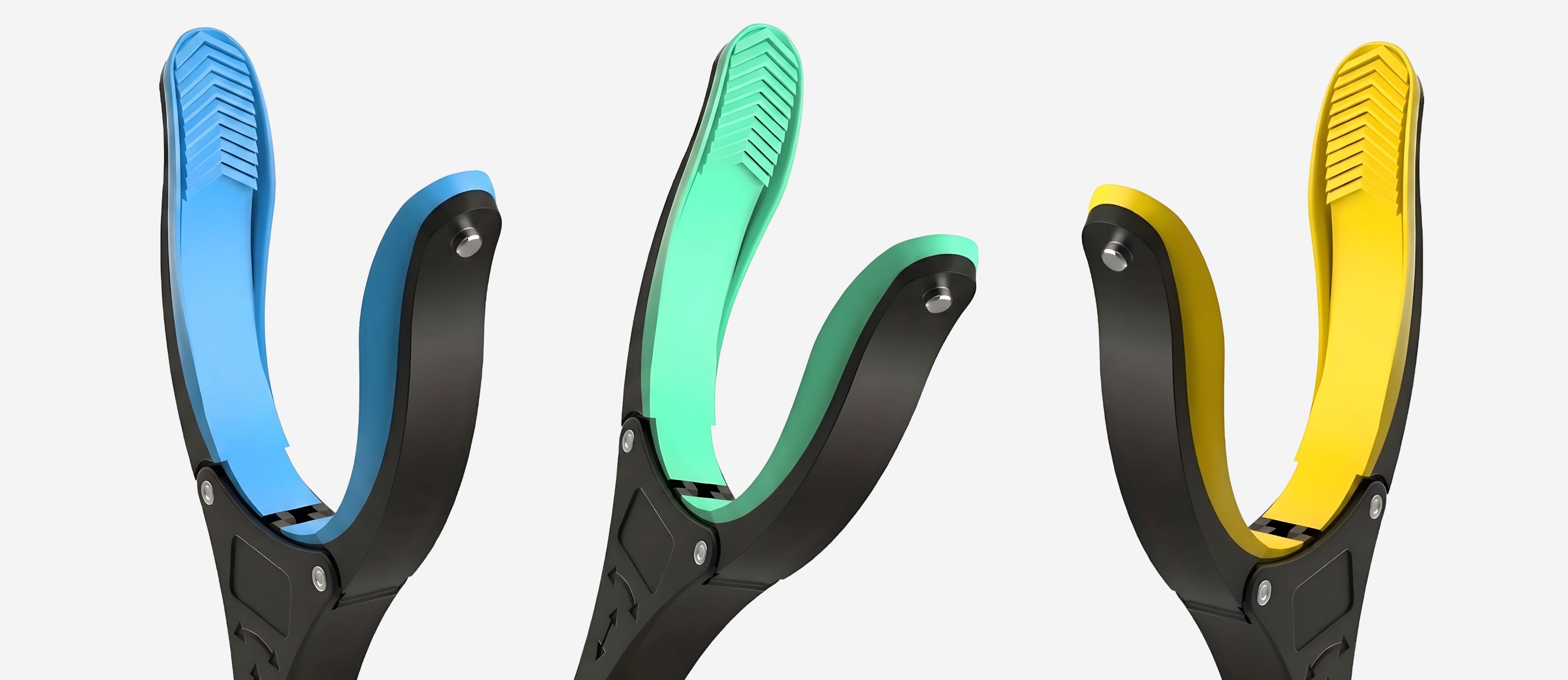
Direct answer: Parkinson FOG kitchen safety requires environmental modification (widen kitchen pathways, eliminate narrow spaces that trigger FOG) and cueing availability (auditory metronome or phone app, visual floor cues). Adaptive tools that reduce the need to walk across the kitchen while carrying items reduce FOG injury risk. The reacher reduces the number of trips between kitchen zones. The GrabbersTool 32-inch Reacher reduces kitchen walking that triggers FOG in Parkinson disease.
Parkinson FOG Kitchen Safety Strategy
| FOG Trigger in Kitchen | Injury Risk | Safety Strategy |
|---|---|---|
| Narrow kitchen doorways and spaces | FOG commonly triggered by narrow entry to kitchen; patient freezes in doorway holding items; may fall in doorway if balance lost during freeze; particularly dangerous if carrying hot items | Widen kitchen doorway if structurally possible; remove obstacles from kitchen entry path; use rolling cart or counter sliding to move items rather than carrying through narrow spaces; reacher to access items without crossing narrow spaces |
| Approaching the stove while carrying items | FOG triggered as patient approaches the stove (a common freezing trigger is approaching a targeted destination); freezing while holding a heavy or hot pot near the stove creates fall and burn risk; stove is one of the highest-risk FOG kitchen locations | Slide pots on the stovetop rather than carrying them to the stove; prepare items at the stove (do not carry from far); rhythm cues (singing or counting) while carrying to the stove; keep clear pathway from preparation area to stove |
| Turning between kitchen zones | FOG is triggered by turns, especially tight turns; the kitchen requires many turns (stove to sink, counter to refrigerator); turning while carrying items or near hard surfaces is high-risk | Wide-radius turns (step around rather than pivoting); auditory cueing during turns; kitchen organization to minimize the number of turns required; reacher to access items across the kitchen without walking and turning |
| Dual-task FOG (carrying while walking) | Carrying a kitchen item while walking (a dual-task) worsens FOG; any cognitive demand added to walking increases FOG frequency; the combination of carrying hot food and walking the kitchen is high-risk | Rolling kitchen cart to transport items without dual-task walking; slide items on counter surface; put down the carried item before navigating tight spaces; minimize the carry-and-walk tasks in the kitchen |
See the 32-inch Reacher and Electric Jar Opener for Parkinson disease kitchen FOG safety management.


