

Before the widespread adoption of telehealth, access to occupational therapy for adaptive equipment evaluation was limited by geography: rural patients, patients without transportation, and patients whose condition made travel difficult had inconsistent access to OT services that could recommend appropriate adaptive tools. The post-2020 expansion of telehealth has changed this access equation significantly. GrabbersTool now regularly hears from customers who were referred to us by their telehealth OT -- practitioners who conducted video home assessments, observed the patient kitchen environment on camera, and generated adaptive equipment recommendations without an in-person visit. This model of adaptive equipment access is expanding and changing how adaptive tools reach the people who need them.
Direct answer: telehealth occupational therapy -- specifically video-based home environment assessment -- is now a primary pathway through which people in rural and transportation-limited communities access adaptive equipment recommendations. The OT observes the patient kitchen via video, identifies functional limitations in real-time task demonstration, and recommends specific tools including reachers, electric openers, and mobility aids. GrabbersTool products are commonly recommended through this telehealth pathway because they are commercially available, shipped directly, and do not require a medical device distributor.
Telehealth OT vs. In-Person OT for Adaptive Equipment
| Aspect | In-Person OT | Telehealth OT |
|---|---|---|
| Environment assessment | Direct observation of actual home environment | Video observation -- patient can demonstrate using camera pan |
| Tool trial | Can bring physical tools for patient to trial in session | Cannot provide physical trial; relies on patient-purchased trial or description |
| Geographic access | Limited by proximity to OT practice or home visit service area | Statewide access (licensing-permitting); rural and remote access included |
| Transportation burden | Patient must travel to clinic or OT must travel to home | No travel; camera session in patient home |
| Documentation for insurance | Standard documentation pathways established | Same documentation; some payers have telehealth-specific requirements |
| Follow-up | Requires scheduling and travel for re-assessment | Rapid follow-up via video for tool troubleshooting after purchase |
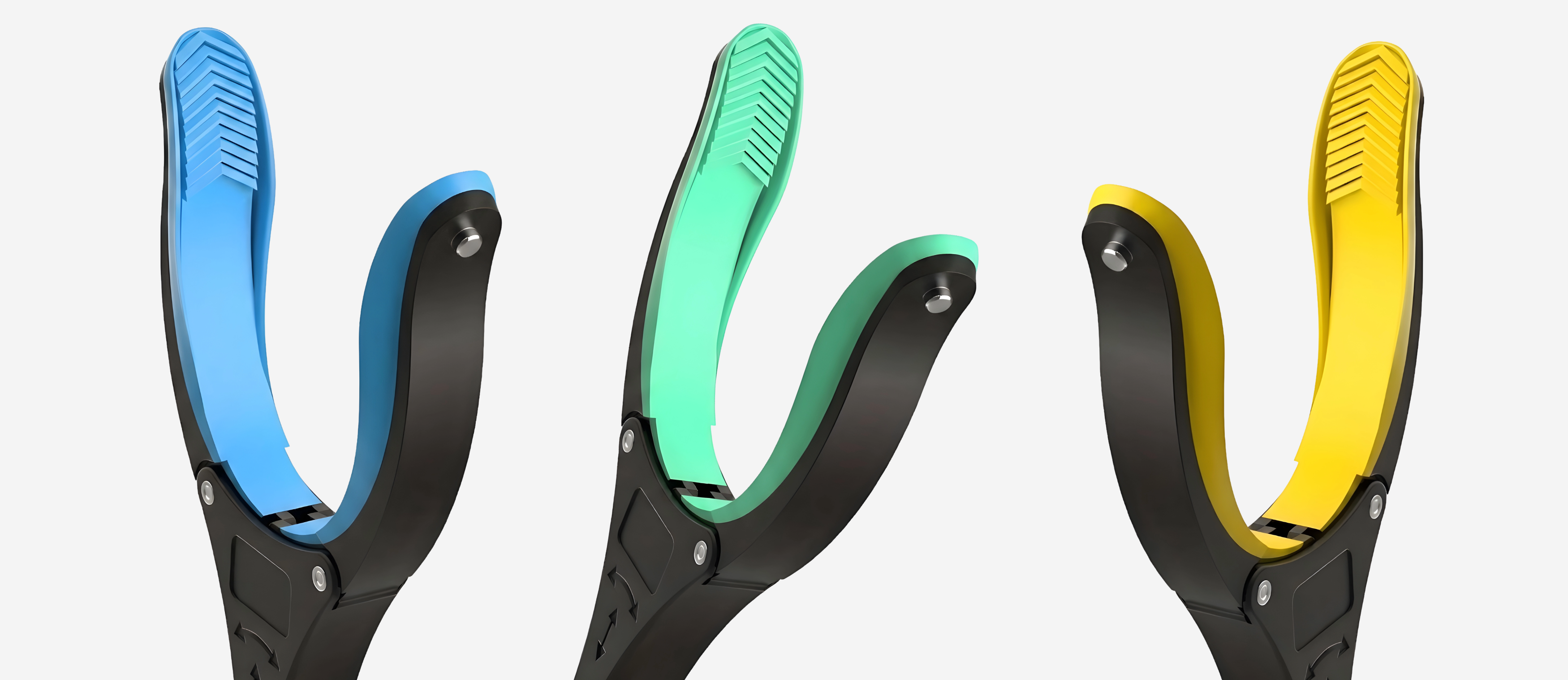
For specific adaptive tool specifications that telehealth OTs can review for their patients, see each product page. Browse Reacher Grabber Tools.
What Telehealth OT Can and Cannot Assess Remotely
Video-based OT assessment has genuine strengths and genuine limitations for adaptive equipment recommendation. Strengths: the OT sees the actual home kitchen environment (counter height, cabinet arrangement, floor layout) which an office-based assessment cannot provide. The patient can demonstrate functional tasks on camera -- opening a jar attempt, reaching for a shelf, rising from a chair -- which provides direct functional assessment. Limitations: the OT cannot measure grip strength directly (dynamometry is not possible remotely), cannot physically demonstrate tool use, and cannot assess fine motor tasks as precisely as in-person testing. For most GrabbersTool adaptive tool recommendations, the telehealth assessment is sufficient: the functional task observation (can the patient open a jar? can they bend to retrieve a floor item?) provides the information needed to recommend the right tool category.
Patient Preparation for Telehealth OT Kitchen Assessment
GrabbersTool recommends that patients preparing for a telehealth OT kitchen assessment: (1) position the camera or phone where the OT can see the kitchen counter, cabinets, and floor area; (2) have a sample jar (sealed) and a sample can available to demonstrate opening attempts; (3) have a typical dropped item scenario available (e.g., a pen on the floor to demonstrate retrieval difficulty); and (4) be prepared to describe which specific kitchen tasks feel most problematic and most dangerous. This preparation allows the OT to make specific tool recommendations rather than general category suggestions. The more specific the functional limitation description, the more precise the tool recommendation can be. See also: OT Assessment Guide: Evaluating Adaptive Tool Needs for Daily Living.
Browse Easy Grip Kitchen Openers and Reacher Grabber Tools.


