

Transverse myelitis (TM) is an inflammatory disorder that damages the myelin sheath of the spinal cord at a defined horizontal level, disrupting motor and sensory signals below the lesion. It can occur as an isolated condition, in the context of multiple sclerosis, neuromyelitis optica (NMO/NMOSD), or as a post-infectious inflammatory response. The functional impact depends on the spinal level affected: cervical lesions affect arm and hand function in addition to leg and trunk function; thoracic lesions primarily affect the legs and trunk; lumbar lesions affect the legs and lower body. Recovery is highly variable -- some patients recover substantially over months; others have permanent deficits. During the recovery period and afterward, adaptive tools support the independence that remaining function permits.
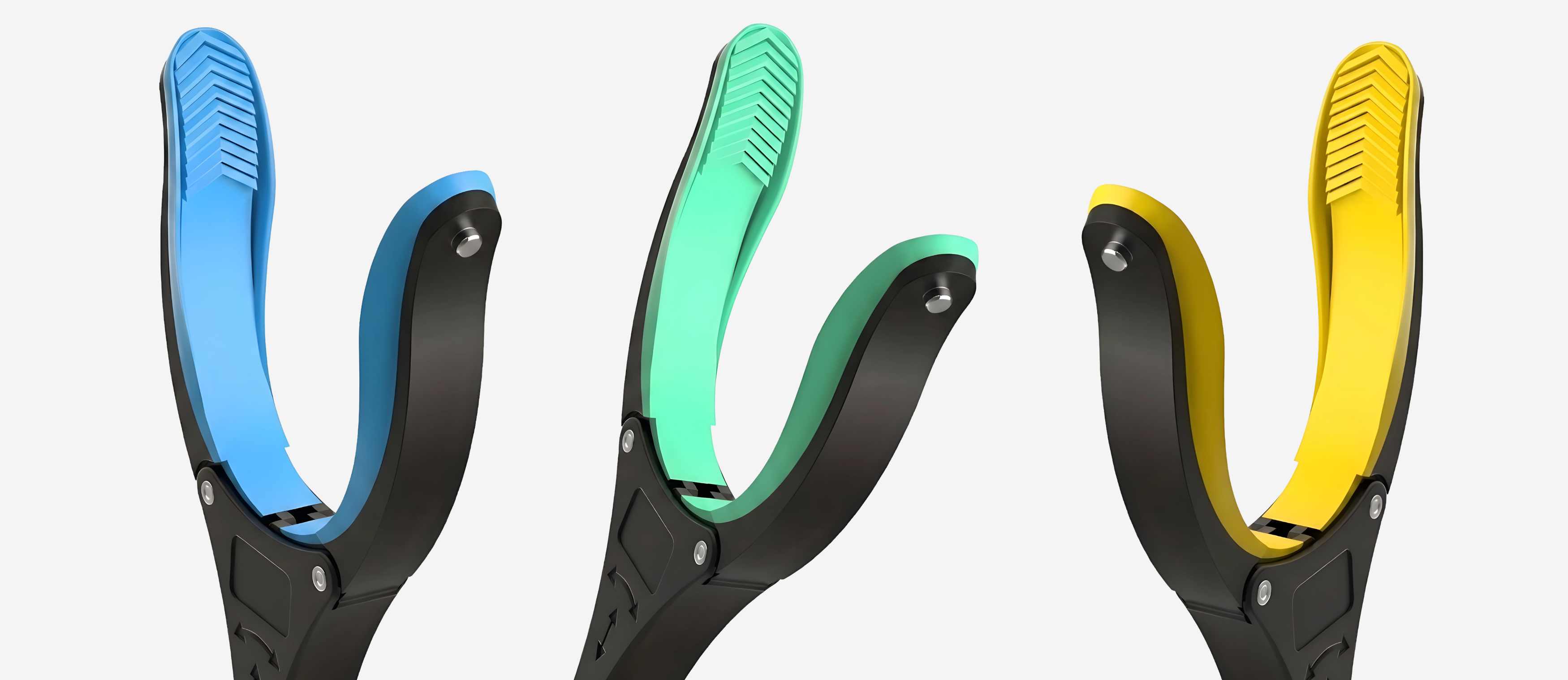
Direct answer: The adaptive tools most useful for transverse myelitis patients depend on the lesion level. For cervical TM with hand weakness, the electric jar opener is the highest-priority kitchen tool -- it replaces the grip and rotation demand that TM-affected hand muscles cannot generate. For thoracic or lumbar TM with leg function loss and wheelchair use, the 43-inch reacher is the priority tool -- it provides the extended reach that a seated position requires for floor and low-surface access. See the Electric Jar Opener and 43-inch Reacher.
Transverse Myelitis Level-Specific Adaptive Needs
| TM Lesion Level | Primary Deficit | Key Adaptive Tool |
|---|---|---|
| Cervical (C3-C7) | Hand and arm weakness; grip loss; possible need for wheelchair | Electric jar opener; built-up grip utensils; reacher; power wheelchair tray |
| Thoracic (T1-T12) | Full leg paralysis; intact arm/hand; trunk stability variable | 43-inch reacher for wheelchair; kitchen setup for seated cooking |
| Lumbar (L1-L5) | Leg and lower trunk weakness; some may be ambulatory with aids | Reacher for floor access; energy conservation tools; non-slip mats |
| Incomplete lesion (any level) | Mixed motor and sensory; fatigue; recovery ongoing | Adaptive tools matched to current function; re-assessment as recovery progresses |
Occupational therapy assessment is strongly recommended for transverse myelitis patients, as the functional profile changes significantly during recovery and adaptive tools should match the current level of function rather than the worst-case deficit. Browse the reacher collection and adaptive kitchen tools.


