

ALS (amyotrophic lateral sclerosis) is the condition that most directly challenges the concept of adaptive equipment as a long-term solution. Unlike orthopedic conditions where recovery is the trajectory, or stable neurological conditions where the equipment is fitted to a fixed functional profile, ALS involves progressive change in which the functional level of today is not the functional level of next month. Adaptive equipment for ALS is not a static prescription but a staged, anticipatory process -- fitting for where the person will be in 3-6 months, not just where they are now.
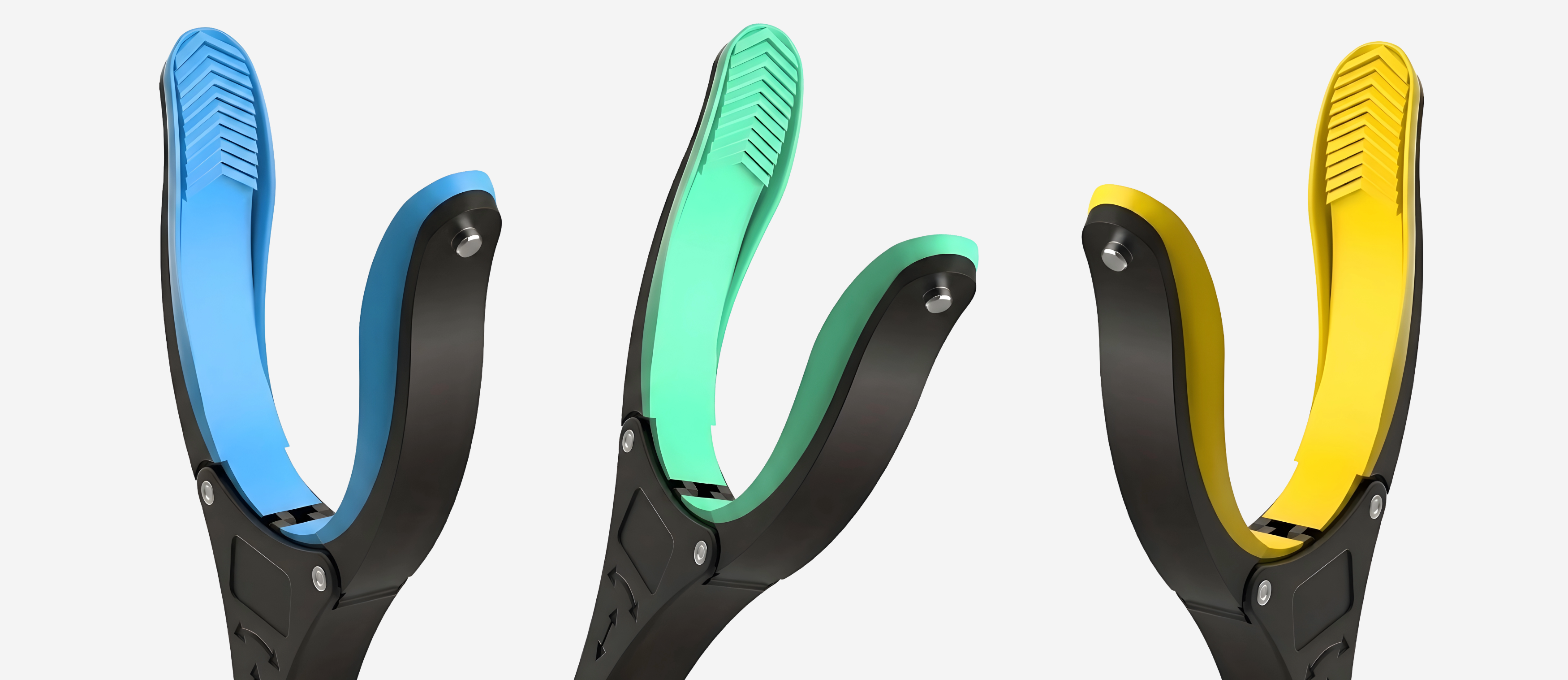
Direct answer: Reacher grabbers are appropriate for ALS patients who retain adequate hand and wrist function to operate the trigger mechanism. As grip and pinch strength decline, trigger force becomes the critical specification variable. GrabbersTool reachers use a standard pistol-grip trigger mechanism -- appropriate for patients in the earlier-to-middle functional stages of ALS. When grip function is significantly compromised, palmar-assist grip modifications or powered reaching devices become more relevant than standard reachers.
Functional Staging and Equipment Fit
| ALS Stage | Upper Extremity Function | Relevant Equipment | Reacher Applicability |
|---|---|---|---|
| Early (Functional) | Mild weakness, fatigue | Lightweight tools, energy conservation aids | Yes -- full function |
| Mid (Compensating) | Moderate weakness, reduced grip | Built-up handles, lightweight reachers, arm supports | Yes -- evaluate trigger force |
| Late Upper (Severely Limited) | Minimal hand function | Powered reaching aids, environmental controls | Limited -- proximal-assist devices |
| Late (Dependent) | No functional hand use | Full power wheelchair, eye-gaze communication | No -- powered alternatives |
Energy Conservation in ALS
ALS produces significant fatigue alongside progressive weakness. For patients in early and mid stages, energy conservation is as important as mechanical adaptation. The reacher grabber serves double duty: it eliminates the physical effort of bending and reaching, preserving energy for higher-priority activities. An OT working with an ALS patient will assess the daily activity load and identify which tasks consume the most energy relative to their functional importance.
Kitchen Independence in ALS
- Electric jar opener: Jar opening requires bilateral hand function and grip strength that declines early in ALS. The GrabbersTool Electric Jar Opener eliminates grip requirement for this high-frequency kitchen task.
- Reacher grabber for low-shelf retrieval: The 32-inch reacher allows retrieval of kitchen items from low cabinets without bending -- conserving energy and avoiding fall risk.
Browse the GrabbersTool Reacher collection and the adaptive kitchen tools collection.


