

Upper limb amputation rehabilitation focuses appropriately on prosthetic fitting and training — the prosthetic represents the most sophisticated adaptive solution available. What rehabilitation programs often underaddress is the period before a prosthetic is fitted or finalized, the times when the prosthetic is not being worn (sleep, hygiene, home activities where prosthetic wear is uncomfortable), and the residual one-handed functional challenges that prosthetics do not fully replicate. Non-prosthetic adaptive tools fill these gaps.
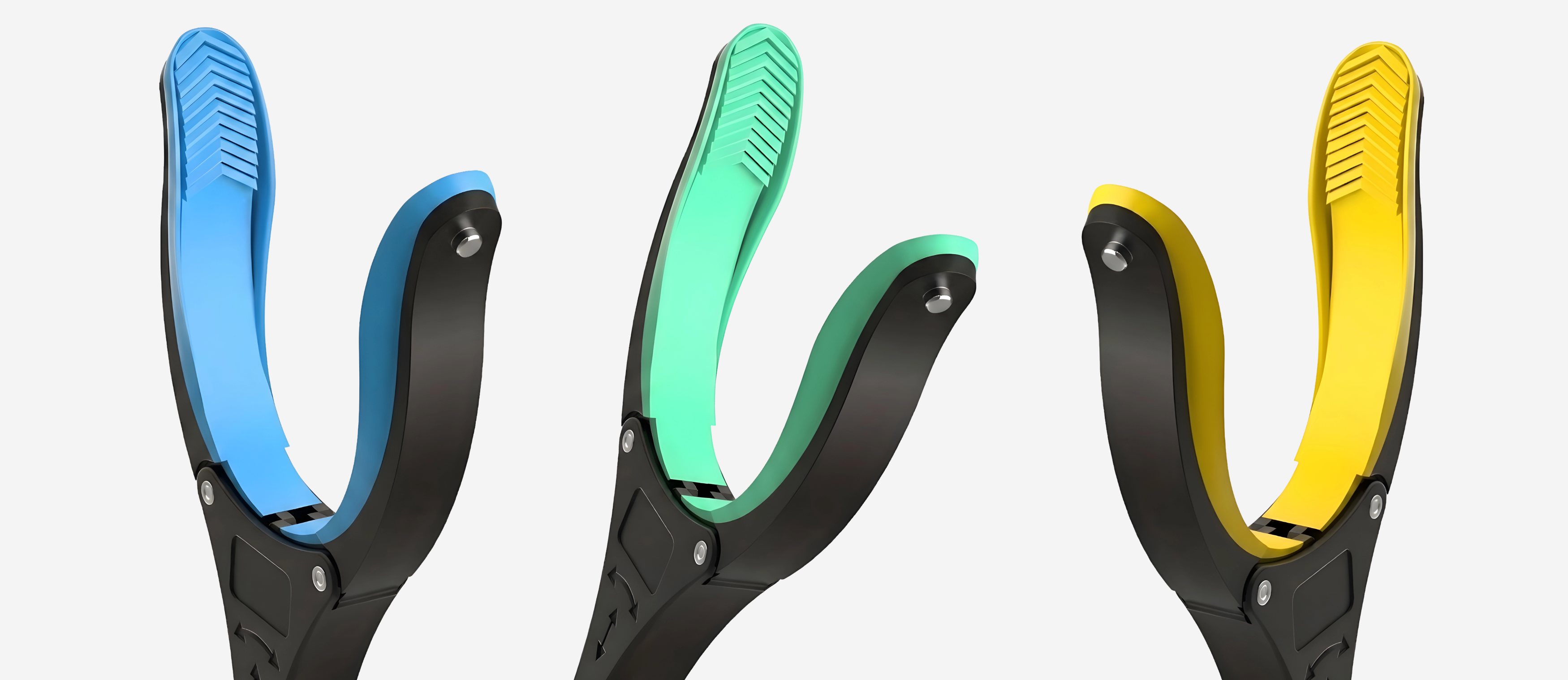
Direct answer: for upper limb amputees, the most functionally relevant non-prosthetic adaptive tools are: the GrabbersTool Electric Jar Opener (eliminates the need for a second hand to stabilize and grip the lid), the Electric Can Opener (one-placement activation, no stabilization required), the 5-in-1 Multi-Opener (lever-based bottle and top access), and the Reacher Grabber (extends one-handed reach for floor retrieval without the balance disruption of bending with asymmetric weight distribution).
The Bimanual Task Problem in Upper Limb Amputation
Most daily living tasks are bimanual by design: one hand holds, one hand operates. Jar opening, food preparation, container access, dressing, and household tasks all assume two functional hands. Upper limb amputation — particularly above-elbow amputation where prosthetic grip function is more limited — means that many standard tasks require one of three approaches:
- Technique adaptation: one-handed technique that does not require stabilization (limited applicability)
- Stabilization assistive devices: suction-base holders, dycem mats, plate guards — items that substitute for the stabilizing hand
- Mechanized tools: electric openers and automated tools that eliminate the stabilization requirement entirely
GrabbersTool products serve the third category — they mechanize or extend one-handed function rather than requiring adapted technique or supplementary stabilization equipment.
Kitchen Independence: The Highest Barrier After Limb Loss
GrabbersTool feedback from customers who have experienced upper limb amputation or limb difference identifies kitchen independence as the most significant daily living challenge. Cooking requires the highest density of bimanual tasks per hour of any home activity — cutting, opening, pouring, stirring, holding, and transporting. Non-prosthetic adaptive tools address the opening and retrieval components of this challenge.
| Kitchen Task | One-Handed Challenge | Adaptive Solution |
|---|---|---|
| Opening jars | Requires stabilization of jar body AND rotation of lid — two simultaneous actions | Electric Jar Opener — motorized rotation; intact hand stabilizes jar only |
| Opening cans | Can opener requires two-handed placement and operation | Electric Can Opener — one-hand placement, automatic operation |
| Bottle tops and caps | Twist-off caps require grip and counter-grip simultaneously | 5-in-1 Multi-Opener — lever mechanics replace the second hand |
| Floor object pickup | Bending with prosthetic or residual limb changes balance center | Reacher Grabber — floor retrieval from standing |
Electric opener specifications — compatible lid diameters, automatic shutoff, handle design — are on the product pages. These specifications determine whether the tool accommodates the specific container types the user regularly needs to open. View jar opener specifications
Below-Elbow vs. Above-Elbow: Functional Differences
Below-elbow (transradial) amputation preserves elbow function, which maintains the ability to position the residual limb and, with a prosthetic, to position a terminal device. Many below-elbow amputees develop effective one-hand-plus-residual-limb technique that partially substitutes for the missing hand in stabilization tasks. Electric openers remain useful in this population but may not be as universally necessary as in above-elbow cases.
Above-elbow (transhumeral) amputation removes elbow function, requiring the prosthetic to reconstruct both elbow positioning and terminal device function. This is mechanically more complex and typically leaves less residual limb function. Kitchen adaptive tools are more consistently necessary in above-elbow cases because the residual limb cannot provide stabilization assistance.
Non-Prosthetic Days: When Adaptive Tools Are the Primary Solution
Most upper limb amputees have significant periods — morning and evening routines, hygiene, sleep, and during prosthetic fitting and maintenance — when the prosthetic is not worn. During these periods, non-prosthetic adaptive tools are the primary functional solution. Having a complete set of kitchen adaptive tools that work without any prosthetic use ensures that food access and basic kitchen independence do not require prosthetic wear as a prerequisite.
See also: Adaptive Kitchen Tools: A Buyer's Guide for One-Handed Cooks and Stroke Recovery and Independence: Adaptive Tools for One-Sided Weakness.
Browse Easy Grip Kitchen Openers and Reacher Grabber Tools for the full range.


