

Caregivers preparing meals for patients with physical limitations, neurological conditions, or post-surgical restrictions face a distinct set of kitchen challenges: balancing the patient's remaining ability to participate in meal preparation (which supports independence and wellbeing) against the safety risks of their condition; managing the physical demands of adaptive meal preparation for someone with a disability; and adapting kitchen routines to the patient's changing functional status over time. This guide covers the core caregiver kitchen strategies and adaptive tools that occupational therapists recommend for caregivers in home settings.
Caregiver Kitchen Safety Principles
The fundamental caregiver kitchen principle is graded assistance: provide the minimum assistance necessary to keep the patient safe while maximizing their participation. A post-hip-replacement patient who can stand safely can stir a pot while the caregiver handles the heavy lifting and bending. A mild dementia patient can set the table while the caregiver manages the stovetop. Full dependence (caregiver does everything) should be the last resort, not the default, because independence supports psychological wellbeing and functional maintenance.
Core Caregiver Kitchen Adaptive Tools
| Caregiver Kitchen Tool | Patient Condition Best Matched | How Caregivers Use It |
|---|---|---|
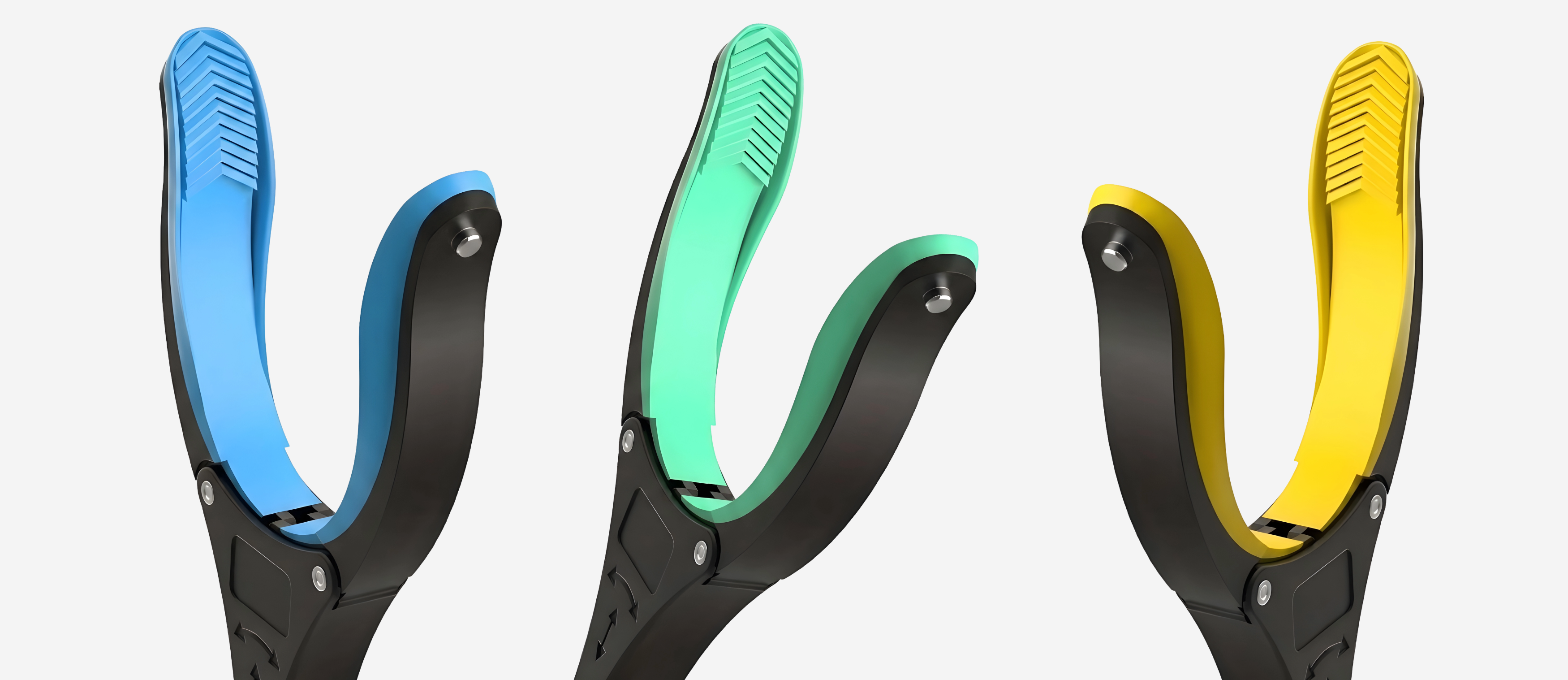
| Reacher grabber (GrabbersTool 32-inch or 43-inch) | Post-hip replacement, lumbar surgery, stroke, MS, Parkinson, spinal cord injury, COPD, elderly patients | Caregivers use the reacher to retrieve items for patients who cannot bend or reach; reduces caregiver bending and reaching demand when assisting a patient; caregiver places the reacher in the patient hand for self-retrieval if the patient can use it independently; see 32-inch Reacher and 43-inch Reacher |
| Electric jar opener (GrabbersTool) | Arthritis, stroke, MS, mastectomy arm precautions, post-wrist surgery, one-armed patients, elderly, lymphedema | Caregivers use the electric jar opener for patients who cannot grip strongly enough for manual jar opening; enables the patient to open jars independently without caregiver assistance -- the electric opener requires only one hand and very light contact; reduces caregiver requests for assistance with jar opening; see Electric Jar Opener |
| Non-slip mats and dycem | One-handed patients, tremor, arthritis, stroke hemiplegia | Non-slip mats placed under bowls, cutting boards, and plates stabilize kitchen items for one-handed or tremor-affected patients; caregivers place mats before leaving the patient to perform supervised independent preparation |
| Rocker knife and built-up handles | One-handed patients, arthritis, Parkinson tremor | Rocker knife allows one-handed cutting with a rocking motion rather than bilateral knife-and-fork technique; caregivers use it to enable supervised independent chopping for patients who can manage it safely |
One-Handed Meal Preparation for Caregivers
For patients with one non-functional arm (stroke hemiplegia, mastectomy sling, rotator cuff repair, BPI), caregiver preparation of one-handed meals focuses on: electric jar opener (no second hand needed), suction cup bowl holders, non-slip mat under cutting boards, and electric can openers. The caregiver teaches these techniques and sets up the kitchen so the patient can manage the safe tasks independently. See the Electric Jar Opener and adaptive kitchen collection for caregiver-focused kitchen tool options.


